
Before we begin
There are strict rules on what can and cannot be said about food supplements. We are bound by this European legislation, so we choose our words carefully. Medical claims, for example, are not permitted and health claims about botanical ingredients must carry a disclaimer. We also do not always list all scientific sources, because we are responsible for the exact wording of the material we refer to.
Read more here about how we handle health claims and regulations.
Why is magnesium so popular?
Magnesium is
probably the best-known mineral we use every day.
This is hardly surprising, as it plays a role in the most important biological
processes in nature and in our bodies. This powerful mineral is therefore
also one of the most abundant elements in nature. The same is true in our
bodies. It is found in the blood, bones and
cells, among other places. This means it performs many important functions throughout the body.
Magnesium is therefore essential for good health, there is no doubt about that.
These are the main functions of magnesium:
- Helps support healthy cell function
- Keeps muscles healthy, strong and supple
- Helps reduce fatigue
- Keeps the nervous system working properly
- Helps build body protein
- Maintains a balance in fluid and mineral levels
- Releases energy from food
Where do we get magnesium from?
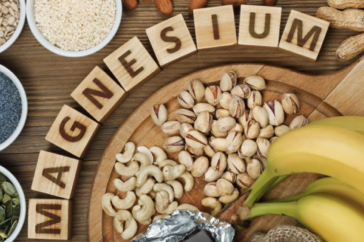
Fortunately, magnesium is found almost everywhere in nature, including in our food. The healthiest sources of magnesium are spinach, bananas, dark chocolate and avocados. Wholegrain foods also contain plenty of it. However, eating too much of these is not recommended, as grain products also contain a lot of phosphorus and phytic acid. Both substances hinder magnesium absorption.
The absorption of magnesium from food varies from 20 to 60%. This depends on the amount present in the food. Oddly enough, the more magnesium your food contains, the lower the percentage your body absorbs. In addition, magnesium is poorly absorbed by people with gut problems. Another reason for magnesium deficiency is the excessive amount of calcium we get through our diet. This often disrupts the required calcium to magnesium ratio (2:1). Magnesium reserves then become depleted.
Another reason for deficiency is that magnesium absorption declines as we get older. Magnesium deficiency is therefore common. The WHO reports that it affects at least 20% of the Western population. The consequences of magnesium deficiency are quite serious, so taking magnesium supplements can hardly do any harm.
The balance between magnesium, calcium, D3 and K2
Many people are familiar with the functions of magnesium. For example, it is often used for fatigue or muscle cramps. A less well-known aspect is its interaction with calcium. These two minerals need each other to function properly in the body. They are therefore interchangeable. If you consume a lot of calcium, magnesium is used in the process too. Calcium intake must therefore be accompanied by sufficient magnesium, otherwise magnesium levels become depleted.
In recent years, it has become increasingly clear that magnesium also affects how vitamin D works. It supports the activity of vitamin D enzymes, which regulate both the activation and breakdown of vitamin D. This makes things even more interesting, as vitamin D in turn enables the absorption of calcium from our food. Are you starting to see the connections? Doctors and therapists often recommend combining vitamin D3 with calcium. However, this in turn causes a magnesium deficiency because too much calcium is then absorbed.
Another point that should not be underestimated is that when calcium is absorbed with the help of vitamin D, it does not reach the right destination without vitamin K. This vitamin ensures that calcium actually reaches the skeleton rather than causing calcification in the wrong tissues. Otherwise, hardening of the arteries and even heart problems can result. It is therefore the combination of vitamins D and K and magnesium that ensures calcium can do its job without causing problems.
These are the forms of magnesium we stand behind

60 capsules | Capsules | Magnesium | Citrate | Netherlands
Liposomale Magnesium
Our Liposomale Magnesium contains only pure ingredients. This food supplement has exceptionally high bioavailability thanks to the use of natural fat-like substances, also known as lipids. The lipids form a small liposome around the magnesium, protecting it throughout its journey through the body. As a result, compared with many other magnesium supplements, far less is lost or converted during transport.

120 capsules | Capsules | Magnesium | United States of America
Magnesium Glycinate
Magnesium Glycinate from Morgen is Nu contains 375 mg of magnesium per daily dose. An easily absorbed, gentle form in vegan capsules. No unnecessary additives.

1000ml, 500ml | Liquid | Magnesium | Nano | Netherlands
Nano Magnesium
Nano Magnesium from The Health Factory is a revolutionary new form of magnesium. One nanometre is just one millionth of a millimetre. These tiny particles make the action and effect of the magnesium particularly powerful. The smaller the magnesium particles, the clearer the colour and the better it works. The magnesium particles are also absorbed more quickly and completely through the skin and mucous membranes.


