
Bilberry (Wild European Blueberry)
Looking to buy wild bilberries? Bilberry, also known as the European blueberry or Vaccinium myrtillus, is a distinctive berry that grows naturally in the shady forests of Northern and Central Europe. This wild berry is known for its intense colour, rich nutrient content and centuries of use in herbal medicine. Find out more about Bilberry on this page.
By Stefan, last updated: 27-06-2025.
Contents
- Our favourite Bilberry supplements
- What is Bilberry (wild European blueberry)?
- Traditional use and origins of Bilberry
- The compounds in Bilberry
- The benefits of Bilberry
- Bilberry or blueberry?
- Sources
Our favourite Bilberry supplements
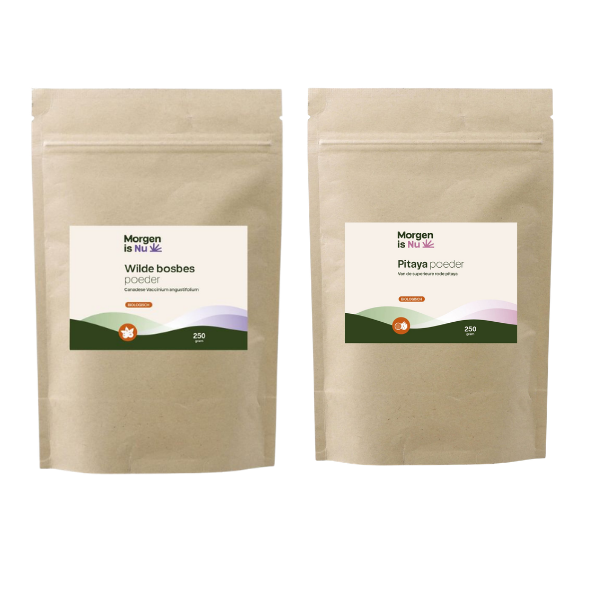
- Bio Wilde Bosbessen Poeder by Morgen is Nu
- Bilberry (360mg) by Terranova
- Wild Blueberry Powder (bio) by LOOV
What is Bilberry (wild European blueberry)?
Bilberry (Vaccinium myrtillus L.) is also known as wild European blueberry, European blueberry or myrtille. This berry grows on a low-growing shrub in the heather family, found in cool, wooded areas of Europe. The berries are small, round and deep purple-blue, with notably dark flesh. This distinguishes them from the American blueberry (Vaccinium angustifolium), which is generally larger and has lighter, almost white flesh.
The plant belongs to the genus Vaccinium and has been valued in European herbal medicine for centuries for its nutritional value and distinctive composition. (source)
Traditional use and origins of Bilberry
Bilberry (Vaccinium myrtillus) has been valued in Europe for generations as a nutritious woodland fruit. The berry is best known for its intense pigments (anthocyanins), which are widely studied in relation to blood vessels and vision.* (source)
The plant grows mainly in northern temperate regions such as Scandinavia and the Alps, and is still harvested from the wild. As bilberry is not cultivated on a large scale, supply depends heavily on wild harvests. (source)
The compounds in Bilberry
Bilberry is a real powerhouse when it comes to phytonutrients. The berry contains a unique combination of:
- Anthocyanins: pigments responsible for the intense colour. Bilberry contains up to 15 different types, including delphinidin and cyanidin glycosides
- Phenolic acids: such as chlorogenic acid and caffeic acid
- Flavonoids: including quercetin and myricetin
- Organic acids, pectins, sugars, fibre and vitamins
What makes Bilberry special is that the flesh itself is deeply coloured, unlike most berries, where the colour is mainly in the skin. As a result, bilberry has a higher anthocyanin content than many other types of berries. (source, source)
The benefits of Bilberry
Several benefits can be attributed to Bilberry, including:
- Bilberry is good for blood vessels*
- Bilberry contributes to the maintenance of normal vision*
* Health claim awaiting European authorisation.
Bilberry or blueberry?
Bilberry and blueberry are often confused, but they are not the same.
- Bilberry is the wild European blueberry (Vaccinium myrtillus): small, dark purple inside and rich in anthocyanins.
- Blueberry is a collective name for several species of blueberries, the best known being Vaccinium corymbosum (the cultivated highbush blueberry) and Vaccinium angustifolium (the lowbush blueberry). These originate from North America, are often larger and lighter in colour, and are usually cultivated.
Sources
- The European blueberry (Vaccinium myrtillus L.) and the potential for cultivation. A review.
- Vaccinium myrtillus L. Fruits as a Novel Source of Phenolic Compounds with Health Benefits and Industrial Applications - A Review
- Anti-Inflammatory Activity of Bilberry (Vaccinium myrtillus L.)
- Analysis of Anthocyanin Variation in Wild Populations of Bilberry (Vaccinium myrtillus L.) in Finland
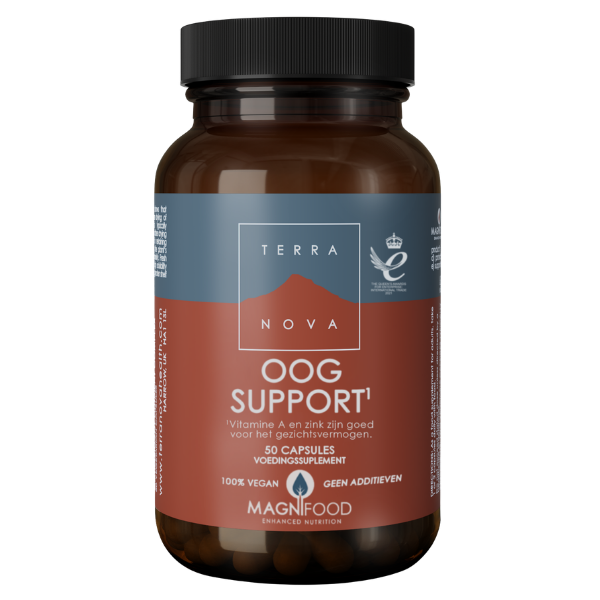
50 capsules | Capsules | Bilberry, Vitamin C, Copper, Selenium, Zinc, Manganese, Vitamin A, Vitamin E | United Kingdom

50 capsules | Capsules | Bilberry | United Kingdom


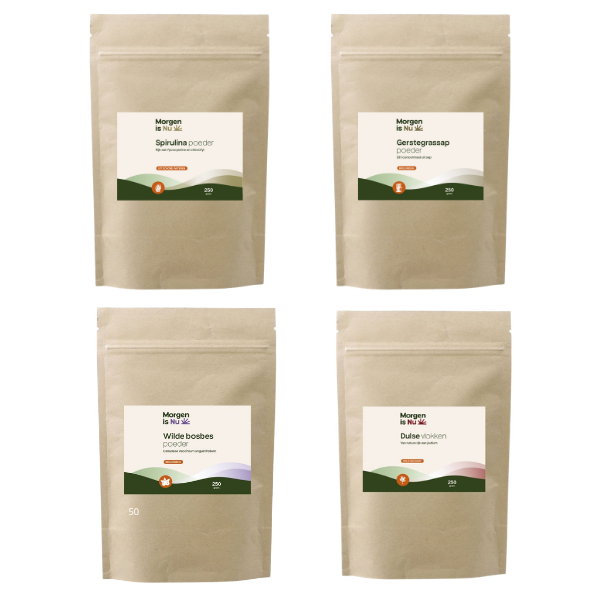
Bundle | United States of America, Finland, Ireland

250 grams | Powder | Bilberry | Canada

500ml | Liquid | Canadian Wild Blueberry | Canada

Our mission is to help people choose their health products with the right information
Not quite. In Dutch, the terms for wild blueberries and blueberries are often used interchangeably, but there are different species within the Vaccinium genus. “Blueberry” usually refers to the larger, cultivated variety found in supermarkets. These are often highbush species, such as Vaccinium corymbosum. These berries are relatively large, pale inside and have a milder flavour.
“Wild blueberry” more often refers to varieties that grow in the wild. A well-known example is the European bilberry (Vaccinium myrtillus), but the Canadian wild lowbush blueberry (Vaccinium angustifolium) also falls into this group. These wild varieties are usually smaller, darker in colour and have proportionally more skin.
Although they are related, they differ in how they grow, as well as in appearance, flavour and composition.
Wild blueberries are known for their rich natural composition. They naturally contain various plant compounds, including anthocyanins and other polyphenols. These are pigments that give the berries their deep blue-purple colour. Blueberries are also known, among other things, to be good for blood vessels* and to contribute to the maintenance of normal vision*.
Wild varieties, such as the Canadian lowbush blueberry (Vaccinium angustifolium) or the European bilberry (Vaccinium myrtillus), are also smaller and have a relatively higher proportion of skin. The skin is where many of the natural compounds produced by the plant are found.
*Health claims awaiting European approval.
Bilberries are the fruit of the Vaccinium myrtillus shrub, the European wild bilberry. They are small and purplish-blue, and have been used for centuries for their flavour and composition. Unlike blueberries, bilberries are not cultivated but are mainly picked in the wild.
Yes, wild blueberries are generally safe to eat, provided you are certain they are Vaccinium myrtillus (European bilberry) or Vaccinium angustifolium (Canadian blueberry) and come from a clean, uncontaminated environment. Always take care not to confuse poisonous berries with edible varieties. Buying wild blueberries as a supplement or powder? At Morgen is Nu, you can choose products that are safe and quality-checked.
Wild blueberry (Vaccinium myrtillus or Vaccinium angustifolium) is generally well tolerated and safe when used as directed. In rare cases, high doses may cause mild stomach discomfort. Do you take medicines such as blood thinners or blood sugar-lowering medication? Consult a healthcare professional first.