

Ayurvedic herbs
Are you curious about the power of Ayurvedic herbs? These plants have been at the heart of Ayurveda, India's traditional health system, for centuries. Discover what makes Ayurvedic herbs so special and explore our range.
By Stefan, last updated: 26-09-2025.
Contents
- Our favourite Ayurvedic herbs
- What does ‘Ayurveda’ mean?
- The long history of Ayurvedic herbs
- Ayurvedic herbs in our range
- Sources
Our favourite Ayurvedic herbs
- Moringa (liquid extract) by Global Healing
- Ashwagandha Root (liquid extract) by Nature’s Answer
- Curcumin C3 Complex (capsules) by Morgen is Nu
What does ‘Ayurveda’ mean?
Ayurveda literally means “the science of life” and originated in India more than 3000 years ago. The system focuses on bringing body and mind into balance through diet, lifestyle, cleansing techniques and herbs.
Its basic principles centre on the three so-called doshas: vata, pitta and kapha, which together regulate processes in the body. In Ayurveda, herbs, diet and lifestyle are tailored to the individual's constitution and circumstances. (source)
What was once a traditional Indian approach to health has now become an international movement. Ayurvedic herbs and spices are finding an established place in nutrition, wellness and research, as they bridge centuries-old traditions and modern health trends.
The long history of Ayurvedic herbs
Ayurvedic herbs have been used for thousands of years. Classical texts such as the Charaka Samhita and Sushruta Samhita describe in detail how plants are used to support vitality and recovery. (source)
Within this system, considerable attention is given to the power of ‘polyherbal formulas’, combinations of several plants whose effects complement one another. This holistic approach sets Ayurveda apart from many other traditions. (source)
Various studies are exploring how Ayurvedic preparations relate to processes in the immune system. This includes looking at cellular mechanisms. Current findings are not yet conclusive and primarily point to the need for further research. (source)
Ayurvedic herbs in our range
At Morgen is Nu, we carefully select herbs and extracts with attention to their origin and composition. Our range includes:
- Ashwagandha (Withania somnifera): known for its root, which has a long tradition in Ayurveda. Ashwagandha contributes to the body's ability to adapt to stress and supports mood.*
- Berberine (Berberis aristata): a potent substance from the bark of the barberry plant, traditionally valued for its deep yellow colour. Berberis aristata contributes to maintaining healthy blood sugar levels.*
- Ginger (Zingiber officinale): a spicy root with an established place in both cooking worldwide and Ayurveda. Ginger contributes to normal digestive function.*
- Curcumin (from turmeric, Curcuma longa): the bright orange pigment that gives turmeric its distinctive colour. Curcumin has an antioxidant effect.*
- Moringa (Moringa oleifera): often called the “drumstick tree”; its leaves are dried and ground into powder. Moringa contributes to normal blood sugar regulation.*
- Schisandra (Schisandra chinensis): small reddish-purple berries known for their distinctive flavour profile. Schisandra contributes to the ability to adapt to stressful situations.*
- Shilajit: a rare natural substance collected from layers of rock in the Himalayas. Shilajit supports the immune system.*
* Health claim pending European approval.
Sources
- The Significance of Ayurvedic Medicinal Plants
- Indian Traditional Ayurvedic System of Medicine and Nutritional Supplementatio
- Polyherbal formulations in Ayurveda and their relevance in contemporary phytotherapy
- Nature and mechanism of immune boosting by Ayurvedic medicine: A systematic review of randomized controlled trials

60 capsules | Capsules | Nigella | United States of America


60 capsules | Capsules | Boswellia | United States of America

90 capsules | Capsules | Turmeric, Curcumin | The Netherlands

60ml | Liquid | Ashwagandha | United States of America

60ml | Liquid | Ashwagandha | United States of America


120 capsules, 60 capsules | Capsules | Ashwagandha | United States of America
Blog on turmeric and absorption
Discover the age-old power of turmeric and its main phytonutrient, curcumin. Widely known as an essential part of Asian cooking and traditional medicine, turmeric offers a wealth of health benefits that have been recognised for more than 4000 years. But what makes curcumin so special, and why is it so beneficial for our health? In our latest blog, we explore the far-reaching effects of curcumin on our bodies. From supporting a healthy immune system to promoting normal digestion and maintaining healthy liver function, curcumin seems to be quite an all-rounder. With more than 9000 research studies supporting its benefits, it is clear that this herb is a powerful ally for a healthy body and wellbeing.
But there is a challenge: the bioavailability of curcumin. Despite its potential, our bodies often absorb only a limited amount. Fortunately, recent research offers hope, with new methods to improve the effectiveness of curcumin supplementation. One approach, Solid Lipid Curcumin Particles (SLCP), promises to dramatically increase bioavailability. But there is a catch: the SLCP production process involves the use of alcohol, pressure and chemicals, which is not ideal for our health. In our blog, we explore this dilemma and offer insight into the world of turmeric and curcumin, so you can make informed decisions about your health and wellbeing.
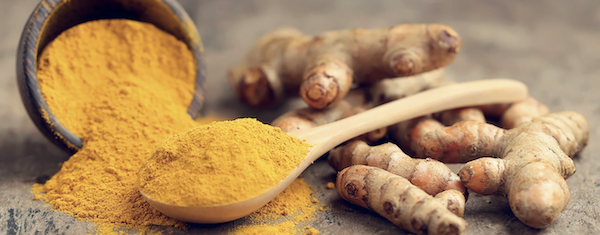
Ayurvedic herbs are plants and parts of plants traditionally used in Ayurveda, a system of health from India that has existed for thousands of years. These herbs are often used as teas, powders, capsules or extracts. Each plant has its own distinctive properties, which are used in Ayurveda to support balance in body and mind.
The golden rule of Ayurveda is to seek balance between body, mind and surroundings. This means tailoring diet, lifestyle and herbs to a person’s constitution (dosha) and circumstances. There is no one-size-fits-all approach; what is healthy for one person may not necessarily be healthy for another.
When Ayurvedic herbs are used correctly and come from reliable sources, they are generally considered safe. It is important to follow the recommended dosage. Are you combining a herb with medication, or unsure whether a product is right for you? Always consult a qualified professional.
You will also find an ‘additional information’ section for each product on our website, which lists specific safety warnings and points to consider. It is advisable to read this information carefully before taking a supplement.
Depending on the herb, they can be taken as a tea, powder, capsule or liquid extract. The form and dosage vary from product to product. It is important to choose an option that suits your needs and lifestyle, and always pay attention to purity and quality.
More and more people are looking for natural ways to support their wellbeing. Ayurveda combines centuries-old knowledge with a holistic approach, in which herbs play an accessible and practical role. This is why Ayurvedic herbs are finding their way into more and more homes and research outside India too.
Most health claims are currently linked to vitamins, minerals and fatty acids. For herbs and botanicals, discussions have been ongoing for years. Various on-hold claims have been submitted for this. These are currently awaiting approval by the European Commission. The claims may therefore currently only be used if there is scientific substantiation for the health effect.