
Hawthorn
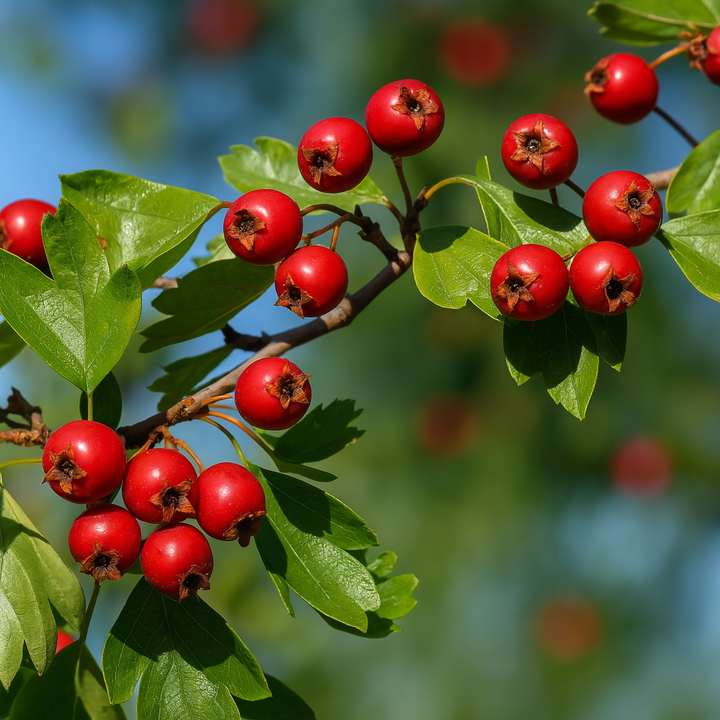
Looking to buy hawthorn? Hawthorn is a thorny shrub with white blossoms and deep red berries. This distinctive plant has been used in herbal medicine for centuries and is known for its rich range of natural compounds. Find out more about hawthorn here.
By Stefan, last updated: 27-06-2025.
Contents
- Our favourite hawthorn supplements
- What is hawthorn?
- Traditional use of hawthorn berries
- The compounds in hawthorn
- The benefits of hawthorn berries
- Sources
Our favourite hawthorn supplements
What is hawthorn?
Hawthorn (Crataegus spp.) is a shrub or small tree in the rose family (Rosaceae) and grows mainly in Europe, Asia and North America. The best-known species are Crataegus monogyna and Crataegus laevigata. This plant is known for its thorny branches, white blossoms in spring and bright red berries in autumn. (source)
The leaves, flowers and berries are the parts most commonly used in herbal medicine. Hawthorn berries are rich in phytonutrients and are sometimes made into tea, jam or supplements. (source)
Traditional use of hawthorn berries
Hawthorn has been used since ancient times for its presumed supportive effect on the heart and blood vessels*. As early as the first century, Dioscorides described the effects of hawthorn on the heart. (source)
It is no surprise that it is known as a ‘heart herb’ in Europe and North America.
* Health claim pending European approval.
The compounds in hawthorn
Hawthorn contains, among other compounds:
- Flavonoids such as hyperoside, quercetin and vitexin
- Oligomeric procyanidins, particularly in the leaves and flowers
- Organic acids such as chlorogenic acid and caffeic acid
- Triterpenes such as ursolic acid and oleanolic acid
- Vitamin C, calcium, pectin and dietary fibre in the berries
(source, source, source, source)
The benefits of hawthorn berries
Hawthorn berries have several benefits, including:
- Hawthorn contributes to the normal function of the heart and blood vessels*
- Hawthorn is good for blood pressure*
* Health claim pending European approval.
Sources
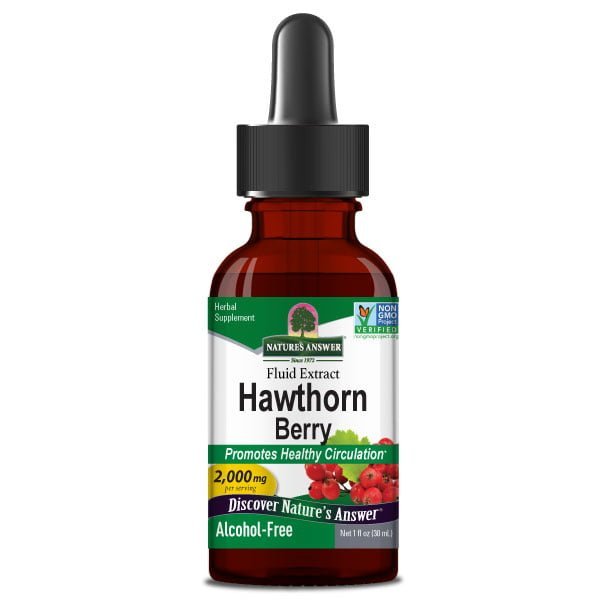
30ml | Liquid | Hawthorn | United States of America
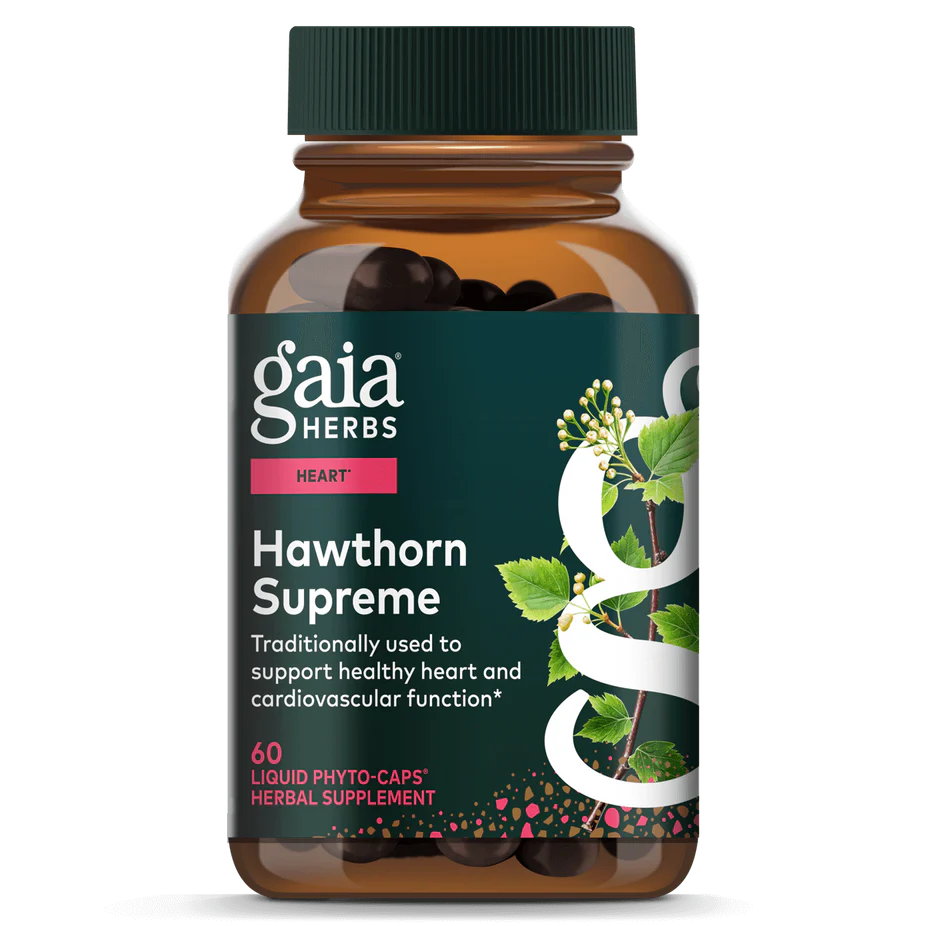
60 capsules | Capsules | Hawthorn | United States of America
Our mission is that people with the correct information choose their health products
Hawthorn is traditionally used for its plant compounds, such as flavonoids and procyanidins. Scientific studies have focused in particular on whether hawthorn may play a role in supporting the heart and blood vessels*.
* Health claim awaiting European approval.
Hawthorn fruit refers to the berries of the hawthorn shrub (Crataegus spp.). These small, deep red fruits grow on thorny shrubs and have been used for centuries in both European and Asian herbal medicine. The berries naturally contain flavonoids, vitamin C and fibre, among other nutrients.
Hawthorn is generally well tolerated when used in the recommended amounts. In rare cases, mild side effects have been reported, such as dizziness, tiredness or stomach upset. Use during pregnancy or breastfeeding is not recommended, and caution is also advised when taking it alongside heart medication. If in doubt, always consult a doctor or therapist.
Hawthorn capsules are often used as a traditional herbal supplement, particularly because they contain flavonoids and procyanidins. These compounds are found in the plant's leaves, flowers and berries. The following benefits can be attributed to hawthorn:
- Hawthorn contributes to the normal function of the heart and blood vessels*
- Hawthorn is good for blood pressure*
* Health claim pending European approval.
For most people, hawthorn is safe when used correctly. However, the plant is not suitable for everyone. Interactions can occur, particularly when combined with certain medicines, such as heart medication or blood pressure medication. Do not use hawthorn during pregnancy or breastfeeding, or if you have a known hypersensitivity to Crataegus species. Always seek professional advice.
There is no established general maximum duration of use. In scientific studies, hawthorn was usually taken for several weeks to several months. If you plan to take it long term or alongside medication, it is advisable to discuss this with a doctor or therapist.