
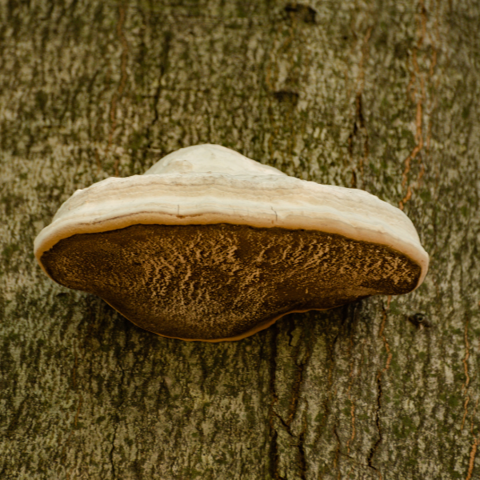
Chaga
Looking to buy Chaga? Chaga (Inonotus obliquus), also known as birch fungus or chaga mushroom, is a distinctive mushroom that grows on birch trees in cold climates. On this page, you can find out more about the ‘king of mushrooms’.
By Stefan, last updated: 19-06-2025.
Contents
- Our favourite Chaga supplements
- What is Chaga?
- The history of Chaga
- The potent compounds in Chaga
- Absorption: powder vs extract
- Sources
Our favourite Chaga supplements
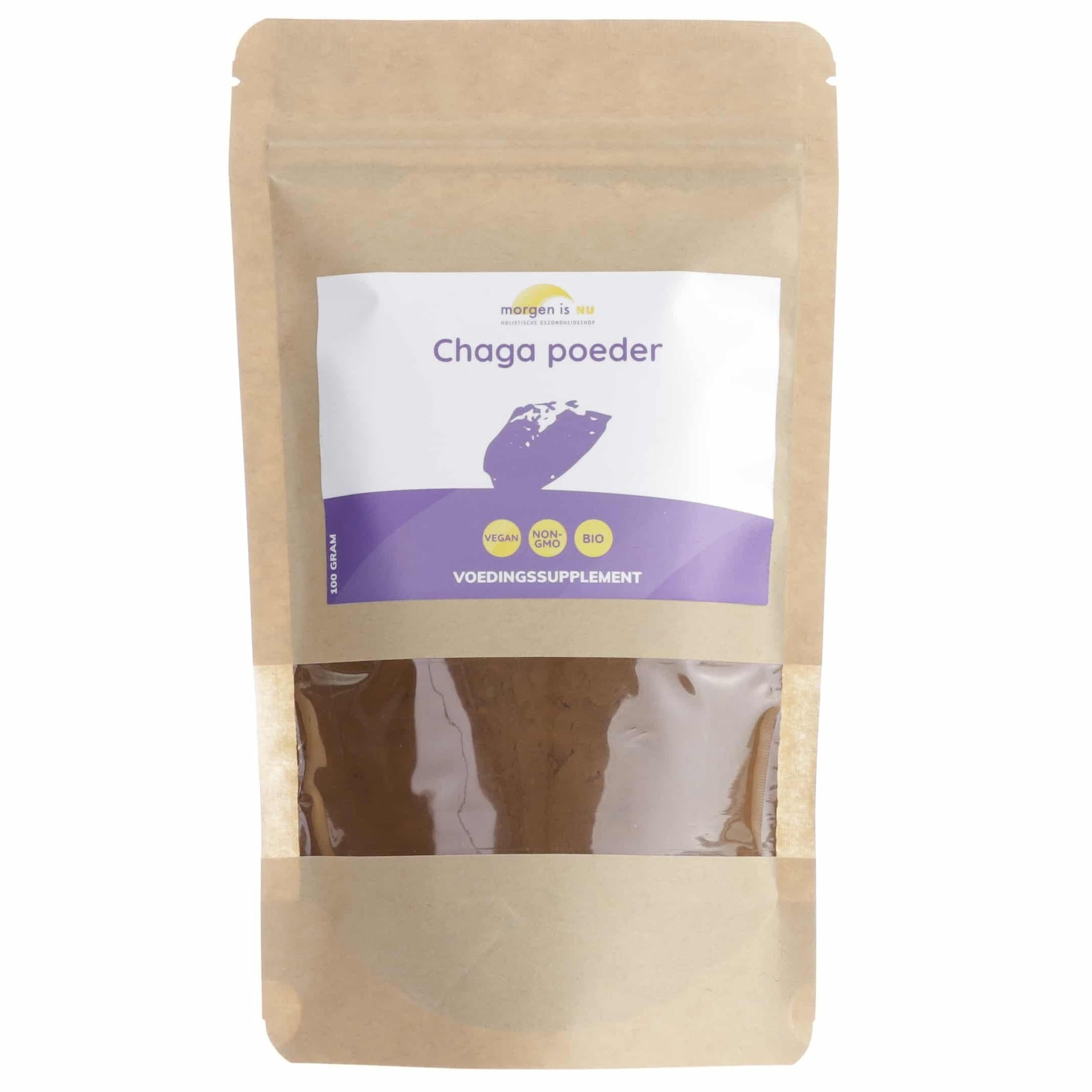
- Bio Chaga Poeder by Morgen is Nu
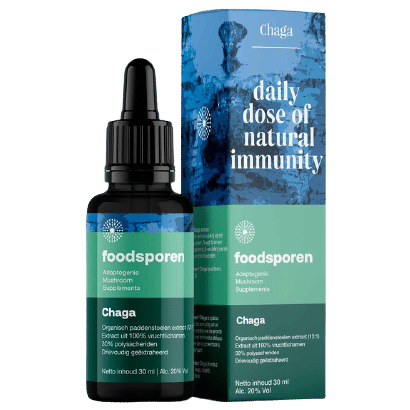
- Chaga Extract by Foodsporen
- Chaga Extract Mushroom Caps (Bio) by KIKI Health
What is Chaga?
Chaga is a woody fungus that grows on birch trees in cold regions such as Siberia, Canada and Scandinavia. Although often called a 'mushroom', it is technically a sclerotium: a dense mass of mycelium that draws nutrients from the tree. Its scientific name is Inonotus obliquus, but it is also known as clinker polypore or the ‘mushroom of immortality’.
Chaga has been used for centuries in traditional medicine, including in Russia, China and among the indigenous peoples of North America. Today, it is valued worldwide as a functional mushroom with a wide range of uses.
The history of Chaga
The first historical records of Chaga date back to the 12th century among the Khanty peoples of Western Siberia. They used the fungus daily as a tea and an addition to food. Chaga was also traditionally used in Russian folk medicine for various physical complaints.
During the Second World War, Chaga was even used as a coffee substitute in Finland. Its rich flavour and potential restorative effects made it a popular alternative.
Scientific interest grew in the 20th and 21st centuries. Clinical and preclinical studies pointed to several distinctive properties of Chaga. (source, source)
The potent compounds in Chaga
What makes Chaga so special? The secret lies in its rich combination of bioactive compounds:
- Beta-glucans: naturally occurring polysaccharides that form part of Chaga's composition.
- Polyphenols & ORAC value: Chaga has one of the highest ORAC values, up to 1500 times higher than blueberries.
- Triterpenes such as betulin and betulinic acid: derived from the birch tree.
- Melanin: gives the fungus its black colour.
- Essential minerals: including potassium, manganese, copper and zinc.
These compounds work together synergistically, giving Chaga its broad range of effects. However, form and quality make the difference.
Absorption: powder vs extract
Chaga is becoming increasingly popular. It is now widely available, but unfortunately not always in the quality best suited to our bodies. One important difference is the form: powder or extract.
- Chaga powder is simply ground, dried chaga. As it does not undergo extraction, its active compounds are not readily available to the body. The powder needs to steep for 1 to 3 hours to have any effect.
- Chaga Extract is produced using an advanced extraction process involving vacuum treatment, moisture removal and freeze-drying. This preserves the phytonutrients and produces a concentrated product that is readily absorbed. Around 8 kilos of raw chaga are needed for 1 kilo of extract.
Chaga extract is therefore the most effective choice. A major advantage is that you can easily dissolve it in warm water (for example, as an instant tea or coffee) or add it to soups, broths, stir-fries, sauces, desserts and more.
Sources

30ml, 50ml, 100ml | Liquid | Vitamin D | The Netherlands

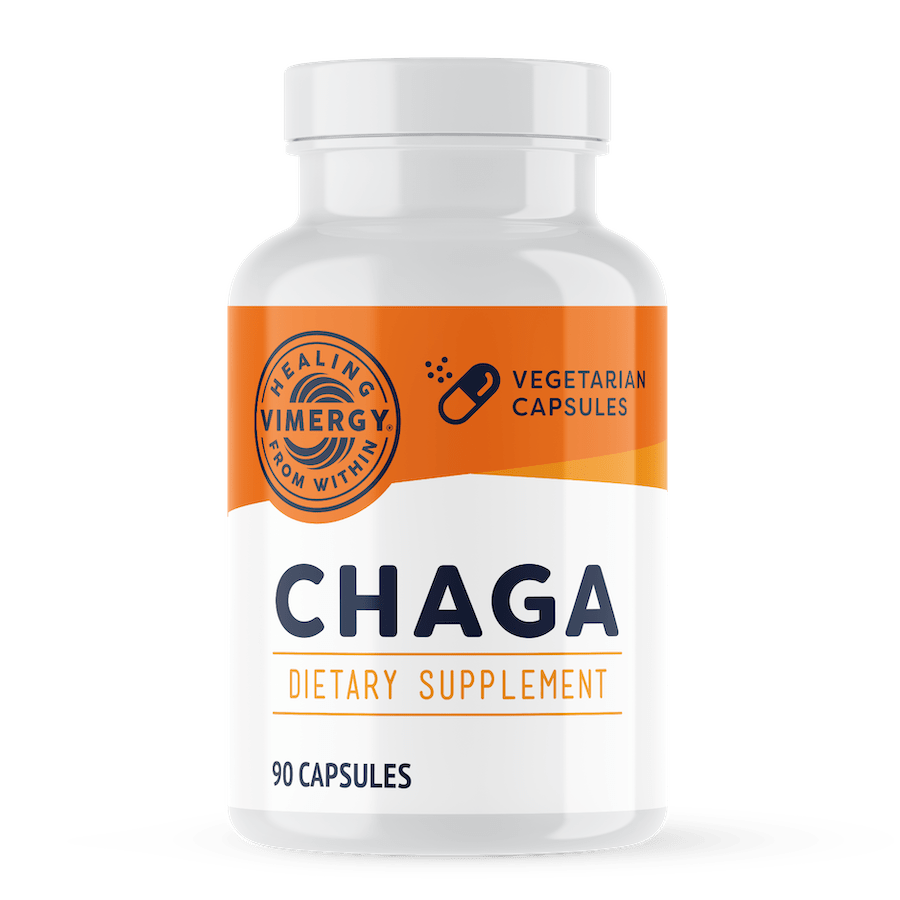
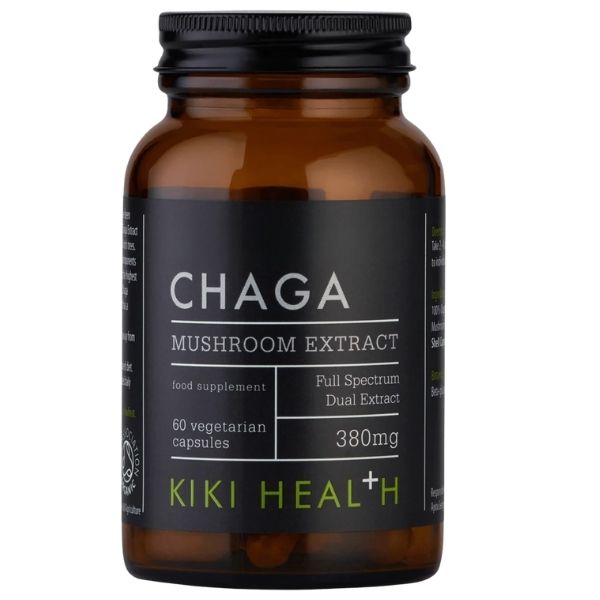
60 capsules | Capsules | Chaga | United Kingdom

250 grams, 50 grams | Powder | United States of America
"Great service and quality! My order arrived really quickly, brilliant! The products are on the pricey side, but you know exactly what you're putting into your body, and that's worth it. If you care about your body and only want the best, I really recommend Morgen is Nu!"
- Mrs Granville
Date of experience: 28 January 2025
View all reviews
Our vision at Morgen is Nu: holistic health and wellbeing
At Morgen is Nu, we work every day to support your health. Guided by a unique vision and years of experience, we select only the purest, highest-quality products. We believe in a holistic approach centred on physical, inner and outer balance.
Telephone: 0341 422 850
Our mission is that people with the correct information choose their health products
The best Chaga comes from wild birch trees in clean, cold regions such as Siberia or Scandinavia, and is carefully harvested and processed. Ideally, choose a Chaga extract made using dual extraction or freeze-drying. This helps preserve valuable plant compounds as much as possible. Also look for purity, provenance and the absence of additives. At Morgen is Nu, we only select products we can stand behind 100%.
The recommended amount of Chaga varies by product form (powder, extract or capsule) and manufacturer. Always follow the dosage advice on the packaging and adjust the amount based on your needs and sensitivity. If you are unsure, consult a qualified professional.
Chaga grows mainly on birch trees in cold regions such as Russia, Scandinavia, Canada and Alaska. You can recognise the fungus by its black, charred-looking exterior. Wild Chaga is uncommon in the Netherlands.
Chaga is traditionally used as a tea or extract, rather than eaten as a mushroom like button mushrooms or shiitake. Eating it raw is not recommended because of its tough texture and the limited absorption of its compounds. It is best used in a prepared form, such as an extract or tea steeped for a long time.
Chaga is generally well tolerated when used in normal amounts. However, Chaga contains naturally occurring oxalates, which may put a strain on the kidneys if consumed in excessive amounts, particularly in people prone to kidney stones. Chaga may also affect the action of blood thinners or immunosuppressant medicines. Are you taking medication or do you have a medical condition? Always consult a doctor or therapist first.
Mushrooms are rich in nutrients such as fibre, protein, vitamins and minerals. They are valued in cooking and also used as a basis for supplements because of their unique composition.
Most mushroom supplements are well tolerated when used as directed. Possible drawbacks include differences in quality between suppliers and the fact that some supplements may not be suitable for use alongside certain medicines. Always choose products from a verified source and consult a qualified professional if you are unsure.
Everyone responds differently to supplements. Using and combining mushroom supplements is your own responsibility. Pay attention to how your body responds and consult a doctor or pharmacist if you are unsure or have existing health concerns. Would you like to take several mushroom products at the same time or combine them with other food supplements? Consult a healthcare professional first.