
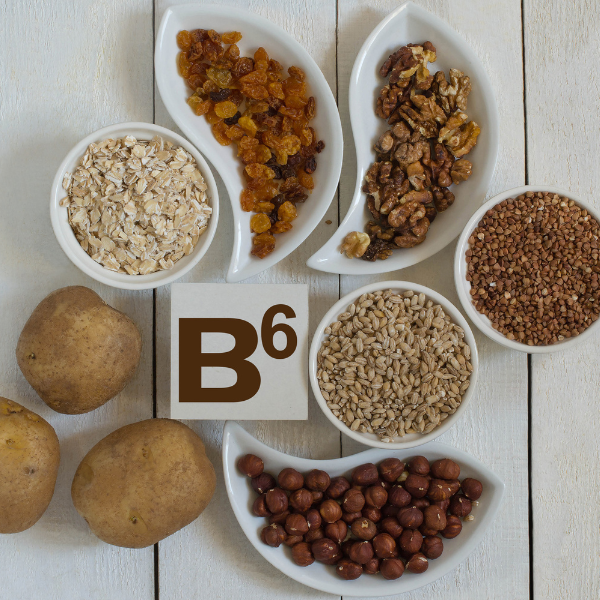
Vitamin B6
Looking for vitamin B6? At Morgen is Nu, you’ll find carefully selected, high-quality vitamin B6 supplements. Read on to learn what vitamin B6 does, which forms it comes in and what to look for when choosing a supplement.
By Danielle, last updated on 10-11-2026.
What is vitamin B6?
Vitamin B6 is a water-soluble vitamin that belongs to the vitamin B complex. The body needs this vitamin for various processes, including protein metabolism, energy metabolism and nervous system function. Vitamin B6 occurs naturally in foods such as meat, fish, potatoes, bananas and wholegrain products.
Vitamin B6 is a collective term for several compounds that can be converted in the body into the biologically active form, pyridoxal-5'-phosphate (P-5-P). This active form functions as a coenzyme and is involved in more than 100 enzymatic reactions in the body.
Different forms of vitamin B6
Vitamin B6 is available in several forms. In supplements, the most common forms are pyridoxine hydrochloride and pyridoxal-5'-phosphate (P-5-P).
Pyridoxine hydrochloride is a widely used form of vitamin B6 that the body first needs to convert into the active form.
Pyridoxal-5'-phosphate (P-5-P) is the biologically active form that can be used directly as a coenzyme.
At Morgen is Nu, you’ll find carefully selected vitamin B6 supplements, chosen with attention to the vitamin form, dosage and formulation. You’ll also find vitamin B6 in various B-complex supplements.
Our favourite vitamin B6 supplement
The benefits of vitamin B6
Vitamin B6 is involved in various processes in the body and has several health benefits. These are:
- Vitamin B6 contributes to the production of immune cells
- Vitamin B6 contributes to red blood cell formation
- Vitamin B6 contributes to memory function
- Vitamin B6 contributes to the regulation of hormonal activity
- Vitamin B6 has a positive effect on nervous system function
- Vitamin B6 helps reduce tiredness and fatigue
- Vitamin B6 supports protein metabolism and production
- Vitamin B6 contributes to the energy supply in muscles
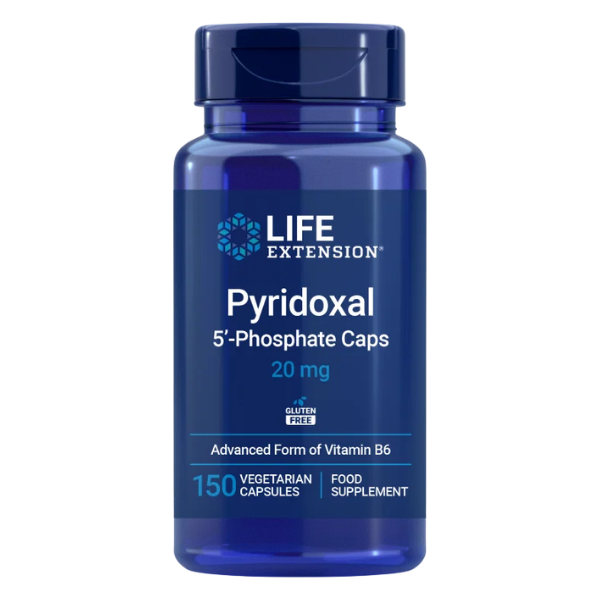
150 capsules | Capsules | Vitamin B6 | United States of America