

Berries
Berries are among nature's most versatile and colourful fruits. Think of blueberries, blackcurrants, goji berries, acai berries, cranberries and many other varieties. Their rich colours are a pleasure to look at and also reflect the presence of distinctive bioactive compounds.
By Stefan, last updated: 25-09-2025.
Contents
- Our favourite berry supplements
- What are berries?
- What makes some berries so special?
- The colours & bioactive compounds in berries
- Popular berries and their characteristics
- Sources
Our favourite berry supplements
- Bio Wilde Bosbessen Poeder by Morgen is Nu
- Intense Berries Super-shake (powder) by Terranova
- Black Elderberry (capsules) by Gaia Herbs
What are berries?
Berries are small, often brightly coloured fruits that come in many varieties around the world. They are known for their high levels of fibre, vitamins (such as vitamins C and E), and especially their unique mix of polyphenols and flavonoids. (source) Thanks to their composition, berries have been part of traditional diets for centuries, from the forests of Scandinavia to the rainforests of South America.
What makes some berries so special?
Not all berries are the same: varieties such as blueberries and blackcurrants are known for their high anthocyanin content, while goji berries and acai berries are rich in carotenoids and specific polyphenols. There is extensive ongoing research into the role of berry compounds in biological processes, including oxidative stress and inflammatory responses. (source & source)
The colours & bioactive compounds in berries
The deep colours of red, blue and black berries come from anthocyanins, powerful water-soluble pigments. (source) Berries also contain ellagitannins, flavanols and phenolic acids, each with its own role in plant metabolism.
Popular berries and their characteristics
- Blueberries: widely eaten in the Netherlands; they owe their deep blue colour to anthocyanins and are often eaten fresh or used in smoothies.
- Blackcurrants: rich in vitamin C and polyphenols; often made into syrups and extracts in Europe.
- Goji berries: small, red-orange berries from China and Mongolia; usually eaten dried or used in tea.
- Acai berries: dark purple fruits from the Amazon region; they spoil quickly, so are often consumed as freeze-dried powder or pulp.
- Cranberry: bright red berries from North America; known for their use in juices and capsules.
- Sea buckthorn berries: orange-red berries that grow on shrubs along coasts and rivers; naturally contain fatty acids and plant oils.
- Raspberries and redcurrants: slightly tart fruits that are popular in desserts and jam; rich in pigments such as anthocyanins and ellagitannins.
- Bilberry (wild blueberry): related to the blueberry but smaller and darker; the pigments are found in both the skin and the flesh.
- Hawthorn (hawthorn berries): red berries from Europe and Asia; traditionally used in herbal teas and extracts.
- Saw Palmetto: dark blue to black berries from a palm species native to south-eastern America; often used in extract form.
- Schisandra: reddish-purple berries from East Asia, also known as the “five-flavour berry” because of their complex flavour profile (sweet, sour, bitter, pungent and salty).
- Elderberry: deep, dark purple berries traditionally used in syrups and jellies.
- Lingonberry (cowberry): small red berries widely eaten in Scandinavia; traditionally made into compotes and jams.
Sources
- Extraction of functional extracts from berries and their high quality processing: a comprehensive review
- Berry Fruit Supplementation and the Aging Brain
- Effect of berry-based supplements and foods on cognitive function: a systematic review
- Antioxidative and antibacterial activities of aqueous ethanol extracts of berries, leaves, and branches of berry plants


250 grams | Powder | Blueberry | Canada

30ml | Liquid | Cranberry | United States of America

120 capsules, 60 capsules | Capsules | Elderberry | United States of America

30ml | Liquid | Hawthorn | United States of America


30ml | Liquid | Elderberry | United States of America
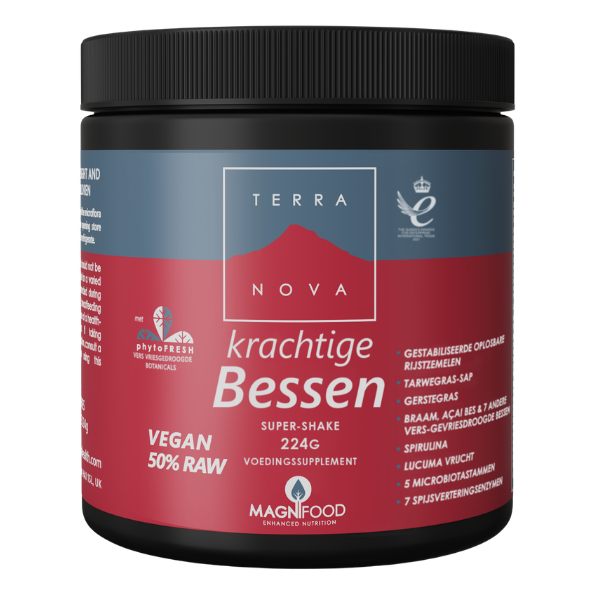
224 grams | Powder | Blueberry | United Kingdom