

GABA
Are you looking for a natural GABA supplement? GABA, short for gamma-aminobutyric acid, is a substance naturally present in the body that is gaining attention in natural self-care. On this page, you can read more about GABA as a neurotransmitter.
By Stefan, last updated: 28-05-2025
Contents
- Our GABA supplements
- What is GABA (gamma-aminobutyric acid)?
- Where is GABA found in the body?
- GABA from food and supplements
- Sources
Our GABA supplements
What is GABA (gamma-aminobutyric acid)?
GABA stands for gamma-aminobutyric acid and is a naturally occurring substance in our bodies. It is a neurotransmitter: a signalling substance involved in communication between nerve cells. GABA is one of the inhibitory neurotransmitters in our central nervous system. (source)
In biochemical terms, GABA is produced from glutamate through the action of the enzyme glutamate decarboxylase. The substance occurs naturally in the brain, but is also being studied in relation to diet and supplementation.
Where is GABA found in the body?
GABA is found mainly in the brain. There, it acts as a neurotransmitter: a messenger substance involved in transmitting signals between cells. Unlike many other amino acids, GABA is not used to build proteins, but primarily has a regulatory role (source).
GABA from food and supplements
As we get older, our bodies produce less gamma-aminobutyric acid. Fortunately, we can also obtain this substance from food. GABA occurs naturally in certain fermented foods, such as kimchi, miso and kefir.
It is also used as an ingredient in GABA food supplements. These supplements are often available as capsules, sometimes combined with other substances such as L-theanine, magnesium or vitamin B6.
Sources
- Neurotransmitters as food supplements: the effects of GABA on brain and behavior
- The Effect of Oral GABA on the Nervous System: Potential for Therapeutic Intervention
- Effects of Oral Gamma-Aminobutyric Acid (GABA) Administration on Stress and Sleep in Humans: A Systematic Review
- GABA Supplementation, Increased Heart-Rate Variability, Emotional Response, Sleep Efficiency and Reduced Depression in Sedentary Overweight Women Undergoing Physical Exercise
- Supplementation of gamma-aminobutyric acid (GABA) affects temporal, but not spatial visual attention
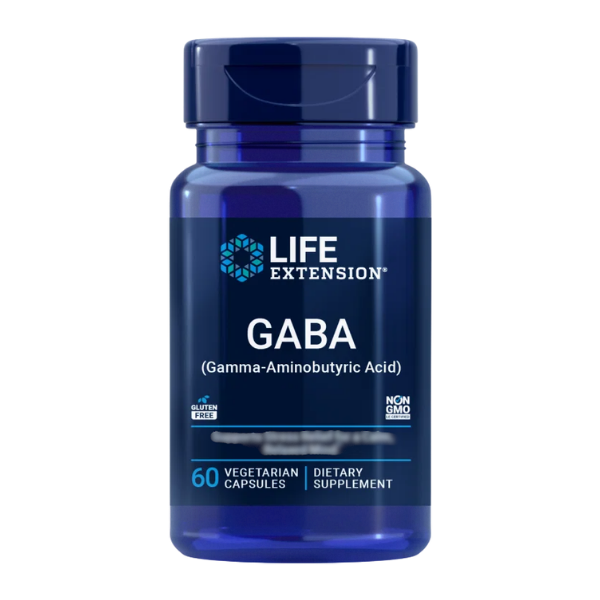
60 capsules | Capsules | United States of America

60 capsules | Capsules | Magnesium | (Bis)glycinate | United States of America
Our mission is to help people choose their health products with the right information
For most people, GABA supplementation is considered well tolerated when used at the recommended dosage. As with any supplement, individual sensitivity may vary. Some people experience mild side effects such as tiredness or an altered sensation in the body, especially at higher dosages. If in doubt, it is advisable to seek professional advice, particularly if you are taking medication or have specific health concerns.
We also regularly receive questions about possible interactions with medicines such as antidepressants. Although GABA is a substance naturally produced by the body, supplements should be used carefully and responsibly. Always discuss their use with a professional if you are taking medication.
GABA (gamma-aminobutyric acid) is a substance naturally produced by the body that acts as a neurotransmitter in the central nervous system. Within this system, GABA plays an inhibitory role in signalling between nerve cells. Exactly what this means for how the body functions varies from person to person and depends on the situation.
There is currently no simple or standard medical test that can accurately identify a GABA deficiency. Because GABA acts in the brain and is difficult to measure directly there, research often uses indirect methods such as neuroimaging or cerebrospinal fluid analysis. These are not commonly used in routine medical practice. If you have questions about a possible deficiency, it is best to speak to a doctor or a neuroscience specialist.
How long you can take a GABA supplement depends on your goals, the dosage and your individual circumstances. In scientific studies, GABA is sometimes taken for several weeks to months, usually under controlled conditions. For general use, always follow the instructions on the product label and consult a qualified professional if you plan to take GABA long term or combine it with medicines or other supplements.
That depends on your personal circumstances and expectations. Although GABA occurs naturally in the body, it is not yet entirely clear how effectively GABA from supplements reaches the central nervous system. Some studies suggest an effect in certain groups of people, but the results vary and depend greatly on the context of the research. It is best to consider whether it may be worthwhile for you together with a qualified professional, based on your own needs and lifestyle.
GABA supplementation is generally well tolerated. In some cases, mild side effects are reported, such as sluggishness, mild tingling or drowsiness. These effects vary from person to person and are usually dose-dependent. As with any supplement, start with a low dose, pay attention to how your body responds and stop if you have any concerns. Are you taking medication or do you have a medical condition? Always consult a doctor before use.