
Lemon balm
Looking to buy lemon balm? This fragrant herb is known for its naturally calming properties*. Curious about its other properties and uses? Find out all about lemon balm here.
By Stefan, last updated: 29-09-2025.
Contents
- What is lemon balm?
- The history of lemon balm
- What makes lemon balm special?
- How lemon balm works
- Sources
What is lemon balm?
Lemon balm (Melissa officinalis) is a herb belonging to the mint family (Lamiaceae). The plant is known for its fresh lemon scent and has been used in various ways for centuries. Its leaves contain a unique combination of bioactive compounds, such as essential oils, phenolic acids, flavonoids and triterpenic acids. All these natural compounds contribute to the effectiveness of lemon balm. (source)
The history of lemon balm
The use of lemon balm dates back thousands of years and was documented by the ancient Greeks and Romans. The Roman naturalist Pliny the Elder mentioned it in his book Natural History, praising the herb's versatility. Centuries later, lemon balm became a staple of monastery gardens, where monks carefully cultivated and used it. From Spain, it spread throughout Europe and became a much-loved herb in folk medicine.
This long tradition is still recognised today. The European Medicines Agency (EMA) confirms that lemon balm has been used for centuries as a calming herb in European folk medicine, mainly as a tea or tincture. (source)
How lemon balm works
Lemon balm is known for its wide range of effects:
- Lemon balm contributes to normal psychological function*
- Lemon balm contributes to mental wellbeing*
- Lemon balm supports the maintenance of healthy sleep*
- Lemon balm has naturally calming properties*
There is good reason why this plant has long been the subject of scientific research. PubMed alone lists more than 5,000 studies (source). This is hardly surprising, as the results are promising.
What does the research suggest?
Scientific research suggests that the herb may have a calming effect and helps with mental pressure and exertion. Studies show that a lemon balm extract may help promote a feeling of relaxation (source).
As well as this mental support, research has explored the role of lemon balm in sleep. Studies suggest that an extract may help maintain healthy sleep (source).
Lemon balm has also been widely studied in relation to digestion. The EMA recognises its traditional use in folk medicine for a variety of stomach and intestinal applications (source).
What makes lemon balm special?
Lemon balm stands out for its unique combination of active compounds, which have been extensively investigated in scientific studies. The plant's essential oils, including geranial and neral, give lemon balm its distinctive fresh scent and are also being studied for their calming properties. (source).
Lemon balm leaves also contain natural compounds such as phenolic acids and flavonoids. These belong to the antioxidant group and are widely studied in scientific research for their broad role in the body. (source).
This distinctive composition has made lemon balm a valued herb for centuries in both traditional medicine and modern science. The plant is appreciated by people and bees alike. The name Melissa means ‘honeybee’ in Greek, a reference to the abundance of nectar the plant produces. This makes lemon balm valuable to us and to nature.
Sources

50ml | Liquid | Lemon balm | Netherlands

90 capsules, 30 capsules | Capsules | Lemon balm, Theanine | United Kingdom
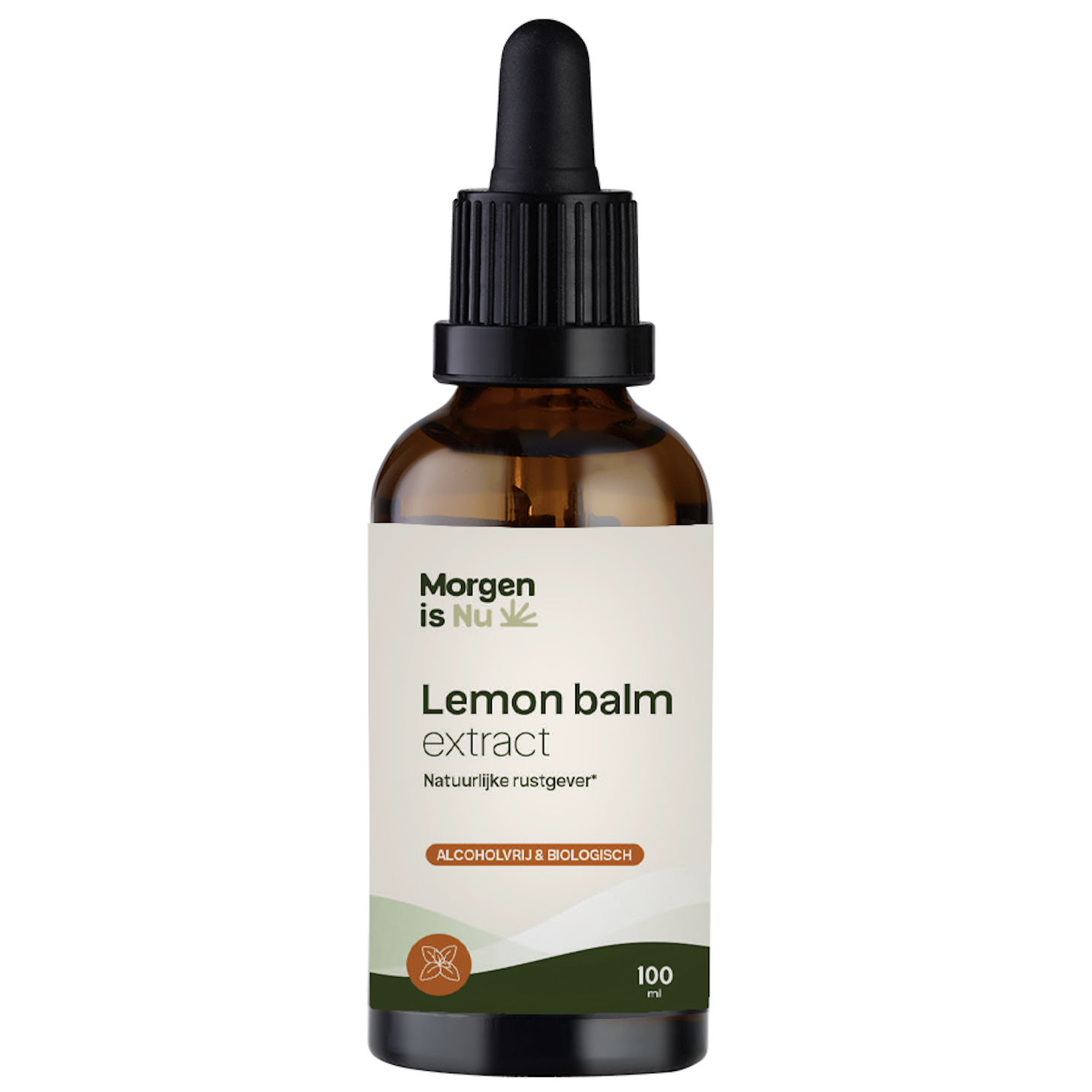
100ml | Liquid | Lemon balm | Netherlands


60 capsules | Capsules | Rhodiola, Saffron, Lemon balm | Netherlands
"Your order arrives within one day if placed before 4 pm. Supplements are well packaged and hygienically sealed. Very happy with this company."
- Rene Frohlings
Date of experience: 13 May 2025
View all reviews
About Morgen is Nu - Holistic health shop
At Morgen is Nu, we work every day to support your health. Guided by a unique vision and years of experience, we select only the purest, highest-quality products. We believe in a holistic approach that puts physical, inner and outer balance at its heart.
Phone: 0341 – 422 850
Blog about lemon balm (Melissa officinalis)
Lemon balm, known in Dutch as citroenmelisse, is more than a fragrant plant in your garden. Since ancient times, this herb has been known for its calming effects and used to support relaxation and mental wellbeing. From royal herbal teas to modern supplements: lemon balm has proved its worth over the centuries.
In this blog, you can read all about the rich history, powerful bioactive compounds and effects of this remarkable plant. Curious about how this age-old calming herb could support you too? Read on to find out.
