
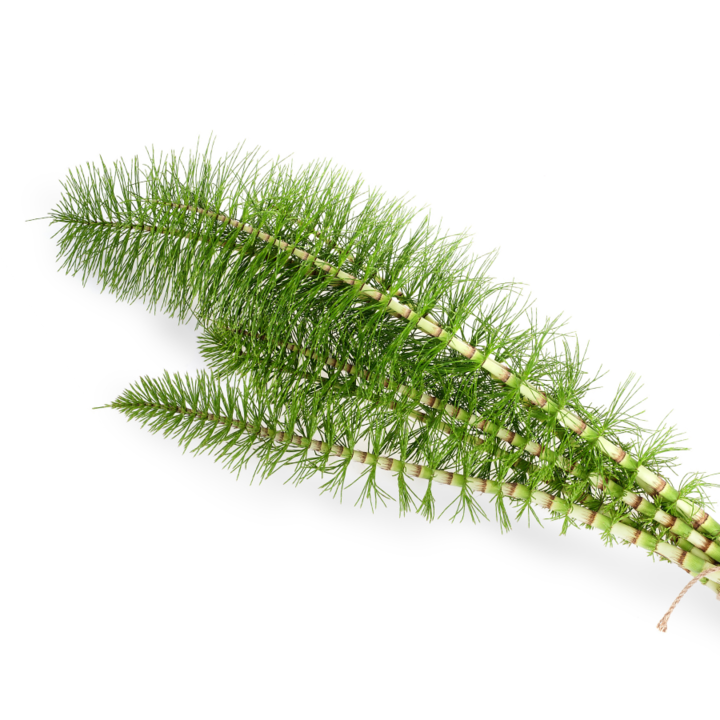
Horsetail (Heermoes)
Looking for a natural herb that has been valued since ancient times? Horsetail, also known as field horsetail, equisetum arvense or common horsetail, is an ancient plant with an exceptional composition. Both traditional use and modern research point to its unique botanical value. Find out what makes horsetail so special on this page.
Contents
- Our favourite horsetail supplement
- What is Horsetail (Heermoes)
- The history and traditional uses of horsetail
- What compounds does the Horsetail plant contain
- What does science say about Horsetail?
- The benefits of horsetail
- Sources
Our favourite horsetail supplement
Horsetail (Paardenstaart) Extract by Nature’s Answer
What is Horsetail (Heermoes)
Field horsetail (Equisetum arvense L.), also known as the horsetail plant or common horsetail, is one of the oldest plant species on earth. This perennial belongs to the vascular plants and is characterised by its hollow, bamboo-like stems. Despite its name, horsetail is neither a grass nor a herb, but a spore-producing plant related to ferns.
The plant grows in moist soils throughout Europe and Asia and is also commonly known as horsetail weed, a name that does not quite do justice to this species' versatility. Although it is considered a nuisance in gardens, it is valued in herbal medicine for its distinctive composition.
The history and traditional uses of horsetail
Horsetail has a long tradition as a medicinal plant in Europe and Asia. It has been used in herbal medicine since ancient times, often as an infusion or herbal tea. In various cultures, horsetail formed part of cleansing rituals or was used for general body care. A comprehensive pharmacological review confirms that Equisetum arvense was widely used historically because of its mineral and plant acid content. (source)
What compounds does the Horsetail plant contain
What makes horsetail special is its high content of silicic acid (silicon), a mineral that occurs naturally in the plant's cell structure. Scientific research confirms that this plant can contain up to 10% silicic acid by dry weight. (source)
In addition, horsetail contains a range of bioactive compounds, including flavonoids, phenolic acids and saponins. These compounds and their potential effects in the body have been widely studied, as described in an analysis of the polyphenols in horsetail. (source)
What does science say about Horsetail?
A clinical study involving healthy volunteers tested an extract of Equisetum arvense for tolerability and effects. The study showed that the supplement could be used safely within a certain dosage range. (source)
Although more research is needed to understand all the mechanisms involved, these initial results offer valuable insights into the potential of horsetail as a natural ingredient. Read more about all the benefits of this plant that have been studied in the next section.
The benefits of horsetail
Under European regulations, a number of health claims have been approved for the use of horsetail. This plant is recognised for its contribution to natural bodily processes. For example:
- horsetail is good for the skin*
- horsetail supports hair condition*
- horsetail contributes to the maintenance of healthy bones*
These permitted claims are in line with the traditional use of horsetail and are used today in various natural supplements.
Sources
- EQUISETUM ARVENSE: PHARMACOLOGY AND PHYTOCHEMISTRY - A REVIEW
- Phenolic Compounds in Field Horsetail (Equisetum arvense L.) as Natural Antioxidants
- Protective Effect of Field Horsetail Polyphenolic Extract on Erythrocytes and Their Membranes
- Randomized, Double-Blind Clinical Trial to Assess the Acute Diuretic Effect of Equisetum arvense (Field Horsetail) in Healthy Volunteers
* Health claim pending European approval.
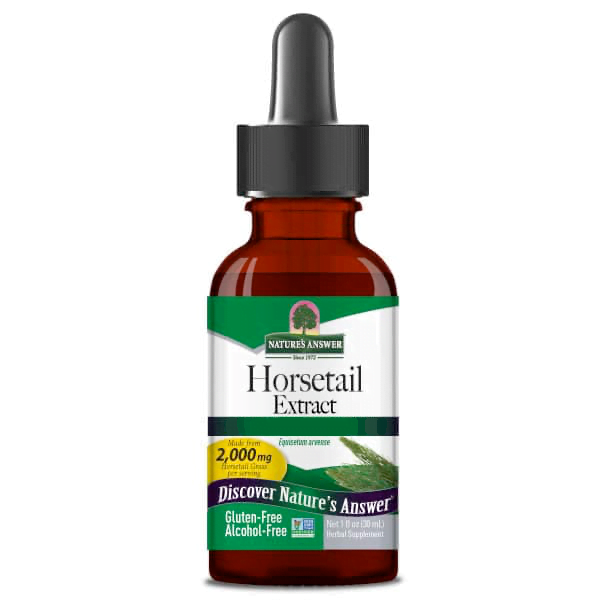
30ml | Liquid | Horsetail | United States of America
"Bestelling is er binnen één dag mits voor 4 uur besteld. Supplementen zijn goed en hygiënisch verpakt. Zeer tevreden met dit bedrijf."
- Rene Frohlings
Datum van ervaring: 13 mei 2025
Bekijk alle reviews
Over Morgen is Nu - Holistische gezondheidsshop
Bij Morgen is Nu zetten we ons elke dag in voor jouw gezondheid. Gedreven door een unieke visie en jarenlange ervaring selecteren we uitsluitend de meest pure en hoogwaardige producten. Wij staan voor een holistische aanpak waarin fysieke, innerlijke en uiterlijke balans centraal staan.
Telefoon: 0341 – 422 850
Our mission is that people with the correct information choose their health products
Horsetail is traditionally used to support the skin, hair and bones. Under European regulations, several health claims are permitted for these uses, including:
- Horsetail is good for the skin*
- Horsetail supports the condition of the hair*
- Horsetail contributes to healthy bones*
Traditionally, Horsetail has been used in herbal medicine to support general wellbeing. Modern studies focus mainly on its mineral composition, including silicon, and the presence of polyphenols. Clinical research shows that the extract is well tolerated and may have a mild diuretic effect. It is important to emphasise that further research is needed to fully understand exactly how it works in the body.
When used as directed, Horsetail is generally well tolerated. According to scientific Literatuur, few side effects have been reported in healthy adults. However, higher doses or long-term use may carry risks, such as reduced potassium levels or interactions with diuretic medicines. Therefore, use Horsetail supplements according to the instructions on the label and consult a healthcare professional if in doubt.
Under European legislation, only the following health claims are permitted for horsetail:
- Good for the skin*
- Contributes to healthy bones*
- Supports hair condition*
Other uses are described in traditional practice, but legally cannot be stated as health claims without sufficient supporting evidence. We recommend always considering the scientific evidence and your own needs.
Horsetail (Equisetum arvense) is not poisonous in its natural form when used normally. It is important, however, not to confuse horsetail with related species such as Equisetum palustre, which do contain poisonous substances. Always choose products from a reliable source. Long-term or excessive use is not recommended without expert advice, particularly because of its possible effect on mineral balance.
Yes, in Dutch, paardenstaart and heermoes are often used interchangeably. Both refer to the plant species Equisetum arvense. In English, this plant is usually called Horsetail. There are other species in the Equisetum family, so always check the botanical name to avoid confusion.
Most health claims are currently linked to vitamins, minerals and fatty acids. For herbs and botanicals, discussions have been ongoing for years. Various on-hold claims have been submitted for this. These are currently awaiting approval by the European Commission. The claims may therefore currently only be used if there is scientific substantiation for the health effect.