
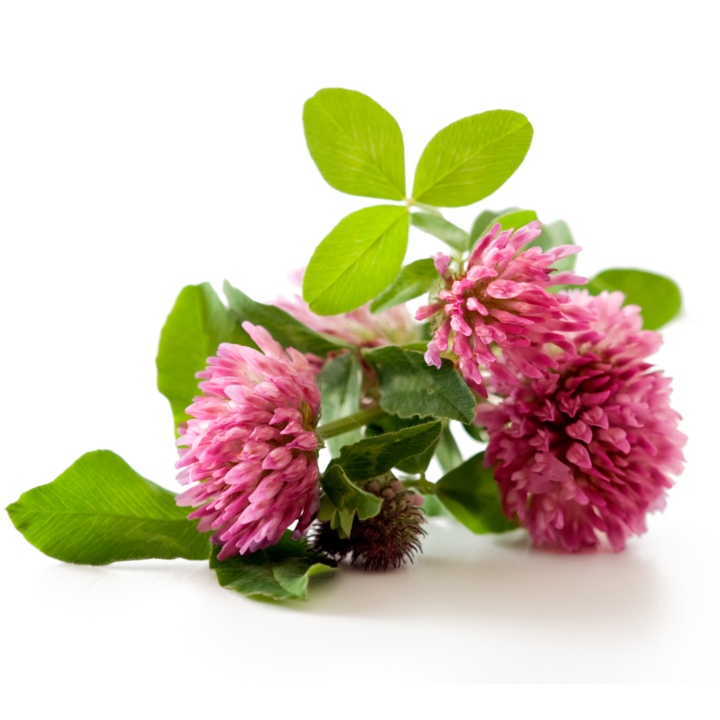
Red clover (Red Clover)
Red clover, or Trifolium pratense, is a plant with striking reddish-purple flowers. It has a long history of use: in the fields, on our plates and in herbal medicine. Curious about this distinctive little plant? Find out more about ‘Trifolium pratense’ on this page.
By Lisanne, last updated: 04-06-2025.
Contents
- Our favourite red clover supplement
- What is red clover (Red Clover)
- The history and traditional uses of red clover
- Red clover in nature and farming
- What does red clover contain?
- Sources
Our favourite red clover supplement
What is red clover (Red Clover)
Red clover (Trifolium pratense L.) is a flowering plant in the legume family (Fabaceae), known for its distinctive reddish-purple flower heads. The plant is native to Europe, Asia and north-west Africa and is found both in the wild and on farmland.
What makes red clover special is its rich mix of natural compounds, including isoflavones. These plant compounds belong to a group known as phyto-oestrogens: compounds whose structure resembles that of the female hormone oestrogen. This makes red clover a popular ingredient in supplements.
The history and traditional uses of red clover
Red clover has a rich tradition in both European and Asian herbal medicine. Over the centuries, the plant has been used for a variety of purposes. Skin care was one of them.
In some cultures, red clover played a part in rituals centred on purification and balance. It was also used in health rituals in North American traditions, including those of Indigenous peoples.
This age-old knowledge forms the basis for the use of red clover today. It is no wonder that interest in scientific research into these traditional uses continues to grow.
Red clover in nature and farming
Red clover is valuable to people, as well as to the soil and the ecosystem. The plant is often sown as a green manure because of its ability to fix nitrogen through root nodules. In this way, red clover naturally enriches the soil and helps maintain fertile farmland.
Red clover is also an important source of nectar for bees and other insects. Its flowers attract pollinators, which benefits biodiversity.
In farming, red clover is also valued as livestock feed because of its high protein content. All of this makes it a versatile plant in ecological and organic farming systems. (source)
What does red clover contain?
Red clover’s strength lies in its mix of bioactive compounds. The best known of these are:
- Isoflavones: such as formononetin, biochanin A, daidzein and genistein. These belong to the phyto-oestrogens: plant compounds with a structure similar to oestrogen.
- Coumarins: a group of aromatic compounds found naturally in various plants, contributing to their scent and defence mechanisms, among other things.
- Triterpenes and flavonoids: these are secondary plant compounds found in many types of herbs and flowers.
- Essential minerals such as calcium, magnesium and potassium: these occur naturally in small amounts in the plant.
(source)
Sources
- The use of red clover (Trifolium pratense) in soil fertility-building: A Review
- Pharmacological and therapeutic properties of the Red Clover (Trifolium pratense L.): an overview of the new findings
- Intake of Novel Red Clover Supplementation for 12 Weeks Improves Bone Status in Healthy Menopausal Women
- Determination of the isoflavone composition and estrogenic activity of commercial dietary supplements based on soy or red clover
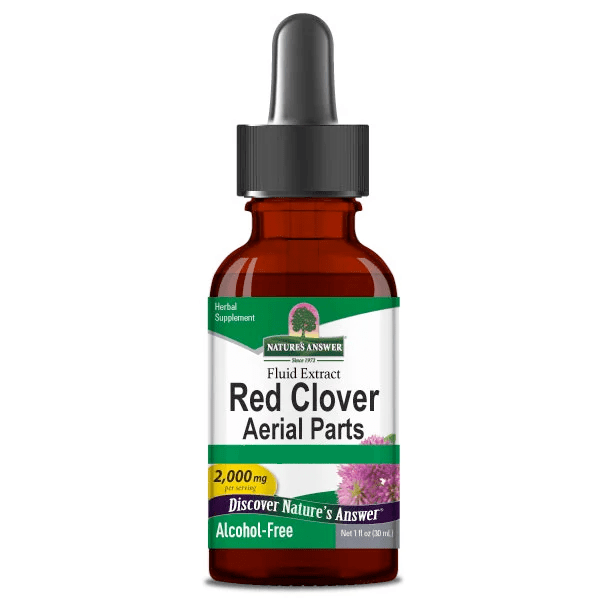
30ml | Liquid | Red clover | United States of America
Our mission is to help people choose their health products with the right information
Red clover naturally contains various plant compounds, such as isoflavones, coumarins and flavonoids. These compounds are widely studied and are one reason red clover is used in supplements and herbal teas.
Red clover (Trifolium pratense) is sometimes considered a weed in lawns or fields, especially when it appears there on its own. At the same time, it is also deliberately sown as a green manure crop or for animal feed, and it plays an important role in biodiversity. Whether it is seen as a weed therefore depends on the context.
Red clover is used for various purposes: as a crop in organic farming, as a source of nectar for bees, as animal feed and as an ingredient in food supplements. Its specific use may vary by sector or user.
There are no standard guidelines on how long to take red clover in supplement form. If in doubt, always consult a qualified doctor or therapist, especially for long-term use or if you are taking other products.
Red clover is used in various contexts, for example in agriculture, as an ornamental plant, in food and in herbal supplements. Why someone uses red clover depends on the application. Scientific research into its possible effects on the body is still ongoing.
The Latin name for red clover is Trifolium pratense L..
Most health claims currently relate to vitamins, minerals and fatty acids. Discussions about herbs and botanicals have been ongoing for years. Various on-hold claims have been submitted for these. They are currently awaiting authorisation by the European Commission. These claims may therefore currently only be used if there is scientific evidence to support the health effect.
Herbs can have an effect on the body and may, in some cases, interact with medication or other food supplements.
You are responsible for your own use and combination of herbal supplements. Consult a doctor or pharmacist if you take medication or have health concerns. The use of herbs during pregnancy or breastfeeding is generally not recommended due to insufficient evidence of their safety. If you want to take several herbal supplements at the same time and are unsure, consult a healthcare professional.