
Eyebright
Eyebright (Euphrasia officinalis) is a distinctive little plant traditionally used to care for the eyes*. Find out what makes this versatile herb so potent.
By: Stefan, last updated: 24-06-2025.
Contents
- Our favourite eyebright supplement
- What is eyebright?
- Traditional uses of Euphrasia
- The compounds in eyebright
- The benefit of eyebright
- Sources
Our favourite eyebright supplement
What is eyebright?
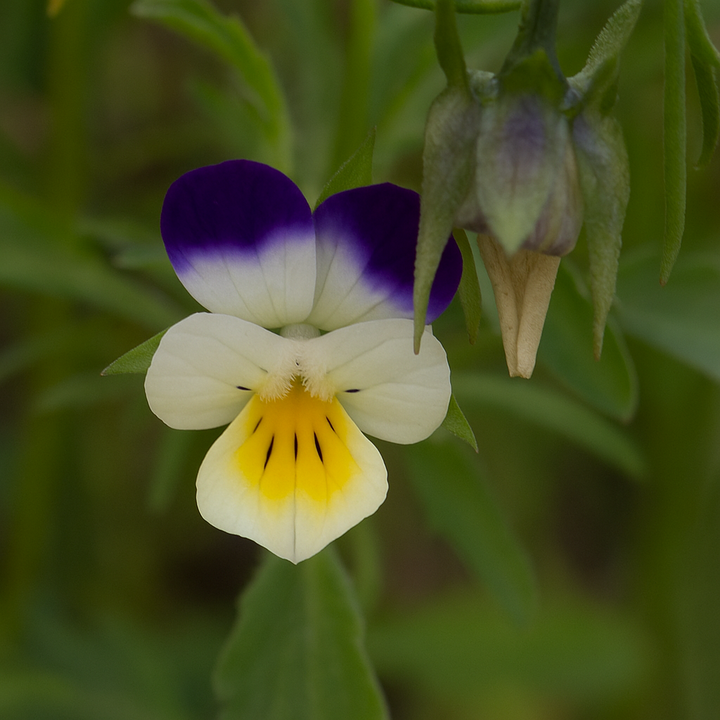
Eyebright, or Euphrasia officinalis, is an annual plant that grows mainly in meadows and grasslands in Europe, Asia and North America. It is easy to recognise by its small white or pale purple flowers with yellow markings.
Eyebright is good for eyesight*, so it is no surprise that this plant was given the name “eyebright”. It was used for this very purpose in traditional herbal practices too.
Traditional uses of Euphrasia
Eyebright was traditionally used in eye lotions, teas, tinctures and compresses. In European folk medicine, it was used to care for the eyes* (source).
Eyebright was also valued in herbal medicine for uses beyond eye care. In various traditions, the herb was used in different ways, often depending on the season or the individual. Although not all these uses have been scientifically proven, modern research shows that Euphrasia officinalis contains interesting plant compounds.
* Health claim awaiting European approval.
The compounds in eyebright
Euphrasia officinalis contains a wide range of bioactive compounds, including:
- Iridoids
- Flavonoids (such as luteolin, apigenin, quercetin and rutin)
- Phenolic acids (such as chlorogenic acid, caffeic acid and ferulic acid)
- Essential oils
The benefit of eyebright
One health benefit of eyebright is:
Eyebright contributes to the maintenance of normal vision*
* Health claim awaiting European approval.
Sources
- Source 1: Ecofriendly synthesis of silver and gold nanoparticles by Euphrasia officinalis leaf extract and its biomedical applications
- Source 2: Protective Effects of Euphrasia officinalis Extract against Ultraviolet B-Induced Photoaging in Normal Human Dermal Fibroblasts
- Source 3: Chemical Characterization and Assessment of the Neuroprotective Potential of Euphrasia officinalis

30ml | Liquid | Eyebright | United States of America
"Delivery is always quick. I've ordered these products several times before, and they are high quality."
- Catharina Claessens
Date of experience: 9 May 2025
View all reviews
About Morgen is Nu - Holistic health shop
At Morgen is Nu, we work every day to support your health. Guided by a unique vision and years of experience, we select only the purest, highest-quality products. We believe in a holistic approach that focuses on physical, inner and outer balance.
Telephone: 0341 - 422 850
Our mission is that people with the correct information choose their health products
Eyebright (Euphrasia officinalis) is a traditional herb that has long been used to care for the eyes*. So it is no surprise that this herb came to be known as “eyebright”. It is rich in flavonoids and other bioactive compounds.
Use Eyebright Herb as recommended: 1 ml (approximately 31 drops or 1 pipette) three times daily, diluted in 30 ml of water. Hold the liquid in your mouth for 30–60 seconds for optimal absorption. Shake before use. Do not exceed the recommended dose unless advised otherwise by a healthcare professional.
The Dutch name "ogentroost" refers to the plant’s traditional use in eye care. In English, the plant is called “eyebright”, which has the same meaning. Euphrasia comes from the Greek word euphrosyne, meaning “joy” or “cheerfulness”, possibly a reference to relieving discomfort around the eyes in folk medicine.
The recommended daily dose of Eyebright Herb by Nature’s Answer is 3 ml per day, divided into three doses (3 × 1 ml), diluted in water. Hold the liquid in your mouth for 30–60 seconds before swallowing. This dosage has been carefully determined for safe and effective use. Do not exceed the recommended dose unless advised to do so by a qualified professional.