
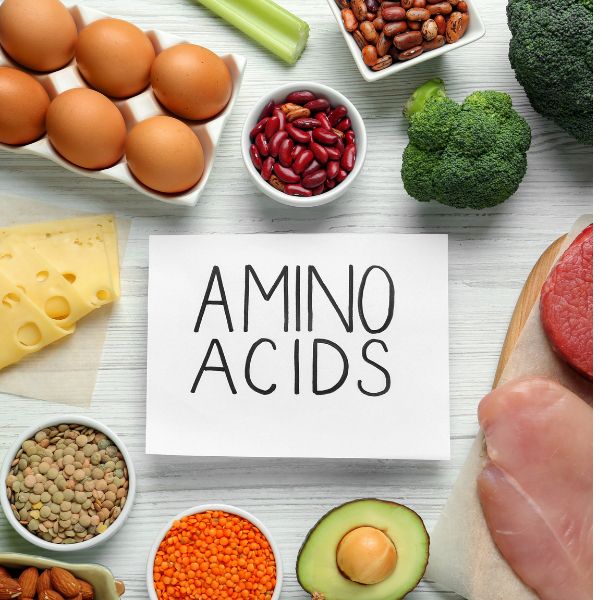
Aminozuren
Amino acids are small organic compounds that together form the building blocks of proteins. There are different types of amino acids, some of which must be obtained through food, while others can be produced by the body.
In our amino acids category, you will find a selection of high-quality products. These include individual amino acids, as well as complexes and special derivatives.
By Stefan, last updated 16-10-2025
Contents
- Our favourite amino acid supplements
- What are amino acids?
- What do amino acids do?
- How many amino acids are there?
- Essential amino acids
- L Lysine
- Sources
Our favourite amino acid supplements
- L-Lysine (capsules) by Morgen is Nu
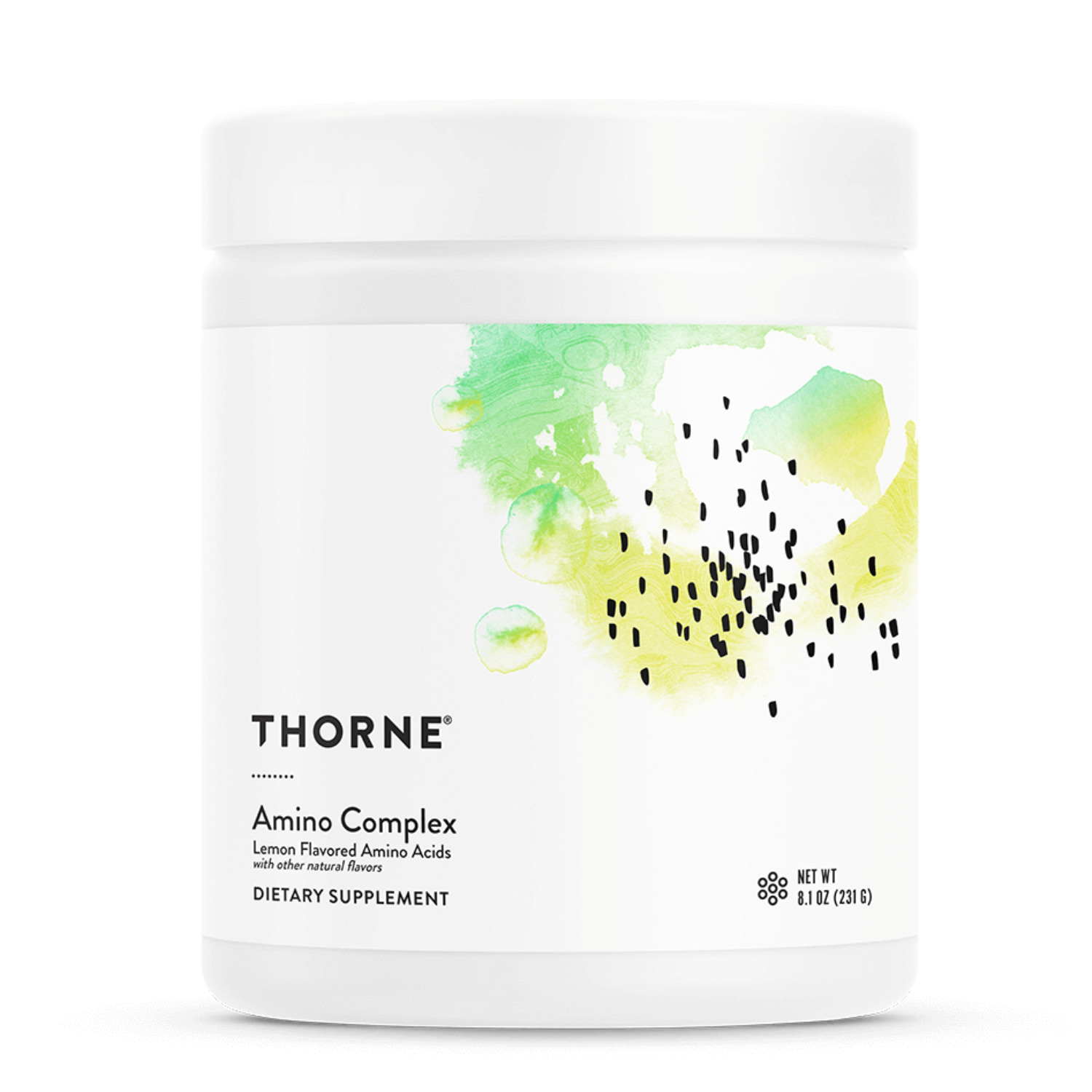
- Aminozuren (capsules) by The Health Factory
- L-Arginine (capsules) by Thorne
What are amino acids?
Amino acids are small organic molecules that join together to form long chains: proteins. You could think of them as the letters of an alphabet: with 20 standard amino acids, the body can make an endless number of ‘words’ (proteins). The body can produce some amino acids itself (non-essential amino acids), while others must come from food (essential amino acids). (source) & (source)
Well-known dietary sources of amino acids include eggs, pulses, meat, fish, nuts and seeds. Grains and vegetables also contain amino acids in varying proportions.
What do amino acids do?
Amino acids are best known as the building blocks of proteins, but their role extends beyond this. Within the body, they take part in a range of biochemical processes that support many different functions.
For example, some amino acids are used as raw materials for substances that act as hormones. (source) Other amino acids are involved in conversion processes that lead to the formation of signalling substances, such as neurotransmitters. (source) Many enzymes in the body also rely partly on amino acids for their structure and function. (source)
The scientific Literatuur has also extensively examined the relationship between certain amino acids, including glutamine, arginine and cysteine, and processes associated with the immune system. (source) & (source)
Although these studies show that amino acids play a role in the body in many ways, their most fundamental function remains to serve as the building blocks of proteins, which are found throughout our bodies.
How many amino acids are there?
More than 300 amino acids have been described in total, but only 20 are routinely used to build proteins. These 20 amino acids are known as the “standard amino acids”. There are also special amino acids and derivatives, such as taurine or GABA, which play a role in other biological processes. (source)
Essential amino acids
Of the 20 standard amino acids, 9 are essential. This means that your body cannot produce them itself and you need to obtain them through food. These are:
- Phenylalanine
- Histidine
- Isoleucine
- Leucine
- Lysine
- Methionine
- Threonine
- Tryptophan
- Valine
Essential amino acids are found in protein-rich foods and amino acid supplements.
L Lysine
Among amino acids, L-Lysine often receives extra attention because this particular amino acid is also available as a standalone supplement. It is one of the nine essential amino acids, which means that the body cannot produce it itself and it must therefore be obtained through food.
L-Lysine is one of the building blocks that make up proteins. It occurs naturally in various foods, including pulses, grains and other protein-rich foods.
Research into the safety of L-Lysine shows that a daily intake of up to 6000 mg is generally well tolerated. Mild, temporary gastrointestinal symptoms have been reported in only a few cases. (source) L-Lysine is therefore considered in the scientific Literatuur to be an amino acid that can be used safely within these limits.
Sources

120 capsules | Capsules | United States of America
Our mission is to help people choose their health products with the right information
Amino acids are small organic compounds that together form the building blocks of proteins. They are used to build many different proteins found both in food and in the body. There are twenty so-called “standard amino acids” that form proteins in different combinations.
All protein-rich foods contain amino acids. Examples include eggs, pulses, meat, fish, nuts and seeds. Grains and certain vegetables also provide amino acids, although the amount and composition vary depending on the food source.
In total, more than 300 amino acids have been identified in nature. Of these, twenty are routinely used to build proteins in the human body. Nine of these twenty are essential, which means they must be obtained through food.
Amino acids occur naturally in food. When taken as supplements, most amino acids have no known adverse effects if taken in normal amounts. Research has looked at the safety of specific amino acids, such as L-Lysine. It suggests that a daily intake of up to 6000 mg is generally well tolerated, although mild, temporary digestive complaints have occasionally been reported. It is always sensible to follow the recommended dosage when taking supplements. If in doubt, consult a doctor or qualified professional.
No, collagen is not an amino acid. Collagen is a protein made up of a combination of different amino acids, including glycine, proline and hydroxyproline. Supplements containing collagen or plant-based collagen building blocks therefore contain several amino acids in specific proportions.
Amino acid deficiencies are generally uncommon in Western diets, as amino acids are abundant in protein-rich foods. If the diet consistently provides too little protein, this can affect the formation of proteins in the body. Scientific Literatuur describes various consequences of protein malnutrition, but this is medical information and does not apply directly to the normal use of amino acid supplements.
There is no single guideline on when to take amino acid supplements. This can vary depending on the type of supplement and the product. Many manufacturers recommend taking amino acids with or around mealtimes so they can be absorbed well. For specific advice, it is always best to follow the instructions on the supplement label.
In some situations, people choose to use supplements to support their overall nutritional intake. Supplements are not medicines and do not replace a healthy diet or medical advice.
If you have specific health concerns, take medication or have particular circumstances, it is advisable to seek professional advice first.