
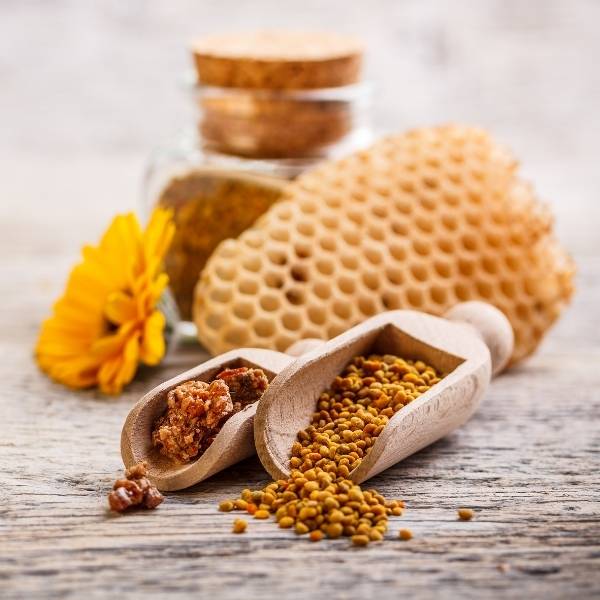
Propolis
Are you looking for pure propolis (also known as bee propolis or “bee glue”)? At Morgen is Nu, you’ll find high-quality propolis tinctures. These alcohol-free propolis drops fit into a natural, mindful lifestyle. Below, you can read about what propolis is, how bees use it, what it contains and how extraction works.
By Lisanne, last updated: 15-09-2025.
Contents
- Our favourite propolis tinctures
- What is propolis?
- Bee propolis
- The composition of propolis
- Propolis extraction
- Sources
Our favourite propolis tinctures
- Propolis Extract (liquid) by Nature’s Answer
- PropolisPure (liquid extract) by Vimergy
What is propolis?
Propolis is a sticky substance made by honeybees from plant resins, beeswax and enzymes from saliva. In nature, bees use it as a kind of “sealant” for the hive. Its exact composition varies by region, season, local plant life and breed of bee. (source & source)
Bee propolis
Propolis is a remarkable substance. For bees, it is essential. They use this sticky resin to seal every small gap in the hive, keeping out draughts, moisture and intruders. It acts as natural insulation and also strengthens the honeycomb. But propolis does more: bees spread it around openings and inside brood cells, keeping their living environment clean and protected. You could think of it as the colony’s “medicine cabinet”, a collective way of safeguarding the health of the colony. (source & source)
The composition of propolis
What makes propolis so special is its rich mix of polyphenols, particularly flavonoids and phenolic acids. Researchers often mention compounds such as chrysin, galangin, pinocembrin, pinobanksin-3O-acetate and caffeic acid derivatives, such as CAPE (caffeic acid phenethyl ester). Exactly which compounds are present depends largely on the environment in which the bees collect their resins. European and North American poplar-type propolis, for example, is known for its specific polyphenols, while Brazilian “green” and “red” propolis each contain their own unique molecules. (source)
Researchers have studied the presence of certain flavonoids and phenolic acids in propolis in relation to various biological activities. These relationships are still being studied scientifically. (source & source)
Propolis extraction
How propolis is extracted makes a considerable difference to the properties of the finished product. Traditionally, the resin is dissolved in a mixture of water and alcohol, producing a propolis tincture. Modern methods have also been developed, including extraction with glycerol or propylene glycol, as well as innovative techniques using ultrasound, microwaves or even supercritical CO₂. These methods can increase the yield and produce a cleaner, more consistent extract.
It is worth knowing that the two liquid propolis extracts in our range are alcohol-free. This makes them an accessible choice for anyone wishing to avoid alcohol. Whichever method is used, the aim remains the same: to make the valuable polyphenols and flavonoids from raw propolis available in a stable, pure and usable form. (source)
Sources

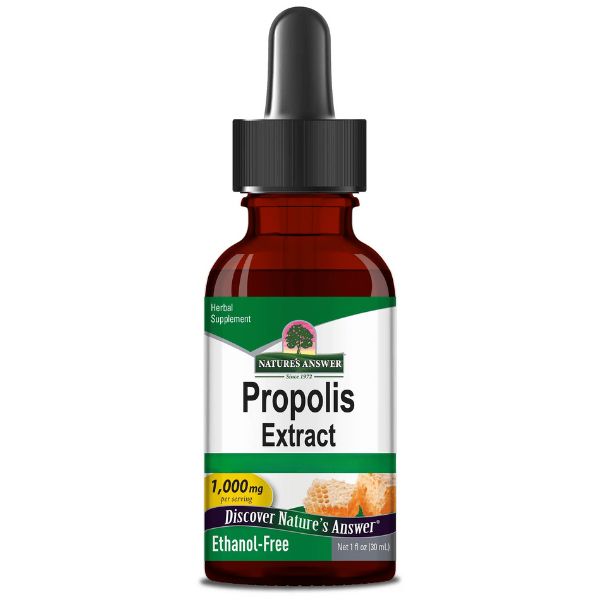
30ml | Liquid | United States of America
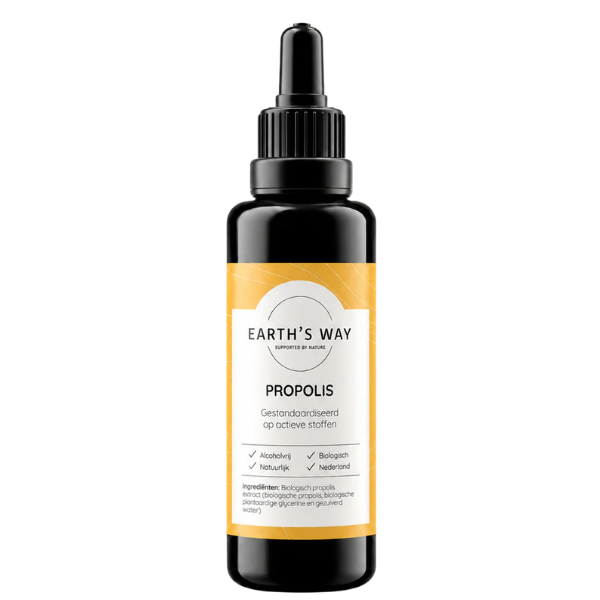


Our mission is that people with the correct information choose their health products
- Nature’s Answer Propolis: 1 ml per day (= approx. 40 drops), diluted in 30 ml of water. Hold this in your mouth briefly (approx. 30 seconds), then swallow.
- Vimergy PropolisPure: 2 dropperfuls per day (= approx. 2 ml, 60–64 drops). Shake well before use.