

L Lysine
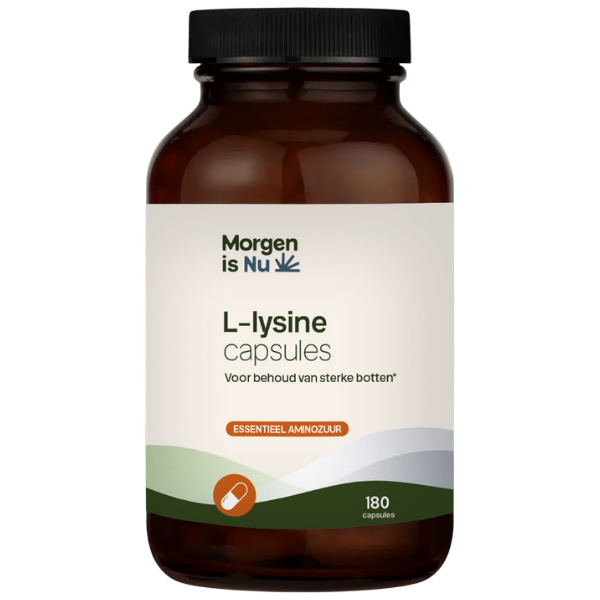
L Lysine is a relatively small but important amino acid. It is one of the nine essential amino acids, which means the body cannot produce it itself or make it from other amino acids. We therefore rely entirely on our diet and/or supplements to obtain it. Read more about how this amino acid works and its benefits here.
By Stefan, last updated 27-03-2025
Contents
- What is L Lysine?
- The use of L Lysine over the years
- How does L Lysine work?
- The role of L Lysine in bone health
- Possible side effects of L Lysine
- Which foods contain L Lysine?
- Sources
What is L Lysine?
L Lysine is one of the essential amino acids that the body cannot produce itself. It is therefore important to obtain it daily through food or supplements. It belongs to the group of alpha-amino acids, which are involved in protein synthesis in the body. Lysine is naturally found mainly in animal sources such as meat, fish and poultry. Plant sources such as pulses also contain it, but in smaller amounts.
The recommended daily intake for adults is around 30 mg per kilogram of body weight.
The use of L Lysine over the years
L Lysine was first isolated in 1889 from casein, a milk protein. In 1928, researchers succeeded in preparing L Lysine in crystalline form, laying the groundwork for further research and applications. (source)
Today, L Lysine is used in food supplements worldwide. This is hardly surprising, given the many things this important amino acid does in our bodies. It is also used in livestock farming to improve the nutritional value of animal feed.
How does L Lysine work?
This substance is an essential amino acid that our bodies need to make proteins. These proteins are then used in many different important processes in the body. Without lysine, your body would not be able to carry these out optimally. For example, L Lysine contributes to maintaining strong bones* (source). We explain more about this in the next paragraph.
The role of L Lysine in bone health
Recent research shows that L-Lysine makes an important contribution to the growth and development of children and adolescents. Supplementation with this amino acid improves nitrogen retention in the body, a crucial factor in building and maintaining body tissues, including bone tissue. The study also showed improvements in height and weight, indicating a positive effect on physical growth. In addition, L-Lysine promotes the absorption of calcium, a mineral essential for healthy bones (source).
Possible side effects of L Lysine
L Lysine is generally well tolerated and is safe in normal amounts. At extremely high doses, some people may experience mild stomach discomfort, nausea or diarrhoea. It is therefore always advisable to follow the recommended dosage and consult a healthcare professional if in doubt. (source)
Which foods contain L Lysine?
L Lysine is an essential amino acid that our bodies cannot produce themselves and must therefore obtain from food. Rich sources of L Lysine include meat, fish, dairy products, eggs and certain plant foods such as pulses and soya. (source)
Sources
"Lovely service. Lovely service. Fast dispatch. Good communication. I always get my supplements from Morgen is Nu. A clear and transparent webshop"
- Myrthel
Date of experience: 27 January 2025
View all reviews
Our vision at Morgen is Nu: holistic health and wellbeing
At Morgen is Nu, everything revolves around finding balance. We offer natural products that contribute to both physical and mental health. For us, wellbeing is the result of harmony between body, mind and the world around us. Read more about our vision and background.
Telephone: 0341 – 422 850