
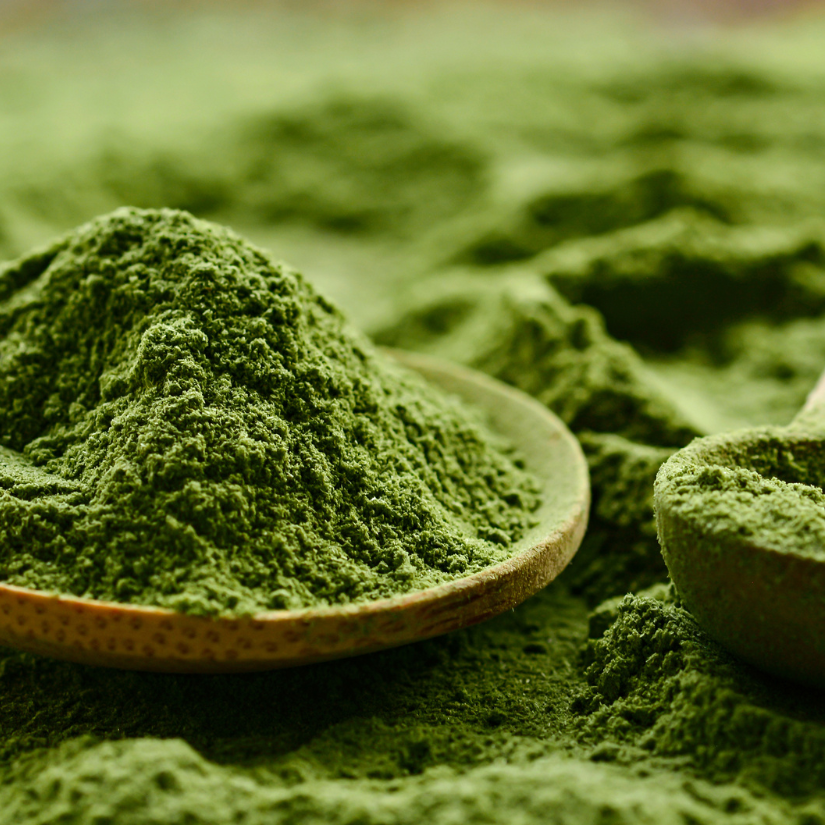
Marine Phytoplankton
Good news: a new Marine Phytoplankton product will soon be joining our range. More information coming soon!
Marine Phytoplankton has been regarded as the foundation of ocean life for billions of years. But did you know that this microscopic alga is also one of the most nutritious food sources in the world? With its rich combination of essential nutrients and the unique way it is absorbed by the body, we believe Marine Phytoplankton is one of the healthiest products you can add to your daily diet.
By Stefan, last updated 05-03-2025
Contents
- What is Marine Phytoplankton
- The origins of Marine Phytoplankton
- What makes Marine Phytoplankton special?
- The benefits of Marine Phytoplankton
- A sustainable, environmentally friendly alternative to fish oil
- Sources
What is Marine Phytoplankton
Marine Phytoplankton is a microscopic saltwater alga at the base of the ocean food chain. This single-celled alga is a rich source of nutrients, including essential fatty acids, amino acids, vitamins and minerals. It is also one of the most important oxygen producers on Earth, responsible for around 90% of the oxygen in our atmosphere, many times more than all plants and trees combined (source).
Did you know? Marine Phytoplankton is the whale's main source of food. The world's largest mammal grows to around 25 metres in length and lives for between 70 and 200 years.
The origins of Marine Phytoplankton
The origins of Marine Phytoplankton go back billions of years. Scientists estimate that these microalgae have existed for more than three billion years and have played a crucial role in the evolution of life on Earth. Through photosynthesis, Marine Phytoplankton has helped to form our atmosphere and bring about complex life forms. Today, it remains an essential part of the ecosystem, both in the ocean and in our diet.
What makes Marine Phytoplankton special?
Scientific research shows that one particular species stands out for its nutritional profile: nannochloropsis gaditana. This microalga contains a wide range of essential nutrients that can be absorbed directly by the body, without needing to be digested first (source).
The main nutrients in Marine Phytoplankton are:
- Protein (over 60%)
- Chlorophyll
- Vitamins A, B1, B2, B3, B5, B6, B12, C and E
- Antioxidants
- Minerals such as calcium, phosphorus, potassium, sodium and magnesium
- Trace elements such as selenium, iodine, zinc and iron
- Polysaccharides
- All 9 essential amino acids
- Nucleotides
- Omega-3 and -6 fatty acids, with a particularly high concentration of EPA (eicosapentaenoic acid)
This unique composition means Marine Phytoplankton is regarded as one of the most complete food sources on Earth.
The benefits of Marine Phytoplankton
Thanks to these properties, Marine Phytoplankton has countless benefits for our bodies, and we believe it may well be the most powerful and healthiest product in the world. Here are some of its main benefits:
- Rich in protein and amino acids: contains all 9 essential amino acids our bodies need.
- A unique source of omega fatty acids: Marine Phytoplankton is a direct, pure source of omega 3 fatty acids. In the ocean, fish and krill obtain their omega fatty acids by eating Phytoplankton. By choosing Phytoplankton directly, you get these valuable fatty acids without any intermediate steps.
- Essential minerals and trace elements: contains naturally occurring amounts of iodine, iron and manganese, which play a role in all kinds of important bodily processes.
A sustainable, environmentally friendly alternative to fish oil
Marine Phytoplankton is a powerful source of nutrients and a more sustainable alternative to fish oil. While fish oil production contributes to overfishing and disruption of the ecosystem, Marine Phytoplankton is grown in an environmentally friendly way, without harming the oceans. This microscopic seaweed grows in controlled environments, placing no pressure on natural marine biodiversity. This gives you a pure, plant-based source of omega fatty acids and a conscious, sustainable choice (source).
Sources
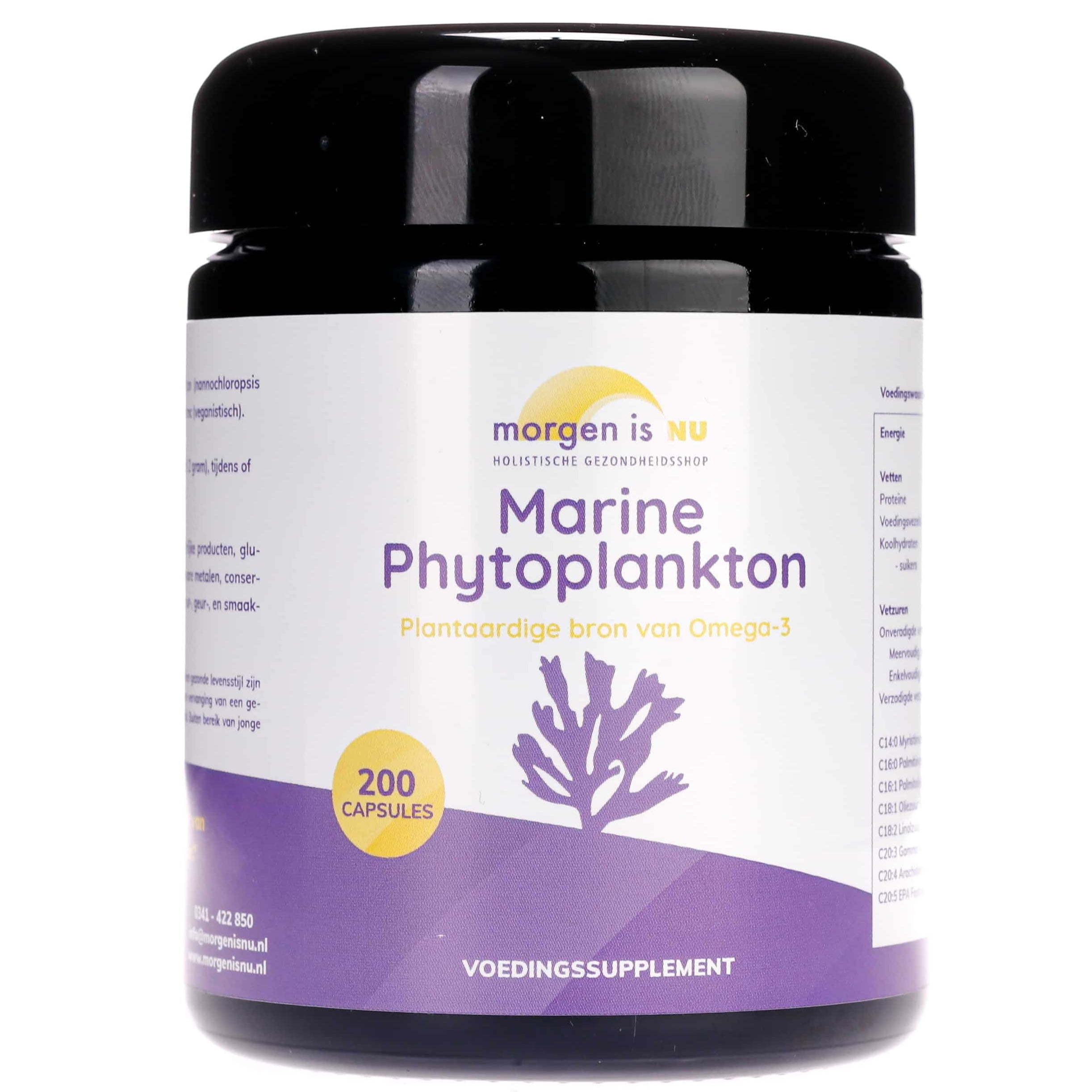
100 grams, 200 capsules | Powder, Capsules | Iodine, Iron, Manganese | Netherlands
"Brilliant. Fast delivery. Products neatly and securely packed. Clear website with detailed product information. Just brilliant. I've been ordering from them for a while and have had 1 problem with a product that didn't seem quite right to me. I explained the issue and received a replacement. A decent company with good products. 100% recommended."
- RK
Date of experience: 08 October 2024
View all reviews
About Morgen is Nu - Holistic health shop
Morgen is Nu has a rich history and a unique approach to health, which is why we only sell the healthiest, natural products. We believe that a balance between physical, internal and external factors is essential for a long and healthy life. Discover our full philosophy and history.
Telephone: 0341 – 422 850
Our mission is to help people choose their health products with the right information
Marine Phytoplankton is known as a rich and complete source of nutrients from the ocean. It naturally contains omega-3 fatty acids, such as EPA, as well as antioxidants, amino acids, vitamins and minerals. This makes it a valuable addition to a varied diet.
What makes Marine Phytoplankton unique is that it contains all the essential amino acids, the building blocks of protein that our bodies need. It is also a direct and pure source of omega-3 fatty acids, without the use of fish or krill. It is naturally rich in important minerals and trace elements such as iodine, iron and manganese, which play a role in various processes in the body.
Yes, Marine Phytoplankton is generally well tolerated and safe for daily use. We do recommend starting slowly and paying close attention to how your body responds. Are you taking medication or do you have a specific medical condition? Consult a doctor before use. During pregnancy and breastfeeding, it is always advisable to seek professional advice first.
In principle, Marine Phytoplankton is a safe and natural product, but we recommend being cautious with the dosage for children. Are you considering giving Marine Phytoplankton to children? It is advisable to consult a doctor or nutritionist first, particularly for young children or long-term use.
Although spirulina, Chlorella and Marine Phytoplankton are all microalgae, they differ in composition. Marine Phytoplankton contains unique omega-3 fatty acids such as EPA, which are barely present in spirulina and Chlorella. Phytoplankton is also often better absorbed and works more deeply at a cellular level. Many people therefore specifically choose Marine Phytoplankton as a high-quality addition to their diet.
Marine Phytoplankton has a mild, slightly salty taste reminiscent of the sea. That makes sense, as it originally comes from salt water. Many people enjoy the taste mixed with vegetable juice, a smoothie or even just a glass of water. Want to soften the taste a little? Try combining it with citrus fruit or ginger.
Absolutely! Marine Phytoplankton is entirely plant-based and is derived from microalgae. This makes it an excellent source of nutrients including EPA omega-3 fatty acids for people who do not eat fish or other animal products. Many vegans specifically choose Marine Phytoplankton to supplement their diet.