
Kelp
Looking to buy a product containing Kelp? Kelp is a collective name for a family of seaweeds, all known for their high iodine content and yellow-brown pigments. Because of their iodine content, these seaweeds are used worldwide to support normal thyroid function, among other things, and also contribute to normal energy-yielding metabolism. Find out all about Kelp, its nutrients and how it differs from other seaweeds, such as Dulse or Iers Mos.
By Ruby, last updated: 16-10-2025.
Contents
- What is Kelp
- Kelp in food supplements
- The nutrients in Kelp
- What is the difference between Kelp and other seaweeds?
What is Kelp
Kelp is a collective name for a family of seaweeds. In plant biology, Kelp species include the botanical genera Laminaria, Macrocystis and Nereocystis. They all belong to the group known as brown algae. They are called brown algae because they are all brown in colour, due to the predominance of yellow-brown pigments (called fucoxanthin). Brown algae include the largest seaweeds in the world. Kelp species of the genus Laminaria growing along the west coast of America, for example, can easily reach 50 metres in length.
What makes Kelp so special is its wide range of minerals and trace elements, particularly iodine. The trace element iodine is essential for the production of thyroid hormones and therefore contributes to normal thyroid hormone production
Kelp in food supplements
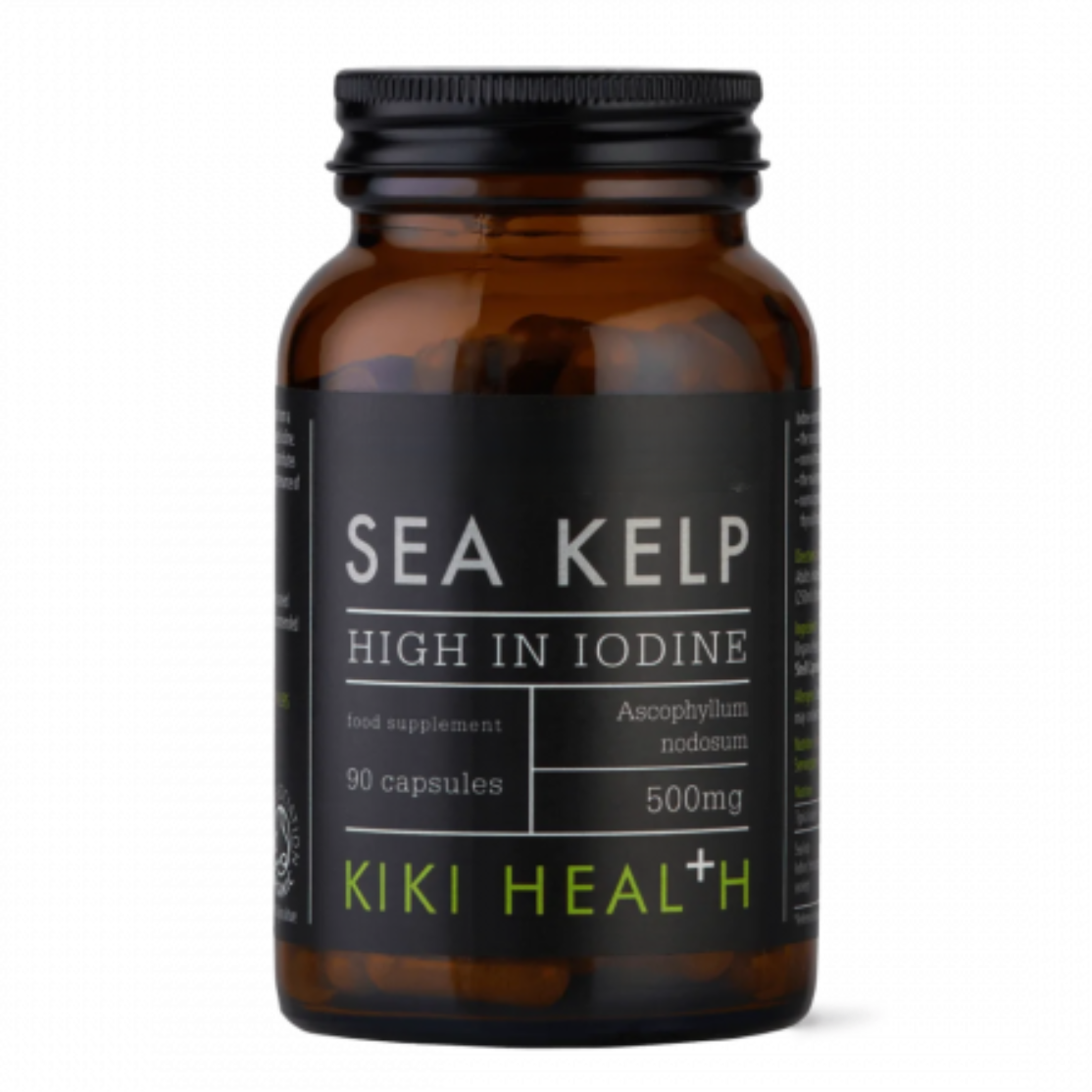
Interestingly, the Kelp species used in food supplements often do not belong to the Kelp family as defined in plant biology. In many cases, they are other seaweeds from the brown algae group, namely bladderwrack (botanical name: Fucus vesiculosis), knotted wrack (botanical name: Ascophyllum nodosum) or sea oak (botanical name: Fucus serratus or Fucus spiralis). At first glance, this is a little odd. But what’s in a name? Bladderwrack and knotted wrack in particular are among the most extensively studied seaweeds in the world. There is more scientific research into the composition, safety and effectiveness of bladderwrack and knotted wrack than into the species biologically classified as Kelp.
We do, however, advise against using food supplements containing sea oak (botanical name: Fucus serratus or Fucus spiralis) . In our view, there is insufficient scientific research to guarantee its safety and effectiveness.
The nutrients in Kelp
Kelp is naturally rich in essential nutrients, with minerals and trace elements standing out in particular. Kelp contains all the minerals and trace elements also found in the sea.
These are its most notable nutrients:
- Minerals: contains calcium, iron, iodine, potassium, copper, magnesium and sodium, among others.
- Vitamins: contains provitamin A (beta-carotene), vitamin B complex; vitamin B1 (thiamine), vitamin B2 (riboflavin), vitamin B3 (niacin), vitamin B6 (pyridoxine), vitamin B8 (inositol), vitamin B11 (folic acid) and vitamin B12 (cobalamin), vitamin C (ascorbic acid) and vitamin E (tocopherol), among others
- Omega fatty acids: contains small amounts of omega-3 fatty acids
- Polyphenols: rich in fucoxanthin.
- Simple sugars: contains mannitol.
These nutrients make Kelp a versatile addition to the diet.
What is the difference between Kelp and other seaweeds?
In everyday language, the names Kelp and seaweed are sometimes used interchangeably. However, there are many species of seaweed worldwide. There are estimated to be at least 10,000 species. These species are divided into 3 groups according to colour: brown algae, red algae and green algae. Kelp belongs to the brown algae group. As you have read, brown algae are characterised by their yellow-brown pigments, called fucoxanthin, and their high iodine content. Red algae, on the other hand, are characterised by their red pigments, called astaxanthin. Well-known red algae used in food supplements include Dulse and Iers Mos. Green algae are characterised by their green pigment, chlorophyll. Green algae include, for example, Spirulina and Chlorella. However, these are not officially seaweeds like kelp, because they only live in fresh and brackish water.
"Ordered about 20 times already. Reliable, speedy delivery
I've ordered products from Morgen is Nu about 20 times now. The orders always arrive promptly and in good order. Their products are very good."
- Pieter
Date of experience: 02 June 2025
View all reviews
About Morgen is Nu - Holistic health shop
At Morgen is Nu, we work every day to support your health. Guided by a unique vision and years of experience, we select only the purest, highest-quality products. We believe in a holistic approach centred on physical, inner and outer balance.
Telephone: 0341 - 422 850