
Goldenseal (Canadian Goldenseal)
Curious about the power of Goldenseal? Canadian goldenseal (Hydrastis canadensis) has been used in traditional herbal medicine for centuries. The root in particular contains many potent compounds. Find out more about Canadian goldenseal on this page!
By Stefan, last updated: 12-06-2025.
Contents
- Our favourite Goldenseal supplements
- What is Goldenseal?
- Historical uses of Goldenseal
- Compounds in Goldenseal
- Interactions and contraindications
- Taking Goldenseal
- Sources
Our favourite Goldenseal supplements
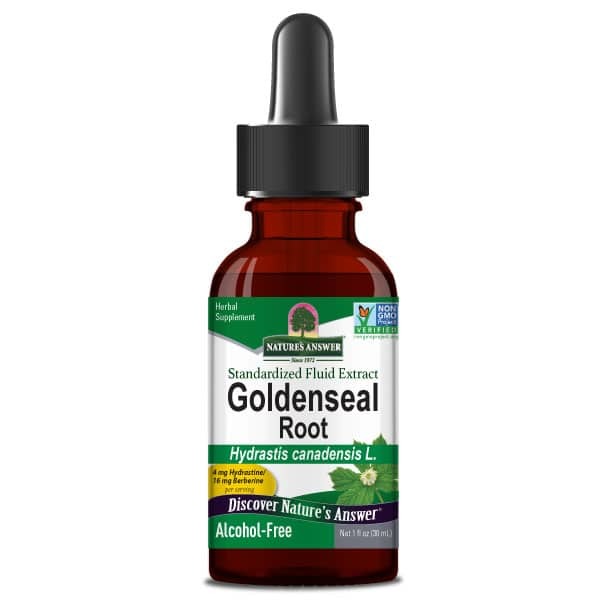
- Goldenseal Root (Geelwortel) by Nature’s Answer
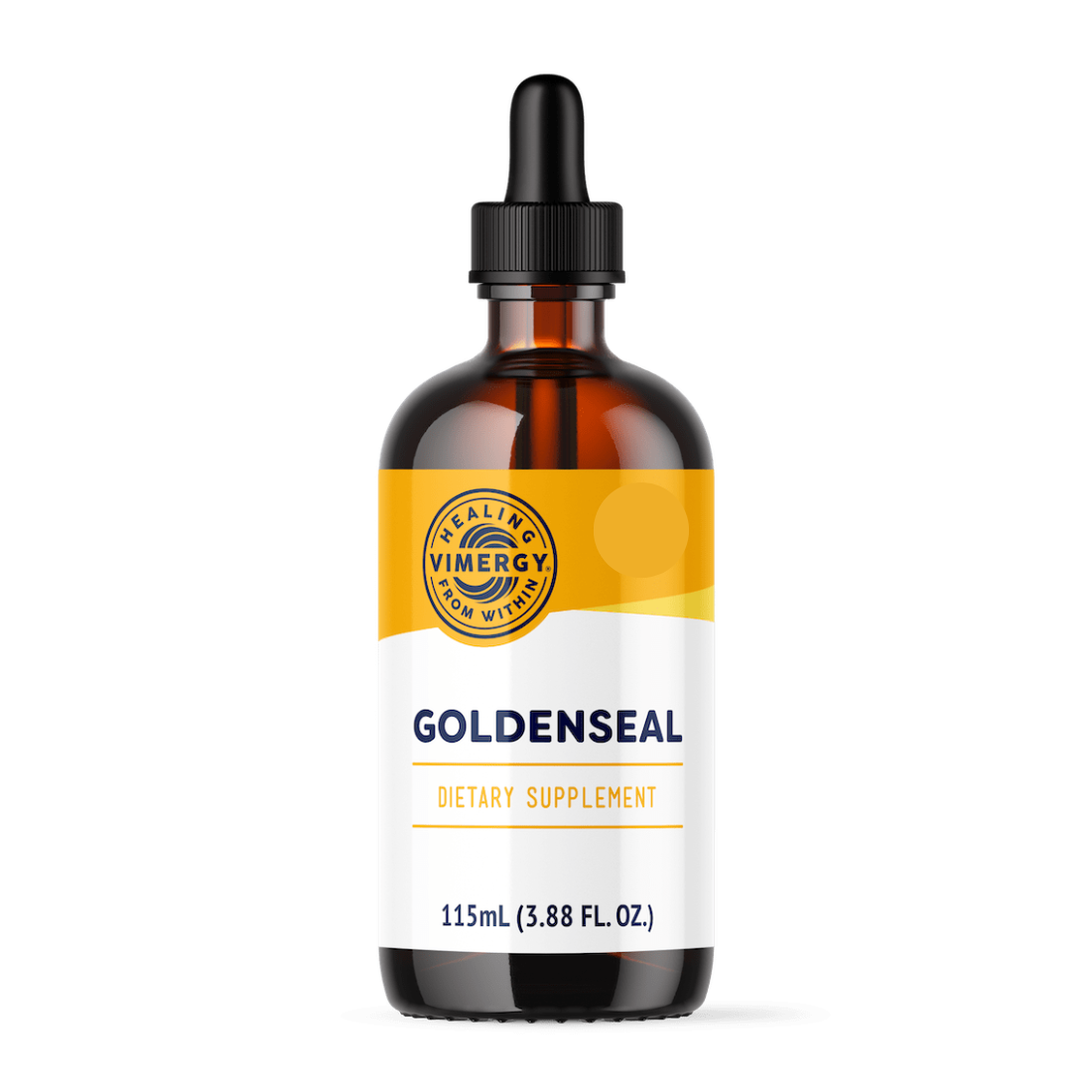
- Goldenseal 10:1 by Vimergy
- Echinacea Goldenseal by Gaia Herbs
What is Goldenseal?
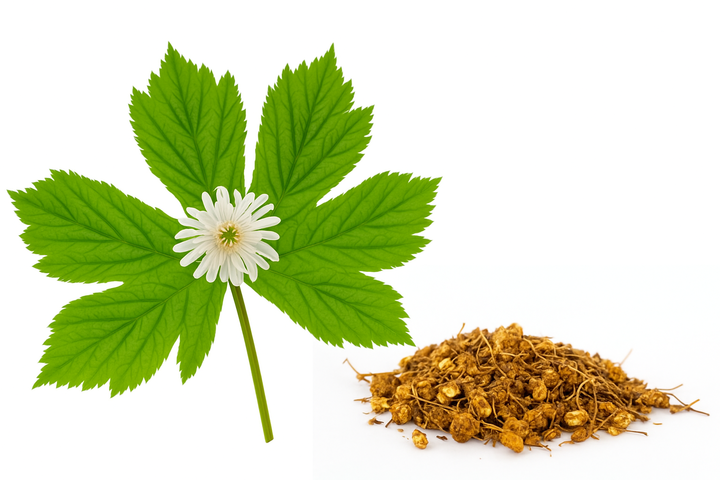
Goldenseal, also known as Canadian goldenseal, is a perennial plant native to North America. Its botanical name is Hydrastis canadensis. It belongs to the buttercup family (Ranunculaceae) and grows mainly in shady woodlands in the eastern United States and Canada.
The plant grows to around 30 centimetres tall and can be recognised by its lobed leaves and distinctive yellow rhizome. It is this root that is most commonly used, both traditionally and in modern supplements. Goldenseal has long been known for its strong, bitter taste and is now mainly used as an extract, powder or in capsules.
Historical uses of Goldenseal
Goldenseal (Hydrastis canadensis) has a long history of use among Indigenous peoples in North America. The root of the plant was traditionally used for a variety of purposes within their cultures. These included rituals (source), use as a natural dye for clothing and body decoration, and keeping unwanted insects away. In times of scarcity, the root was also used as a food source. (source)
The roots are generally only harvested when the plant is three to four years old, contributing to a careful and sustainable harvesting process.
Compounds in Goldenseal
The power of Goldenseal lies in its bitter alkaloids. The main ones are:
- Berberine: the most commonly mentioned compound in Goldenseal, and the subject of extensive research for many years.
- Hydrastine: contributes to the yellow colour of the root and has been studied since the 19th century.
- Canadine: less well known, but often mentioned as one of the accompanying alkaloids in the plant.
Goldenseal also contains tannins, resins and traces of essential oils. The exact composition depends on the plant, its origin and how it is processed. (source)
Interactions and contraindications
We always want to keep our customers as well informed as possible, so it is important to mention that, despite its wide-ranging health benefits, Goldenseal is not suitable for everyone. Canadian goldenseal appears to be able to promote uterine contractions, so we advise against using Goldenseal during pregnancy. It is also not recommended to take Canadian goldenseal for more than three consecutive months, as prolonged use can reduce the absorption of other nutrients, such as B vitamins. (source)
Taking Goldenseal
Goldenseal root has an extremely bitter taste. For this reason, people often choose to take Goldenseal in extract form. Our range includes liquid extracts, although these are still rather bitter. Some producers therefore choose to add a natural flavouring, such as lemon juice.
Sources
- Goldenseal (Hydrastis canadensis): Is There Enough Scientific Evidence to Support Safety and Efficacy?
- Redox regulation in health and disease: Therapeutic potential of berberine
- Goldenseal (Hydrastis canadensis L.) and its active constituents: A critical review of their efficacy and toxicological issues
- Natural Methods for Prevention

30ml | Liquid | Echinacea | United States of America
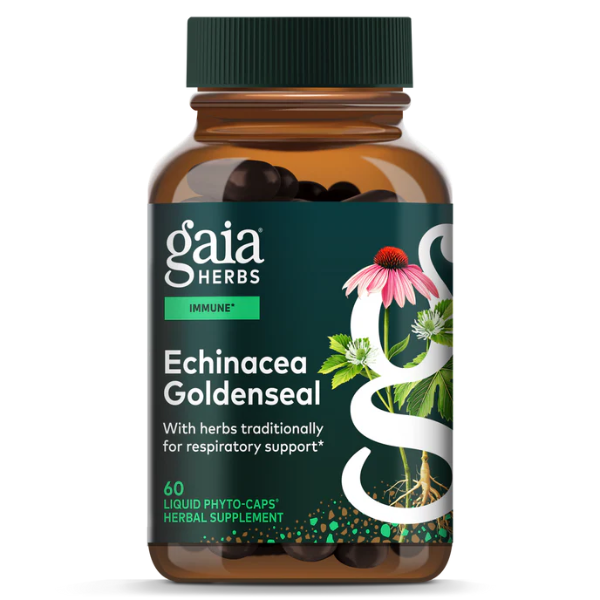
60 capsules | Capsules | Echinacea | United States of America

"Quick delivery
Quick delivery, and I was really pleased to get a message when Golden Seal from Vimergy was back in stock. Pure, reliable products. Brilliant!"
- Hizkia
Date of experience: 10 June 2025
View all reviews
About Morgen is Nu - Holistic health shop
At Morgen is Nu, we work every day to support your health. Guided by a unique vision and years of experience, we select only the purest, highest-quality products. We believe in a holistic approach centred on physical, inner and outer balance.
Telephone: 0341 422 850
Our mission is that people with the correct information choose their health products
Goldenseal is traditionally used as part of a mindful lifestyle. The root of this plant naturally contains substances such as Berberine and hydrastine, which have been the subject of research and traditional use for centuries. What it may offer you depends on your personal circumstances and diet.
No, Goldenseal and turmeric are two completely different plants. Goldenseal (Hydrastis canadensis) is a North American root plant in the buttercup family, while turmeric (Curcuma longa) is an Asian spice in the ginger family. Both have a yellow root and a long history of traditional use, but their composition and uses differ considerably.
How goldenseal (Goldenseal) works depends on the context in which it is used. The root naturally contains bitter plant compounds such as Berberine, hydrastine and canadine. These compounds have been studied for a long time, but their exact role in the body is still a subject of scientific debate.
Goldenseal is generally well tolerated when used as directed. There are a few things to bear in mind. Its use during pregnancy is discouraged, and long-term use (longer than a few months) is not recommended. In some cases, mild stomach or bowel discomfort may occur. Are you taking medication or unsure whether to use it? Always speak to a doctor or qualified professional.
Most health claims are currently linked to vitamins, minerals and fatty acids. For herbs and botanicals, discussions have been ongoing for years. Various on-hold claims have been submitted for this. These are currently awaiting approval by the European Commission. The claims may therefore currently only be used if there is scientific substantiation for the health effect.