
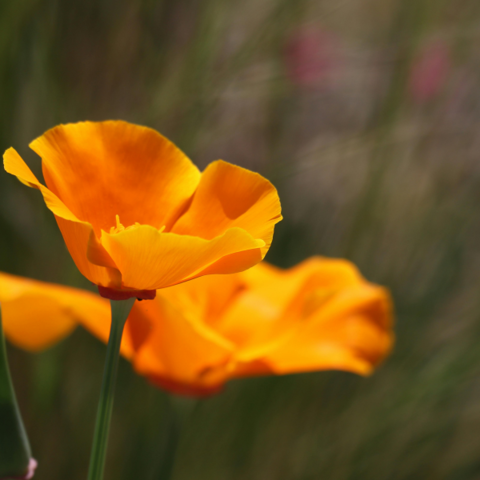
California Poppy (Dutch: slaapmutsje)
Are you looking for a herb traditionally known for its naturally calming properties*? California Poppy, known in Dutch as slaapmutsje, is a distinctive little plant with a rich botanical and cultural history. Find out more about California Poppy on this page.
By Lisanne, last updated: 17-06-2025.
Contents
- Our favourite California Poppy supplement
- What is California Poppy?
- Traditional uses of California Poppy
- The compounds in California Poppy
- The benefits of California Poppy
- Sources
Our favourite California Poppy supplement
What is California Poppy?
California Poppy (Eschscholzia californica), often called slaapmutsje in Dutch, is a flowering plant in the poppy family. The herb is native to western North America and is known for its distinctive orange flowers. These close in the evening like a little “nightcap”, which explains its Dutch name. The botanical name refers to the German physician Johann Friedrich von Eschscholtz, who described the plant in the 19th century.
In the wild, California Poppy mainly grows in sunny, dry areas such as the Mojave Desert and along the Californian coast, but it is now grown worldwide as both an ornamental plant and a medicinal herb. (source)
Traditional uses of California Poppy
California Poppy has been used for centuries by Indigenous peoples in North America. Traditionally, the plant was used for its relaxing properties*, for example as a tea or tincture made from the above-ground parts of the plant. (source)
In many cultures, California Poppy formed part of rituals surrounding sleep*. These uses have been preserved over time and still form the basis of the plant's use in herbal medicine today.
The compounds in California Poppy
The strength of California Poppy lies in its abundance of alkaloids. These are plant compounds with a specific action. In particular, California Poppy contains benzylisoquinoline alkaloids, such as californidine, escholtzine, allocryptopine and protopine.
The composition varies between parts of the plant: the roots mainly contain benzophenanthridine alkaloids (such as sanguinarine), while the above-ground parts are rich in pavine alkaloids. These compounds are central to scientific research into the possible biological effects of this plant.
The flower also contains distinctive carotenoids responsible for its striking orange colour, including eschscholtzxanthin.
The benefits of California Poppy
California Poppy is now the subject of considerable research, focusing mainly on its naturally calming action*. The two claims for California Poppy are:
- California Poppy contributes to normal sleep*
- California Poppy helps support the ability to adapt to stress*
Please note: products containing California Poppy can affect how medicines work, particularly through enzymes such as CYP3A4 and CYP2D6. Always consult a qualified professional if you take medication. (source)
* Health claim pending European approval.
Sources
- California poppy (Eschscholzia californica), the Papaveraceae golden girl model organism for evodevo and specialized metabolism
- Modulation of CYPs, P-gp, and PXR by Eschscholzia californica (California Poppy) and Its Alkaloids
- Enhancement of Macarpine Production in Eschscholzia Californica Suspension Cultures under Salicylic Acid Elicitation and Precursor Supplementation
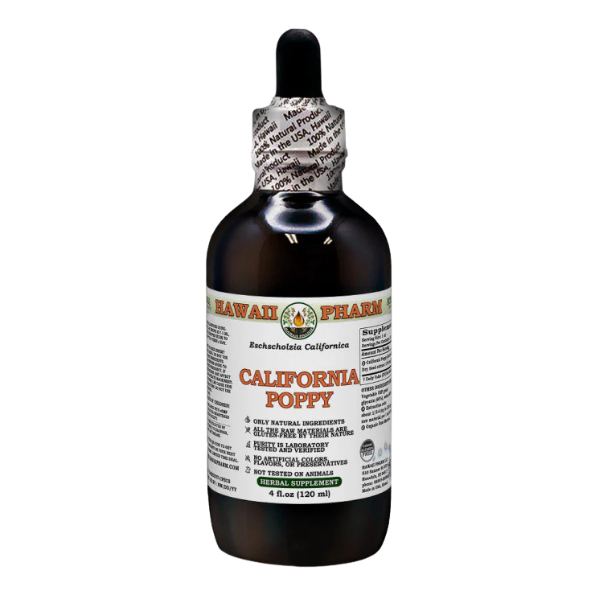
120ml, 60ml | Liquid | Slaapmutsje | United States of America
"I've ordered about 20 times now. Reliable, prompt delivery
I've ordered products from Morgen is Nu about 20 times now. Orders always arrive promptly and in good order. Their products are very good."
- Pieter
Date of experience: 02 June 2025
Read all reviews
About Morgen is Nu - Holistic health shop
At Morgen is Nu, we work every day to support your health. Guided by a unique vision and years of experience, we select only the purest, highest-quality products. We believe in a holistic approach centred on physical, inner and outer balance.
Telephone: 0341 422 850
Our mission is to help people choose their health products with the right information
Based on the current scientific Literatuur, there is no evidence that California Poppy is addictive when used in normal amounts in supplements or herbal tea. The plant does not contain opiate-like substances such as morphine, but does contain other alkaloids with a mild sedative effect. Even so, long-term or high-dose use of herbs that affect the nervous system should always be approached with care. If in doubt, consult a qualified professional.
California Poppy is generally considered safe when used in the recommended amounts. As with many plants, high doses or improper use may cause side effects. Some alkaloids from California Poppy have been studied in isolation for their biological activity, but are present in low concentrations in supplements. Always use products from a reliable source and consult a healthcare professional if you are unsure.
Please note: use by children and pregnant women is not recommended without medical advice.
California Poppy is traditionally used as a natural calming aid*. Health claims awaiting European approval suggest that it may support a normal night's sleep* and the ability to adapt to stress*. Please note: the effect varies from person to person.
* Health claim awaiting European approval.
Use of California Poppy during pregnancy or while breastfeeding is not recommended, as there is insufficient scientific research into its safety in these situations. Are you pregnant or breastfeeding? Always speak to a doctor or qualified practitioner before using herbs or supplements.
California Poppy may affect certain liver enzymes (such as CYP3A4 and CYP2D6) involved in breaking down medicines. (source) This means it could theoretically affect how some medicines work, such as sleeping tablets, antidepressants or sedatives. Are you taking medication? Always consult a doctor or pharmacist before starting a supplement containing California poppy.
Most health claims currently relate to vitamins, minerals and fatty acids. Discussions about herbs and botanicals have been ongoing for years. Various on-hold claims have been submitted for these. They are currently awaiting authorisation by the European Commission. These claims may therefore currently only be used if there is scientific evidence to support the health effect.
Herbs can have an effect on the body and may, in some cases, interact with medication or other food supplements.
You are responsible for your own use and combination of herbal supplements. Consult a doctor or pharmacist if you take medication or have health concerns. The use of herbs during pregnancy or breastfeeding is generally not recommended due to insufficient evidence of their safety. If you want to take several herbal supplements at the same time and are unsure, consult a healthcare professional.