

Pitaya (Dragon Fruit)
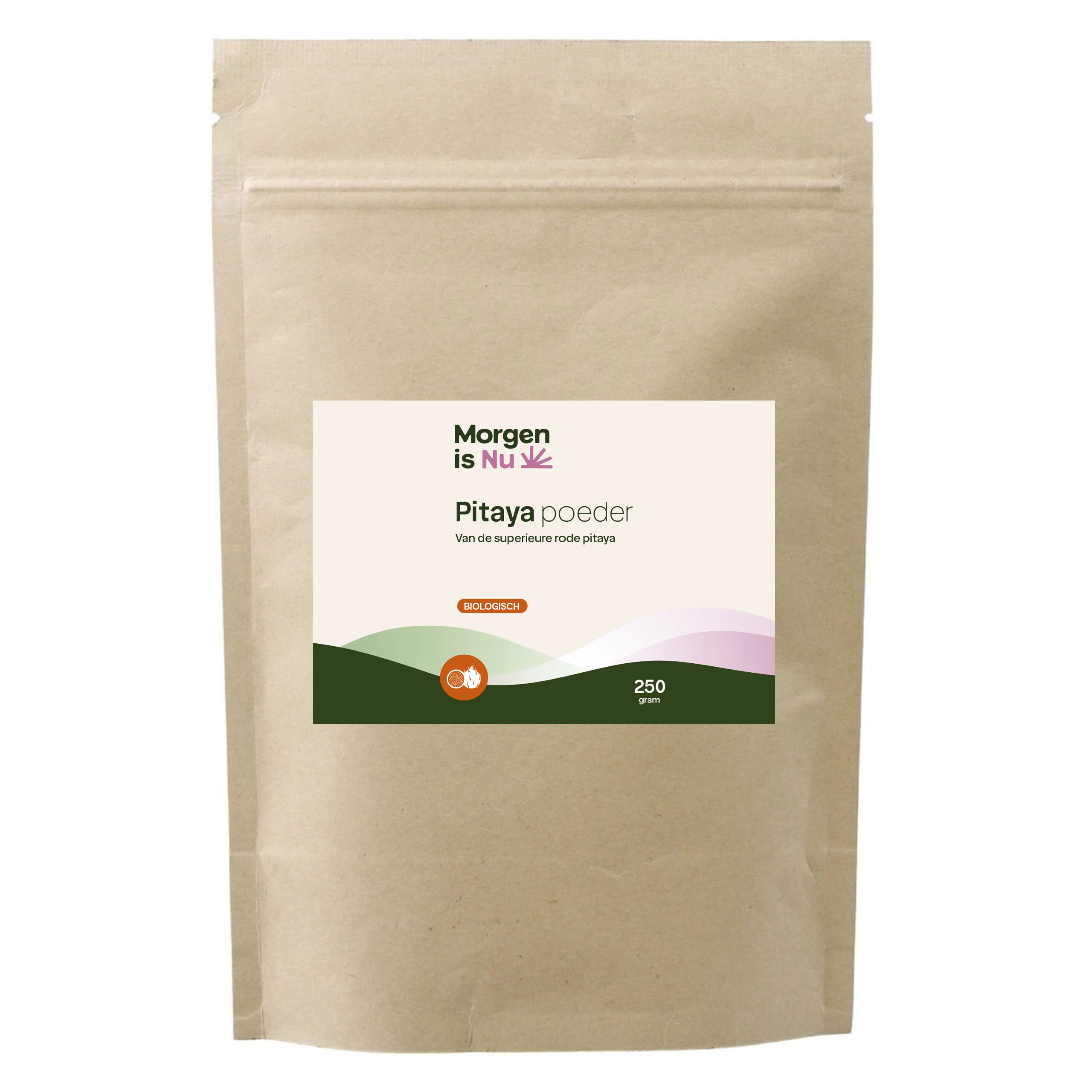
Looking to buy pitaya? At Morgen is Nu, you will find only high-quality, freeze-dried Pink Pitaya powder. Completely natural, with no additives. With its vibrant colours, this striking fruit is a pleasure to look at and a distinctive addition to a healthy, varied diet. Find out all about this cactus fruit, which is becoming increasingly popular in health-conscious kitchens around the world.
By Stefan, last updated: 26-06-2025.
Contents
- Our pitaya
- What is pitaya (dragon fruit)?
- Traditional uses and origins of pitaya
- Different types of pitaya
- The nutrients in pitaya
- Sources
Our pitaya
This organic powder comes from the red variety of dragon fruit (Pink Pitaya), known for its intense colour and rich nutritional content. The powder is freeze-dried to preserve its natural nutrients as fully as possible. This matters because it is naturally high in fibre, vitamin C, calcium and iron. Its intense pink colour makes the powder a nutritious and visually appealing addition to smoothies, yoghurt, pancakes or other dishes.
What is pitaya (dragon fruit)?
Pitaya, also known as dragon fruit, is the fruit of a cactus plant native to Central and South America. The scientific names of the most common species are Hylocereus undatus (white flesh) and Hylocereus polyrhizus (red flesh). (source)
This striking fruit has a spiky, pink skin reminiscent of a dragon's scales, hence the name dragon fruit. The flesh is juicy and mildly sweet, with small, edible black seeds.
Traditional uses and origins of pitaya
Pitaya originates from the dry, tropical regions of Mexico, Guatemala and Nicaragua. In the 19th century, French colonists introduced the fruit to Vietnam, where it has since become an important commercial crop. (source)
Traditionally, pitaya was eaten as a refreshing fruit and was also valued for its colour and seeds. In Asian countries, the fruit is often sold fresh or used in juices and desserts.
Different types of pitaya
There are several species of pitaya, the three most common being:
- Hylocereus undatus: red skin, white flesh
- Hylocereus megalanthus: yellow skin, white flesh
- Hylocereus polyrhizus: red skin, red flesh
The last variety is Pink Pitaya, which is many times richer in nutrients and flavour than the white varieties. Pink Pitaya is therefore the fruit to choose if you want to enjoy the benefits of dragon fruit.
The nutrients in pitaya
Pitaya contains a wide range of naturally occurring nutrients. These include dietary fibre, such as oligosaccharides. The fruit also contains vitamin C and natural pigments such as betalains, including betanin. Pitaya is also rich in minerals such as calcium, iron, magnesium and phosphorus. The small black seeds contain fatty acids, including linoleic acid and linolenic acid. The red variety of pitaya in particular also contains various polyphenols. (source) , (source) , (source) , (source).
Sources
- Oligosaccharides of pitaya (dragon fruit) flesh and their prebiotic properties: ScienceDirect
- Stability of betanin in pitaya powder and confection as affected by resistant maltodextrin: ScienceDirect
- The influence of the fortification of red pitaya powder on oat-wheat bread: Wiley
- Chemical composition and DSC thermal properties of seed oil of Hylocereus: ScienceDirect
Our mission is that people with the correct information choose their health products
Pitaya naturally contains a range of nutrients. The fruit contains fibre, vitamin C, calcium, iron, magnesium and phosphorus, among other nutrients. The edible seeds contain fatty acids such as linoleic acid and linolenic acid. The red variety in particular also contains natural pigments such as betalains and a variety of polyphenols.
Pitaya has a mild, slightly sweet flavour that is often described as a cross between kiwi and pear. The red variety (Pink Pitaya) generally has a slightly stronger flavour and more intense colour than the white variety.
Fresh pitaya is usually cut in half, then the flesh is scooped out with a spoon. The fruit can also be used in salads, smoothies or desserts. In powder form, Pitaya is ideal for adding to yoghurt, muesli, juice or baked goods. Its pink colour makes it a colourful and tasty addition to many dishes.
For Pitaya powder, we recommend a daily amount of 5 grams. You can easily mix it into your muesli, juice or smoothie. Do not exceed the recommended dosage unless otherwise advised by a professional.