

Glycine
Looking to buy glycine? Glycine, also known as L-Glycine, is an amino acid that occurs naturally in food and in the body. It is one of the simplest amino acids and is found in both animal and plant-based foods. Glycine is also available as a standalone supplement. On this page, you can read about what glycine is, where it is found and what makes it unique as an amino acid.
By Stefan, last updated: 01-04-2026.
Contents
- Glycine supplement in our range
- What is glycine?
- Glycine in food
- The properties of glycine
- What makes glycine unique as an amino acid?
Glycine supplement in our range
- L-Glycine (capsules) by Dr. Mercola
What is glycine?
Glycine is a non-essential amino acid. This means the body can produce it itself, including from other amino acids. You also get glycine from food.
Amino acids are small building blocks found in protein-rich foods. Glycine is the smallest amino acid and has a simple structure, with a central carbon atom to which an amino group and a carboxyl group are attached, among other things.
Labels usually state the L-form, such as L-Glycine. This is the naturally occurring form found in food and in the body.
Glycine in food
Glycine occurs naturally in a wide range of foods. Protein-rich foods in particular naturally contain glycine, such as meat, fish, poultry, dairy products and eggs.
Plant-based foods also provide glycine, including pulses, nuts, seeds and certain vegetables and grains. The amount can vary from one food to another and depends on factors such as origin and processing.
The body can also produce glycine itself. This means it is not an amino acid that has to come exclusively from food. Even so, some people choose a glycine supplement, for example for a consistent, clearly defined dosage.
The properties of glycine
Glycine is the smallest amino acid and has a simple, compact structure. As a result, it is found in various protein structures and is widely present in both animal and plant sources.
Glycine also dissolves readily in water and has a neutral taste. This makes it suitable for various supplement formats and easy to incorporate into products with a straightforward formulation.
What makes glycine unique as an amino acid?
Glycine has a number of characteristics that set it apart from other amino acids. It is the only amino acid without a complex side chain, giving it a distinctive place among amino acids.
This simple structure makes glycine clearly different from amino acids with a more complex structure. It is also often found in a variety of protein structures, in both animal and plant sources.
Within the amino acid category, glycine is therefore an accessible, straightforward choice, with a focus on simplicity and clarity.
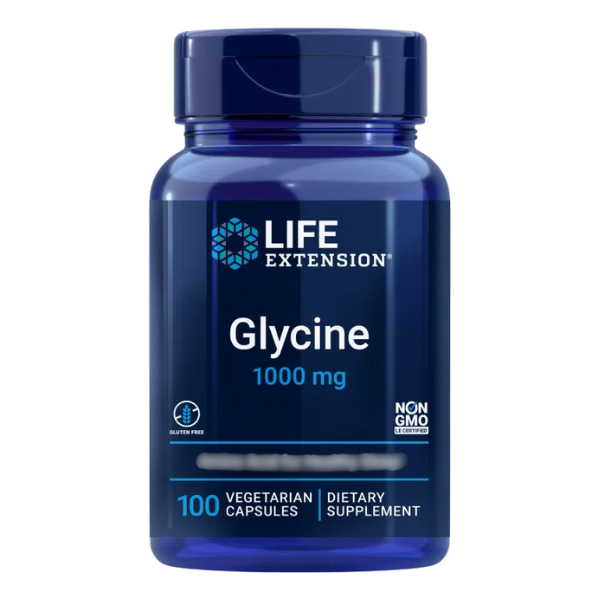
100 capsules | Capsules | United States of America

Our mission is that people with the correct information choose their health products
In practice, Glycine and L-Glycine refer to the same substance. The “L” designation indicates the specific molecular form that occurs naturally in food and in the body.
You can identify a pure glycine supplement by its clear labelling and short ingredients list. Often, glycine is the only main ingredient listed, with no unnecessary additives.
No, Glycine is found in both animal and plant-based foods. These include meat, fish and dairy products, as well as pulses, nuts, seeds and grains.
No, glycine is a non-essential amino acid. This means the body can produce it itself.
Glycine is available as a food supplement with a set dose per product. It is best to follow the recommended dosage on the label.