Before you read on
Strict rules apply to what may and may not be said about food supplements. We are bound by this European legislation and therefore choose our wording carefully. Medical claims, for example, are not permitted, and health claims relating to botanical ingredients must include a disclaimer. We also do not always mention every scientific source, as we are responsible for the exact wording to which reference is made.
Read more here about how we handle health claims and regulations.
Some natural products are so remarkable that their story is every bit as fascinating as the product itself. Propolis is a good example. This sticky bee product is created through the interaction between plants and honeybees and has been valued by various cultures for centuries. But what exactly is propolis, how do bees use it and why does it remain such an interesting subject of scientific research to this day?
In this blog, we take you into the world of propolis, from its origins in the beehive to its unique composition and the way this remarkable natural product finds its place in our daily routine.
Contents
- What is propolis?
- The role of propolis in the beehive
- A complex natural product
- Propolis from a historical perspective
- From resin to tincture: how propolis is processed
- Quality and sensitivity
- Our view of propolis
What is propolis?
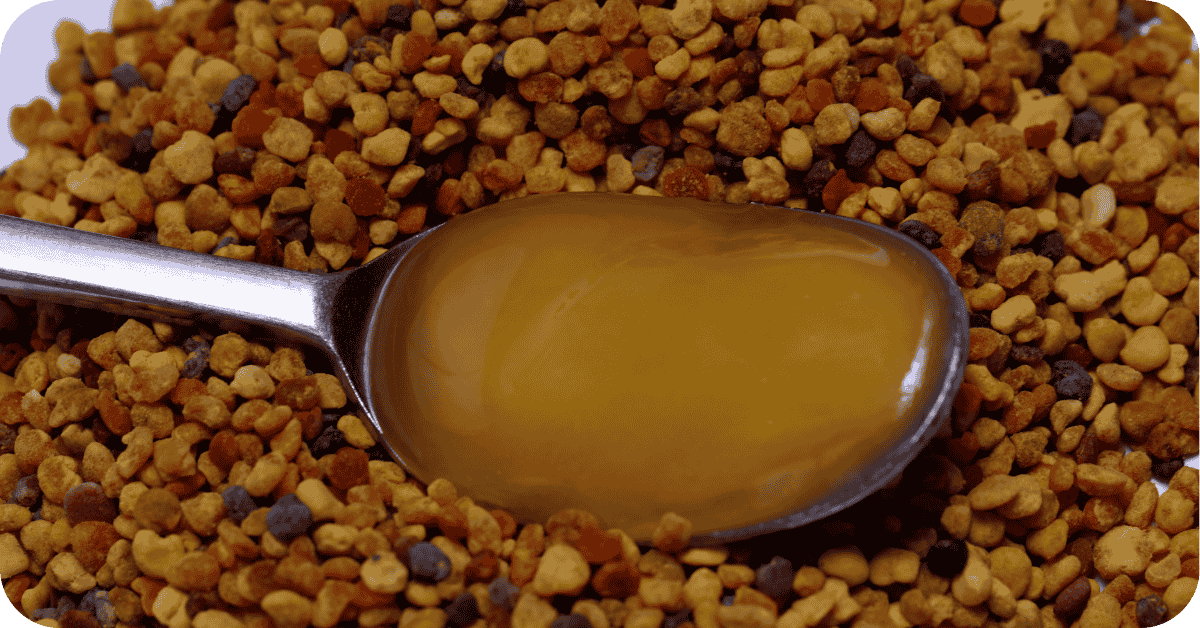
Propolis is a resinous substance made by honeybees. They collect resins from the buds, bark and leaves of trees and shrubs, then mix them with beeswax and enzymes from their salivary glands. The result is an aromatic, sticky substance also known as ‘bee putty’ or bee glue.
The name propolis comes from Ancient Greek: pro (before) and polis (city). It literally means ‘before the city’, a reference to the way bees use propolis at the entrance to their hive.
The role of propolis in the beehive
Propolis is essential to honeybees. Thousands of bees live close together in the hive, at relatively high temperatures and humidity levels. Propolis helps the bees keep their living environment stable. They use it to seal cracks and gaps, reinforce the structure of the hive and coat surfaces.
Bees also often apply a thin layer of propolis to brood cells before the queen lays eggs in them. This creates a protected environment for the brood. Researchers therefore regard propolis as an essential part of the beehive’s natural defence system.
A complex natural product
What makes propolis so remarkable is the enormous complexity of its composition. Scientific research has now identified more than 300 different constituents. The main groups are plant polyphenols and flavonoids, together with aromatic acids, esters and other bioactive compounds.
For us, propolis is particularly interesting because of this rich, natural composition. Polyphenols and flavonoids are substances that plants use to protect themselves against external influences such as sunlight, fungi and microorganisms. It is precisely this natural diversity that makes propolis an appealing choice for many people as part of a conscious, natural lifestyle.
The exact composition of propolis is never the same everywhere. It depends on factors including:
- the region where the bees live
- the season
- the trees and shrubs available
- the specific bee colony
This natural variation is precisely what makes propolis a unique, living product.
Propolis from a historical perspective
People have known about propolis for thousands of years. In ancient Egypt, it was used in the embalming of mummies. The Greeks and Romans described propolis in their medical writings, and it also had an established place in traditional Arabic and South American medicine.
This long history partly explains why propolis remains the subject of extensive scientific research today. In recent years alone, hundreds of publications studying propolis have appeared each year, for example on PubMed.
From resin to tincture: how propolis is processed
Raw propolis is hard and resinous. To make it easier to use, it is usually processed into an extract or tincture. During this extraction process, the valuable constituents are released from the propolis and dissolved in a carrier.
Traditionally, alcohol is often used for this, but alcohol-free alternatives using vegetable glycerine as a solvent are also available. This form is gentler to use and fits well with a conscious, natural lifestyle.
Quality and sensitivity
As propolis is a natural product, its origin and processing play an important role. Organic sourcing, monitored apiaries and consistent extraction methods all contribute to a reliable finished product.
At the same time, it is important to remember that propolis is a bee product. In some people, it may cause an allergic or contact allergic reaction.
Not sure whether you are sensitive to it? Always start with a small amount and consult a doctor or specialist if you have any questions.
Our view of propolis
At Morgen is Nu, we believe that true quality begins with respect for nature. Propolis fits this perfectly: a product created without human intervention, through the remarkable interaction between plants and bees.
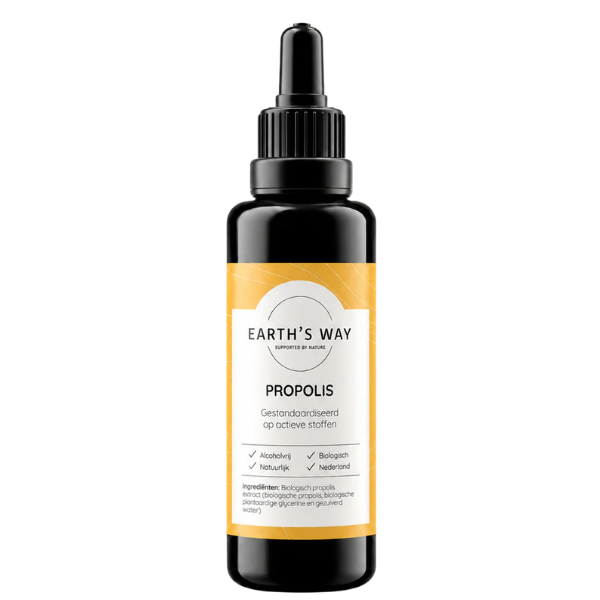
That is why we offer our own organic Propolis, made with carefully selected organic propolis from monitored apiaries and processed without alcohol using vegetable glycerine. With no unnecessary additives and careful attention to purity and safety.
This allows propolis to remain what it has always been: a remarkable natural product, in a form that suits a conscious, modern lifestyle.
Products we believe in

30ml | Liquid | United States of America