Before we begin
Strict rules govern what can and cannot be said about food supplements. We are bound by this European legislation, so we choose our words carefully. Medical claims, for example, are not permitted and health claims about botanical ingredients must carry a disclaimer. We also do not always list all scientific sources, because we are responsible for the exact wording we refer readers to.
Read more here about how we approach health claims and regulations.
Pine Pollen may well be one of the most remarkable substances nature has to offer. This fine, golden-yellow pollen comes from the male cones of pine trees and contains an impressive range of nutrients.
And that is not really so surprising. After all, this pollen has a part to play in creating something big: a tree. Not just a little plant, but a pine tree several metres tall that can withstand wind and weather. No wonder, then, that this powder is a rich source of building blocks. In this blog, you can read more about Pine Pollen and the important substances it contains.
What exactly is Pine Pollen powder?
Pine Pollen is pollen from the male reproductive structures of trees in the genus Pinus (pine trees). This pollen consists of microscopic grains and is dispersed by the wind, usually in spring. These grains serve to fertilise the female structures (pine cones), after which seeds can form.
The pollen is collected by hand or machine from the male flowering structures, then dried and processed into powder. Pine Pollen naturally has a pale yellow colour and a light, powdery texture. Not all pine trees are suitable for consumption; only a select number of species are harvested for their distinctive composition and traditional use.
Known as the ‘China dragon’
The way this pollen is regarded in other cultures shows that it is more than simply a product of nature. While it has only recently begun to appear in Europe, it has been part of Asian traditions for thousands of years. In China, it bears the almost poetic name ‘China Dragon’. A name that refers to vitality, life energy and youthfulness, qualities that are highly valued in Chinese tradition. According to ancient accounts, the very first harvest was brought to the emperor each year. And that is hardly surprising when you consider the valuable substances this pollen contains.
Which substances make Pine Pollen so powerful?
What makes Pine Pollen so special is the impressive variety of naturally occurring substances it contains. More than 200 bioavailable nutrients come together in this fine powder. These include B vitamins, vitamins D3 and E, and beta-carotene. It also contains amino acids, calcium, magnesium, iron and Selenium. And let us not forget powerful antioxidants such as glutathione and superoxide dismutase (SOD). But what may make Pine Pollen most remarkable is its high phytoandrogen content.
A natural source of phytoandrogens
Pine Pollen contains unique amounts of phytoandrogens such as DHEA, androstenedione, androsterone and testosterone. These are compounds that closely resemble certain hormones our bodies produce naturally. This places pine pollen, alongside plants such as maca, ginseng and ashwagandha, among a rare group of natural sources of these bioidentical substances. Because the pollen's cell walls have already been broken, the body can easily absorb these compounds and other nutrients.
Why this fine pollen continues to fascinate us
Now that you know a little more about Pine Pollen, you may understand why we consider it a valuable product. The impressive list of nutrients is part of the reason, but above all, it is what it represents: the power of nature in its most concentrated form. It is remarkable to think that something barely visible holds the potential to bring an entire tree to life.
Written by Lisanne - last updated 18-04-2025
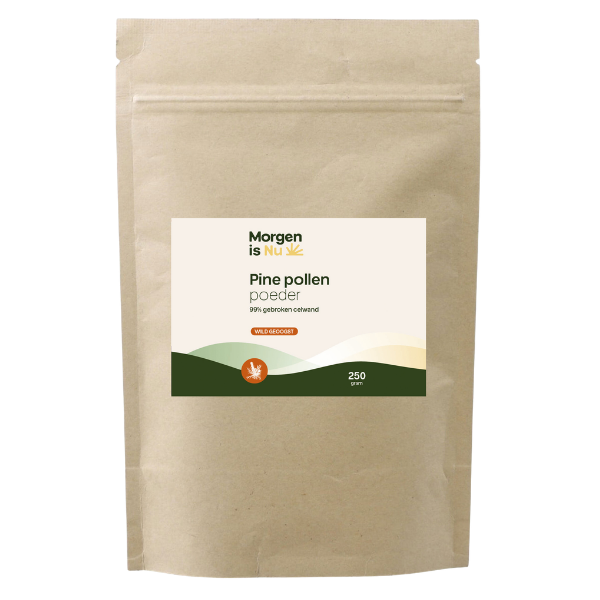
Pine Pollen products we believe in