
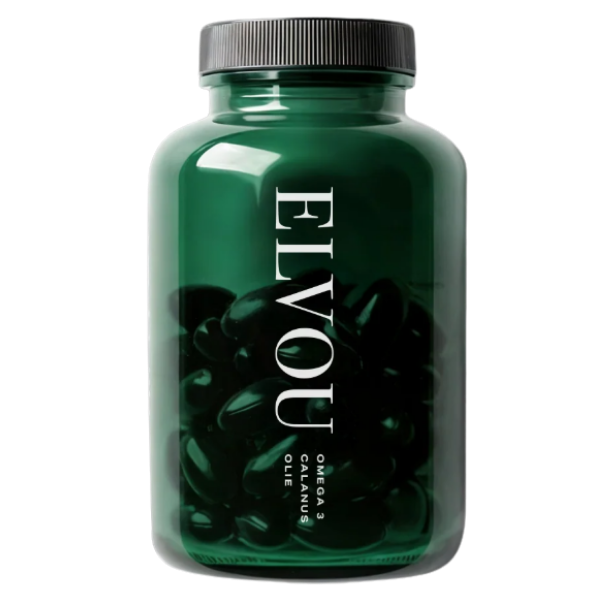
Omega 3 by Elvou is a distinctive omega-3 supplement made with pure Calanus® oil, sourced from the tiny marine creature Calanus finmarchicus. Unlike traditional fish oil, this oil is extracted from a marine crustacean and naturally contains a broad range of fatty acids, including EPA, DHA and stearidonic acid (SDA). The oil also naturally contains astaxanthin, a red-orange carotenoid. Elvou uses unprocessed oil without unnecessary additives, preserving its natural composition as much as possible.
Omega 3 from Calanus finmarchicus
Calanus finmarchicus is a small copepod found in the North Atlantic Ocean. This tiny planktonic animal forms an important link in the marine food web and stores various fatty acids in its body.
Calanus oil differs from traditional fish oil in that it contains more than 40 different fatty acids. Alongside the well-known omega-3 fatty acids EPA (eicosapentaenoic acid) and DHA (docosahexaenoic acid), the oil also contains stearidonic acid (SDA). This omega-3 fatty acid is an intermediate in the conversion of alpha-linolenic acid (ALA) to EPA (eicosapentaenoic acid).
Natural astaxanthin and a distinctive fatty acid structure
Another feature of Calanus oil is the presence of astaxanthin, a carotenoid that gives the oil its characteristic reddish colour. Astaxanthin naturally plays a role in protecting the oil against oxidation.
Calanus oil also contains a relatively high proportion of fatty acids in the form of wax esters. These are compounds of fatty acids and fatty alcohols, also known as marine policosanols. This structure distinguishes Calanus oil from many traditional fish oils, in which the fatty acids are mainly present as triglycerides.
Why Elvou Omega 3 is a good fit for Morgen is Nu
At Morgen is Nu, we consider a supplement's ingredients as well as their origin and how they are processed. Elvou's Calanus oil is carefully extracted and processed as little as possible to preserve its natural composition. The producer oversees the production process, with a focus on quality and sustainable harvesting. This combination of transparency, purity and thoughtful sourcing fits well with our approach to high-quality supplements.

|
|
Ingredients
Calanus® oil from Calanus finmarchicus (crustacean), capsule shell/thickening agent (fish gelatine, glycerine, water)
Nutritional values
| Composition per daily serving (2 capsules) | |
| Calanus® oil (Calanus finmarchicus) | 1000 mg |
| - of which stearidonic acid (SDA) | 74 mg |
| - of which eicosapentaenoic acid (EPA) | 69 mg |
| - of which docosahexaenoic acid (DHA) | 47 mg |
| - of which total marine policosanols (FAOH) | 353 mg |
| - of which astaxanthin | 195 mcg |
* Reference intake
 Gluten
Free
 Soy
free
 GMO
Free
 Alcohol-free
 Sugar
free
Label information
| Contents | 60 capsules |
|---|---|
| Usage | Take two capsules daily. Do not exceed the recommended dose. |
| Storage advice | Store in a dry place, tightly closed and at room temperature. Do not refrigerate. Keep out of reach of young children. |
| Producer | Elvou |
| Distributor | Morgen is Nu BV, Daltonstraat 42, 3846 BX Harderwijk, The Netherlands |
| Country of Origin | The Netherlands |
Extra information
A varied, balanced diet and a healthy lifestyle are important. This food supplement is not a substitute for a varied diet. If you are taking medication, have a medical condition, are pregnant or are breastfeeding, consult your doctor, pharmacist or therapist before use. Experiencing side effects? Stop using the product, let us know and consult your doctor. Not suitable for children unless specifically stated.
 Need help? We're here for you
Our mission is that people with the correct information choose their health products
Omega 3 fatty acids are important building blocks in the body. They are found in cell membranes, among other places, and form part of our daily diet. DHA specifically contributes to the maintenance of normal vision and normal brain function. Together, EPA and DHA support normal heart function with a daily intake of 250 mg.
An omega 3 deficiency can manifest itself in various ways. Commonly reported symptoms of omega 3 deficiency include dry skin, fatigue, difficulty concentrating, mood swings and dry eyes. However, these symptoms are not exclusive to a deficiency. If you recognise these symptoms, it may be worth reviewing your diet. If in doubt, always consult a qualified professional.
Omega 3 is needed to provide the body with essential fatty acids. EPA and DHA in particular perform functions in the body that other fatty acids cannot readily take over. This makes it important to get omega 3 every day through food or supplements.
There are approved recommendations for daily use: an intake of 250 mg of EPA and DHA per day is sufficient for the authorised health claims. Many people therefore choose an omega 3 supplement or omega 3 capsule to supplement their diet. Always choose a pure product from a reliable source, preferably a plant-based option such as omega 3 algal oil.
Side effects of omega 3 are rare with normal use. At very high doses, mild symptoms such as an unpleasant aftertaste, mild stomach discomfort or loose stools may occur. At extremely high doses, there is a theoretical risk of prolonged blood clotting time, but this only applies to large amounts (>3 grams per day) and to people who already take anticoagulant medication. If in doubt, always consult a doctor.
No maximum duration has been established for taking omega 3 supplements, provided they are used at the recommended dosage. Long-term use of a high-quality source, such as plant-based omega 3 from algae, is considered safe. Choose products without unnecessary additives, and check the amount of EPA and DHA per dose.
Foods containing omega 3 include plant and marine sources. ALA (alpha-linolenic acid) is found in flaxseed, chia seeds, walnuts and rapeseed oil. EPA and DHA are found mainly in oily fish and algae oil. For those following a plant-based diet, algae oil is a direct and sustainable source of these fatty acids.
A safe and effective daily amount is 250 mg of EPA and DHA combined. This is also the level at which the European food safety authority has approved the health claims. Depending on your lifestyle and diet, you may choose to take an omega 3 supplement. Check the amount per capsule or drop, and whether it contains EPA, DHA or ALA.
It’s best to take omega 3 capsules or liquid omega 3 oil during or straight after a meal. The fatty acids are absorbed better when taken with fat from food. Choose a time that works for you each day, as this makes it easier to keep up the habit.
The best omega 3 is pure, easily absorbed and sustainably produced. For those following a plant-based lifestyle, algae-derived omega 3 is the best choice. It provides EPA and DHA directly, without involving fish. Look at factors such as origin, purity, EPA/DHA content and whether the product is free from unnecessary additives. This helps you choose a supplement that suits your needs and values.


