
A quick note before we begin
Strict rules govern what can and cannot be said about food supplements. We are bound by this European legislation, so we choose our words carefully. Medical claims, for example, are not permitted, and health claims about botanical ingredients must include a disclaimer. We also do not always list all scientific sources, because we are responsible for the exact wording we refer readers to.
Read more about how we handle health claims and regulations.
You may have seen it before. A claim on an American supplement has been covered up, text in a product photo has been blurred, or a familiar product is suddenly no longer available.
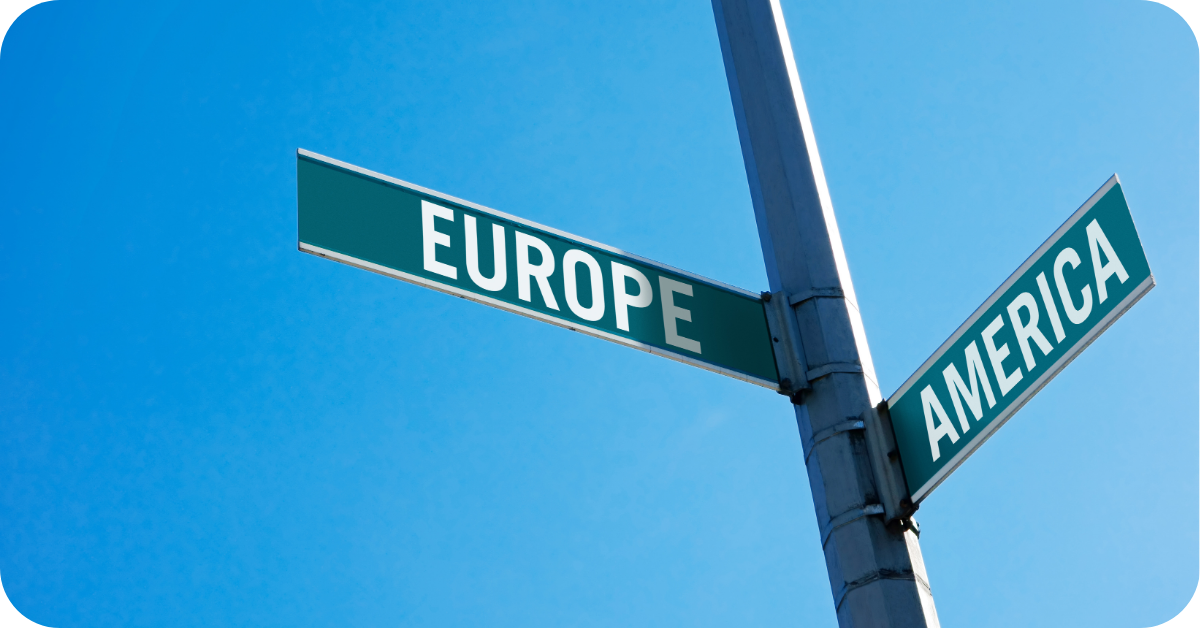
This is usually not the manufacturer's choice, and it says nothing about the quality of the product. It has everything to do with the differences between American and European legislation. As we sell many American brands, we deal with this every day. In this article, we explain why the same supplements are sometimes sold differently in America and Europe, and what this means for you as a consumer.
Contents
- Why America and Europe have different rules
- Health claims: what is allowed in America is not always allowed here
- Why we sometimes cover up or blur claims
- Why we sometimes adjust the dosage
- Why a product can sometimes no longer be sold
- How we make sure products comply with European rules
- Transparency over grand promises
Why America and Europe have different rules
Although food supplements are classed as foods in both the United States and Europe, the way they are assessed differs considerably. Both systems have the same aim: to bring safe products to market and protect consumers. They simply go about it differently.
In the United States, food supplements fall under the US Food and Drug Administration (FDA). Manufacturers there bear primary responsibility for the safety of their products. There is also more scope to use what are known as structure/function claims: statements about an ingredient's role in the body, provided they make no medical claims about treating, curing or preventing diseases.
Different rules apply in Europe. Here, the European Food Safety Authority (EFSA) assesses the scientific evidence supporting health claims. Only claims officially approved by the European Commission may be used. There are also extensive rules on ingredients, maximum safe intake levels, labelling and food safety. In the Netherlands, the Netherlands Food and Consumer Product Safety Authority (NVWA) monitors compliance with these regulations.
This means that a supplement which fully complies with American legislation cannot automatically be sold in the Netherlands too. That does not mean the product is unsafe, but it does mean that it sometimes needs to be adapted to meet European rules.
Health claims: what is allowed in America is not always allowed here
One of the biggest differences between America and Europe is how health claims may be used.
American packaging often carries statements about how an ingredient supports certain bodily functions. There is much less scope for this in Europe. Here, health claims may only be used if they have been officially approved or, in the case of certain herbs, fall under the so-called on-hold arrangements.
That is why you sometimes see more detailed information on American packaging than on our website or the Dutch label. This does not mean we want to tell you less about a product. We are simply bound by European legislation and believe it is important to follow it carefully.
Want to know more about health claims?
Read our blog: What can you actually say about supplements?
Wondering why some herbal health claims have an asterisk after them? Read our article about on-hold botanical claims too.
Why we sometimes cover up or blur claims
You may have noticed it before: a claim on packaging has been covered up, or text in a product photo has been deliberately blurred. We do not do this because we want to hide something.
Many American brands produce a single version of their packaging for several countries. The information on that packaging complies with American regulations, but not always with the rules that apply in Europe. To be able to sell the product in accordance with Dutch legislation, we adapt the packaging or presentation where necessary.
This means that we:
- add a label in Dutch
- change the quantities per daily dose and adjust the directions for use
- include additional warnings
- cover up certain claims, if necessary
- blur text or imagery in product photos, if necessary
The product's formulation does not change. Only the information shown to consumers is adapted to comply with European regulations.
Why we sometimes adjust the dosage
Health claims are not the only difference between America and Europe. The recommended daily dose can also differ.
For various vitamins, minerals and other ingredients, Europe has different maximum safe intake levels or national guidelines from those in the United States. As a result, a manufacturer in America might recommend four capsules a day, for example, while European regulations require us to state a lower recommended daily dose.
In these cases, the product's formulation stays the same. Only the official directions for use are adapted to the regulations that apply in the Netherlands.
This does not mean the product has become weaker. It means we are making sure it can be used responsibly within the European safety framework.
Read our article too: What does dosage mean for food supplements?
Why a product can sometimes no longer be sold
Sometimes the differences between America and Europe go beyond an adjusted claim or dosage. Manufacturers regularly change existing formulas. For example, they may add a new herbal extract, replace an ingredient or use a higher dose. Although the product may still be sold in America, these changes can mean it no longer complies with European regulations.
Scientific understanding and regulatory assessments also change regularly. An ingredient that could be sold for years without any issues may later fall under different regulations or be reassessed. In other cases, an ingredient turns out to be new to Europe and must first go through an authorisation procedure before it can be used.
In these situations, we choose to take a product offline temporarily or remove it from our range altogether. This can be frustrating if it is a favourite product of yours, but we believe that following the law carefully is more important than continuing to sell a product that no longer meets European requirements.
How we make sure products comply with European rules
At Morgen is Nu, we look beyond the ingredients list. Before a product goes online, we assess its formulation, dosages, labelling, health claims and food safety, among other things. Once a product is part of our range, we continue to monitor changes in legislation and product formulations.
This sometimes means adapting packaging, changing directions for use or removing a product from our range. Not because we enjoy doing so, but because we believe you should be able to trust what you buy.
Want to know how we assess products before adding them to our webshop? Read our article too: How we select our products.
Transparency over grand promises
We make a conscious choice to comply with Dutch and European legislation, even when that means wording things more cautiously or adapting packaging. We believe that honest information and safe products matter more than grand promises.
Behind every American supplement you see at Morgen is Nu, there is often more work than you might expect. We check ingredients, assess claims, keep track of changes in legislation and adapt labels or directions for use where necessary. This way, you can be confident that the product you buy from us is of high quality and also complies with the rules that apply here.
Do you have a question about this?
Do you have questions about adapted packaging, a changed dosage or a product that is no longer available? Please feel free to contact us. We are happy to explain why certain decisions are made.
