
A quick note before we begin
Strict rules apply to what can and cannot be said about food supplements. We are bound by this European legislation, so we choose our words carefully. Medical claims, for example, are not permitted and health claims about botanical ingredients must carry a disclaimer. We also do not always list all scientific sources, because we are responsible for the exact wording we refer to.
Read more here about how we handle health claims and regulations.
Our minds and nervous systems have quite a lot to process on an average day. Work, appointments, notifications, thoughts and everything else that needs fitting in. Fortunately, our bodies have all sorts of systems that help maintain the balance between activity and rest.
Nature also provides plants and nutrients that have long been used in connection with relaxation. Think of lemon balm, valerian and passionflower, but also L-Theanine from tea and the distinctive red stigmas of saffron. It is easy to group them all together. Yet each ingredient has a different story. Interestingly, several calming herbs keep bringing us back to the same system: GABA. But what exactly is GABA, and what do all these plants have to do with it?
Contents
- How GABA works: the natural ‘brake pedal’
- One GABA system, different herbs
- How lemon balm works
- Valerian: its influence on GABA receptors
- Passionflower: another route again
- What about California poppy?
- How L-Theanine works: beyond GABA
- How saffron works: a different story
- Which ingredient should you choose, and when?
- Nature offers more than one route to calm
How GABA works: the natural ‘brake pedal’
Our brains contain billions of nerve cells that constantly pass information to one another. To do this, they use neurotransmitters, among other things: substances that help transmit signals between nerve cells.
GABA, short for gamma-aminobutyric acid, is the main inhibitory neurotransmitter in our central nervous system. You can therefore think of GABA as a kind of natural brake pedal. Its counterparts include glutamate, the main excitatory neurotransmitter. We need both: it is all about the balance between activation and inhibition. And this GABA system turns out to be an interesting starting point when we look at different herbs.
One GABA system, different herbs
Lemon balm, valerian and passionflower are all familiar as naturally calming herbs*. Interestingly, research into these plants keeps bringing us back to the same system: GABA. Yet they do not all appear to act on it in the same way.
How lemon balm works: reducing the breakdown of GABA
Lemon balm (Melissa officinalis) has been used for centuries and is best known as a naturally calming herb*. The plant contains various natural compounds, including rosmarinic acid.
Laboratory research has found that compounds from lemon balm can inhibit the enzyme GABA transaminase (GABA-T). This enzyme plays a role in the breakdown of GABA. Rosmarinic acid was found to be an important compound in the extract studied. This does not automatically mean that lemon balm simply gives you ‘more GABA in your brain’. Our bodies do not work quite that simply. It does, however, give us an interesting glimpse into one possible way in which compounds from lemon balm may act on the GABA system.
Lemon balm is naturally calming* and supports mental wellbeing and the maintenance of healthy sleep*.
Valerian: its influence on GABA receptors
Valerian (Valeriana officinalis) takes us to a different part of the same system. Its root contains valerenic acid, among other compounds. This substance is being studied for its interaction with certain GABA-A receptors.
You can think of such a receptor as a kind of receiver that GABA can act on. Experimental research shows that valerenic acid can strengthen the response of certain GABA-A receptors to GABA.
Valerian is naturally calming*, offers support during stress* and contributes to normal sleep*.
Passionflower: another route again
Passionflower (Passiflora incarnata) also brings us to the GABA system, but again by a slightly different route. Laboratory research has looked at GABA-A and GABA-B receptors, as well as the uptake of GABA by nerve endings, among other things.
The extract studied inhibited this uptake of GABA, but had no effect on GABA transaminase. This mechanism therefore differs from the one being studied in lemon balm.
Passionflower is naturally calming*, offers support during stress* and contributes to normal sleep*.
Three herbs, three different points of interaction. Lemon balm brings us to the breakdown of GABA, valerian to the receptors that GABA acts on, while research into passionflower looks at GABA uptake, among other things. The same system, but a different route.
What about California poppy?
The cheerful orange California poppy (Eschscholzia californica) also fits neatly into this story. This plant contains various alkaloids. One of these is reticuline. In experimental research, a specific form of this compound was found to be capable of influencing certain GABA-A receptors.
This brings California poppy back to the GABA system too, although there is still much we do not know about exactly how the whole plant works. California poppy contributes to normal sleep* and the ability to adapt to stress*.
How L-Theanine works: beyond GABA
For L-Theanine, we leave traditional herbs behind and turn to a plant almost everyone knows: the tea plant (Camellia sinensis). L-Theanine is a distinctive amino acid that occurs naturally in tea.
L-Theanine is also linked to the GABA system, but here the story broadens again. L-Theanine is structurally similar to glutamate, and preclinical research is exploring interactions with GABA, glutamate, dopamine and serotonin, among others. The relationship with glutamate receptors is particularly interesting from a mechanistic perspective.
L-Theanine offers support during stress* and contributes to normal sleep*.
How saffron works: a different story
Then there is saffron. Perhaps the most unusual ingredient on this list. Saffron comes from the red stigmas of Crocus sativus. Each flower has just three, and they are harvested by hand. This means that a great many flowers are needed for a small amount of saffron.
These red stigmas contain distinctive natural compounds, including crocin, crocetin, picrocrocin and safranal. Crocins contribute to saffron's characteristic colour, while safranal is important for its aroma.
When we look at research into how saffron works, the story is less easily reduced to a single neurotransmitter or receptor. Mechanistic research examines various constituents and signalling pathways, including systems involving GABA, glutamate, serotonin and dopamine.
This makes saffron different from lemon balm, for example, where we can identify a relatively clear point of interaction in the breakdown of GABA. With saffron, a broader interplay seems to be of interest.
Saffron is uplifting and helps with ups and downs* and supports sleep*. Saffron also supports the natural menopausal transition* and helps with mood changes during the menstrual cycle*.
Which ingredient should you choose, and when?
With so many different plants and nutrients, a natural question is: which should you choose, and when? There is no universal answer. What suits you depends mainly on what you would like support with.
Lemon balm, valerian and passionflower have similar permitted uses. They are naturally calming herbs* with additional claims relating to stress, mental wellbeing and/or sleep*. California poppy combines support for sleep* with the ability to adapt to stress*, while L-Theanine combines support during stress* with normal sleep*.
Saffron has a different profile. Alongside supporting sleep*, saffron is uplifting and helps with ups and downs*. There are also specific claims relating to the natural menopausal transition* and mood changes during the menstrual cycle*. This may make saffron of interest when you are looking for support with mood or a particular stage of life, as well as relaxation.
You do not always have to choose just one ingredient, either. Herbs are also regularly combined. What matters most is looking at the overall composition of a formula and what suits your needs at that moment.
Nature offers more than one route to calm
From the leaves of lemon balm and passionflower to valerian root and the red stigmas of saffron: every plant has its own composition. Yet several traditionally calming herbs bring us back to the same GABA system remarkably often.
But they do not all do the same thing. Lemon balm brings us to the breakdown of GABA, valerian to GABA-A receptors and passionflower to GABA uptake, among other things. L-Theanine broadens the story towards glutamate, while research into saffron examines an even wider interplay of natural constituents and signalling pathways.
We are still a long way from understanding every detail of these processes. Our nervous system is simply not an on-off switch. Perhaps that is exactly what makes nature so interesting: there is more than one route to calm.
*Health claim awaiting European authorisation.
Written by Danielle , last updated 01-10-2026
Products we believe in
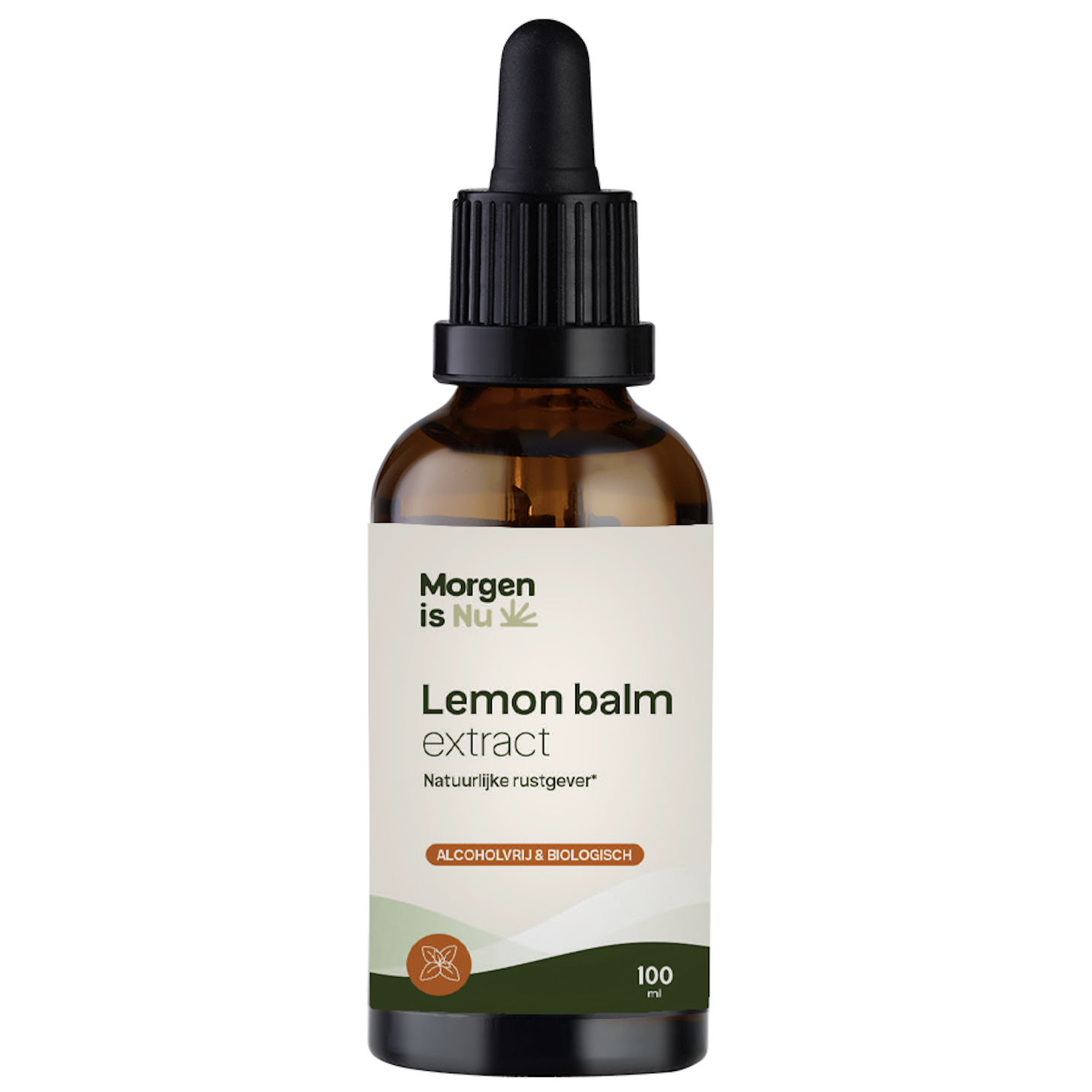
100ml | Liquid | Lemon balm | The Netherlands

50 capsules | Capsules | Theanine | The Netherlands

