Few people know what a biofilm is. Which is strange, because it is something that has always existed in nature and that we as humans always carry with us. That is not all: they have an incredibly large influence on our health. Among other things, fossil finds show that biofilms have existed in nature for over 3 billion years [SOURCE]. So it's time for some clarification. In this article I will explain exactly what a biofilm is and what influence it has on our health.
What is a biofilm?
A biofilm is a layer of microorganisms surrounded by self-produced slime, attached to a surface. The slimy, microbial colonies in biofilms grow mainly in moist environments. They are basically everywhere in nature. For example, a biofilm is the layer of slime that you find in a flower vase if you leave it for too long. But they are also common in our bodies. For example, a biofilm is also simply the dental plaque in your mouth that we brush away every day. In principle, all harmful bacteria in nature make a layer of slime (biofilm) to protect themselves. Of course, not without reason.
Due to the protective slime layer, it ensures that various microorganisms have a greater chance of survival. Biofilms reduce the chances of harmful bacteria, viruses and parasites being removed or eliminated. Biofilms are so persistent that usually only the surface or the edges of the biofilm are affected when an attempt is made to remove the slime layer. The deeper layers of microorganisms and slime are thus protected from removal. This poses a health risk if the biofilm contains harmful microorganisms. For example, some researchers believe that recurring infections are the result of persistent biofilms in the body that resist our immune defenses [SOURCE].
The formation of a biofilm
Simply put, a biofilm forms when harmful bacteria accumulate and form an unhealthy slime layer. Biofilm formation usually begins when a single microorganism deliberately sticks to a surface. Often this is a cell from a tissue or organ, or the slime layer that covers a particular tissue. Other microorganisms then begin to attach to the original [SOURCE]. This creates a colony of microorganisms. This colony then forms a harmful slime layer over the surface to which it is attached.
This unhealthy slime layer in turn attracts other microorganisms and makes the surface a more hospitable environment for other harmful bacteria. Biofilms are therefore constantly growing, which is not what we want. They form an increasingly stronger grip on the surface, making them harder to remove. This is an excellent property for health-promoting biofilms (more on that below), but it is a concern when it is a biofilm in which harmful microorganisms take up residence.
The healthy and unhealthy biofilm in our intestines
The human body has many types of biofilms. They can be found in the sinuses, lungs, urinary tract, ear canals and in our mouth. The most important biofilms are undoubtedly in our intestinal system. Your intestines are extremely suitable for biofilm formation, because the inside of the intestines is covered with a layer of mucus. This mucus layer protects the epithelial cells that are in the intestinal wall. This is a healthy biofilm. The epithelial cells need to be protected, because otherwise the food could irritate the cells in the intestines. In science, this mucus layer that protects the cells is also called a Glycocalix. You can think of this as a sealant that protects tissue from infiltration [SOURCE]. Below is a schematic representation of the healthy biofilm in our intestines.
However, bad bacteria also produce a mucus layer in the intestines. This layer eventually becomes a biofilm. The bad and therefore pathogenic bacteria want to attach themselves to the intestinal wall and protect themselves against the attacks of the good bacteria, digestive juices and other forms of our body's immune defense [SOURCE]. However, the bad bacteria use a number of substances that they find in the intestine, such as heavy metals and calcium. With this they find a way to make the biofilm impenetrable. This is a property that only the bad bacteria have. In this way, the biofilm becomes a fortress where the harmful bacteria can continue to live and reproduce undisturbed. The major disadvantage: this harmful layer of mucus settles over the healthy layer of mucus, causing the healthy layer of mucus to dry out and no longer be able to perform its function properly. Below is a schematic representation of this common situation.
Consequences of an unhealthy biofilm
The unhealthy biofilm has a number of negative effects on our health. The presence of the unhealthy biofilm in the intestine dries out the intestinal wall, which irritates it. This process can cause inflammatory reactions and hypersensitivities in the intestine. This inflammatory process causes the intestinal wall to swell. The holes in the intestinal wall that ensure that food is absorbed become much too large and open up. This causes us to suffer from the so-called Leaky Gut Syndrome, for example. The major disadvantage of this is that the biofilm attaches itself to the intestinal wall even more easily. The problem then only gets worse.
In most people in the Western world, the intestinal wall is somewhat inflamed and there is therefore a persistent and unhealthy layer of mucus (biofilm). This is caused, for example, by our lifestyle, unhealthy food and all the chemical substances that we come into contact with daily. With all the negative consequences that entails. Because you can of course imagine that a layer of mucus full of unhealthy and harmful micro-organisms does not have a positive effect on your health. The harmful biofilm in the intestine also ensures that nutrients, but also medicines, for example, are poorly absorbed because the biofilm closes off the intestinal wall.
Removing the harmful biofilm
You already understand: just like you have to remove your dental plaque every day, it is also important to regularly remove the harmful biofilm from your intestines. There are several products on the market that are made to dissolve the biofilm. Unfortunately, the harmful bacteria, viruses, parasites and fungi are not always immediately out of your body. The harmful bacteria that are still present quickly form a new biofilm in this way. In addition, so many harmful organisms are suddenly released in the intestine that this can be a major burden on your health.
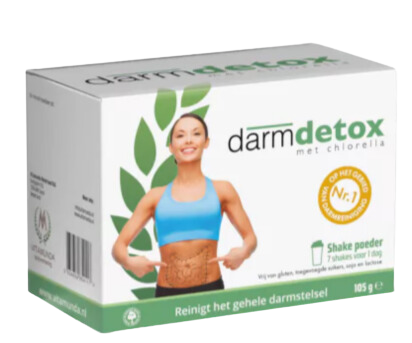
There is however one way to get the biofilm out of your intestines in its entirety, with all the harmful microorganisms in it. This can be done with the fermented fiber of the bark of the oil palm tree, combined with Okra powder. These are the main ingredients of our effective Colon cleansing cure. The formula of our cure has been used for hundreds of years by indigenous peoples and is still traditionally made in Asia with care and quality. The correct fermentation of this bark of the oil palm tree is a very precise and time-consuming process.
How does our Dam Cleaning Treatment work?
With our Colon Cleansing Cure, the harmful biofilm can be removed in a very simple way. It works as follows:
The fermented fiber of the oil palm tree penetrates the solid structures of the biofilm.
When penetrated, the Okra powder is released into the biofilm.
This powder absorbs a hundred times its weight in water, causing the biofilm to swell.
This swelling causes the biofilm to become moist and extremely heavy.
This swelling and heaviness causes the biofilm to loosen from your intestinal wall.
The biofilm then slides out, just like normal feces.
Below is a clear and schematic representation of this entire process.
The fiber of the oil palm tree penetrates the biofilm.
The biofilm swells due to the Okra powder.
The biofilm then slides out in its entirety.
Once the biofilm is gone, the healthy mucus layer that normally covers your intestinal wall can fully revive because the suffocating and drying biofilm is no longer there. To date, there have been no products or methods on the market that ensure that the entire intestinal tract is cleaned in such an effective and comfortable way. It has no 'scouring' effect and does not cause cramps and diarrhea. Even with a colonic irrigation, your intestines are not cleaned so thoroughly.
Products we stand behind
Powder, Bundle | The Netherlands
Powder, Bundle | The Netherlands