Why is the ratio of 80% methylcobalamin and 20% adenosylcobalamin used?
Why is the color red?
What gives it the sweet taste?
What is B12 made from?
When is the best time to take B12?
When is the best time to take my vitamins?
When is the best time to take my minerals?
What is the best way to take vitamins or minerals in liquid form?
What does the term RI stand for?
Why is the ratio of 80% methylcobalamin and 20% adenosylcobalamin used?
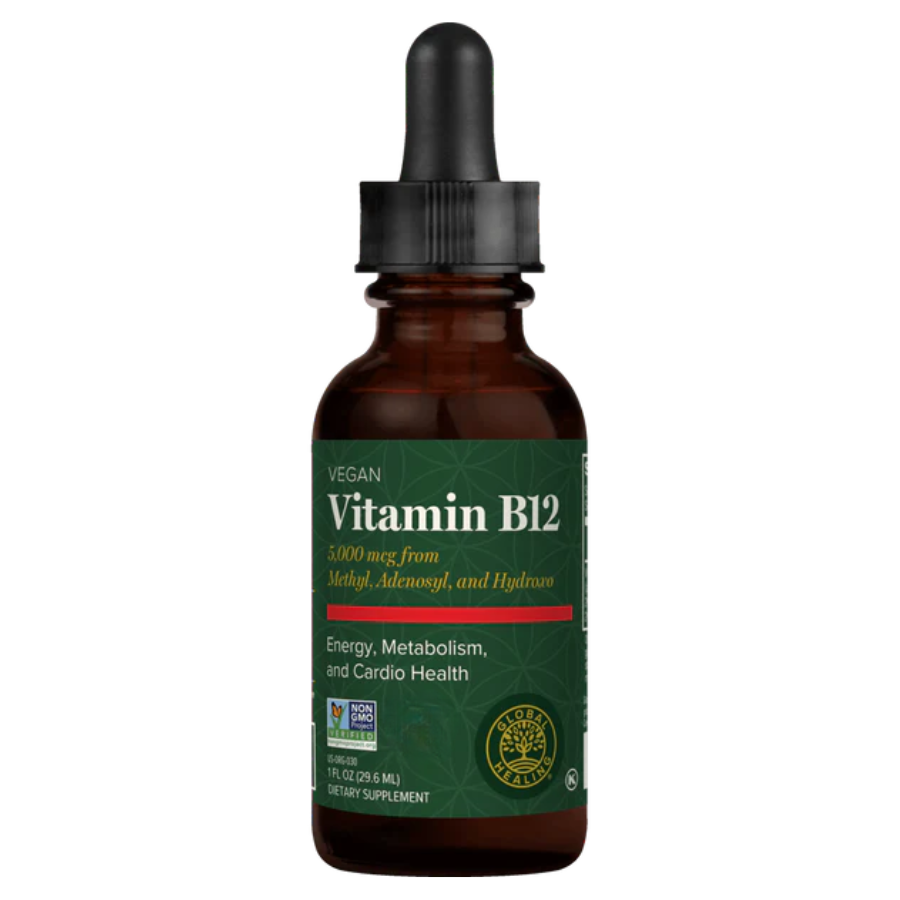
The ratio of these two forms of vitamin B12 in the blood is approximately 80% methylcobalamin and 20% adenosylcobalamin. Therefore, the same natural ratio is used in the product.
Why is the color red?
The natural colours of the B12 provide the red colour, no colourings are added.
What gives it the sweet taste?
The glycerine provides the sweet taste. No sugar or other sweetener is added.
What is B12 made from?
The B12 forms are derived from bacteria. No genetically modified bacteria are used for this (the product is GMO-free).
When is the best time to take B12?
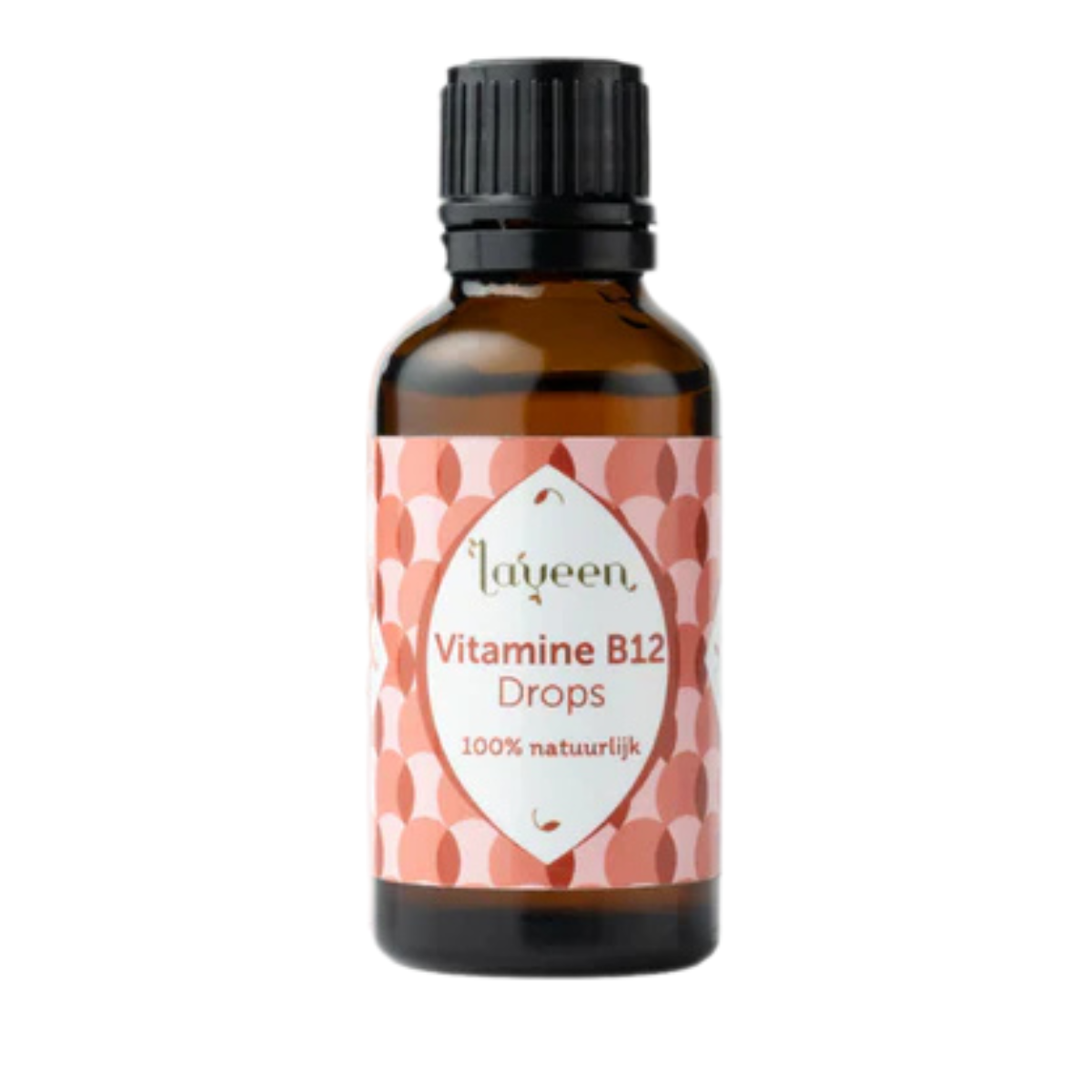
The B12 is best taken on an empty stomach (about 2 hours after or 30 minutes before a meal). Take 1 pipette (1 ml) daily and hold for 15-20 seconds under your tongue.
When is the best time to take my vitamins?
- Fat-soluble vitamins (A, D, E, K): Take with a meal containing fat.
- Water-soluble vitamins (C, B-complex): Can be taken at any time of the day. B12 is best absorbed on an empty stomach.
When is the best time to take my minerals?
Minerals are best taken during or after a meal. Magnesium to support the nervous system is best taken with the evening meal.
What is the best way to take vitamins or minerals in liquid form?
Vitamins or minerals in liquid form can be dripped directly into the mouth or taken on a spoon. Shake the product well before use. Some liquid products must first be mixed with water.
What does the term RI stand for?
RI stands for Reference Intake. Reference intakes are legal guidelines set by the European Commission. These guidelines give an indication of the amount of vitamins and minerals that an adult needs on average. The values may differ from the RDA (Recommended Daily Allowance).
The RDA are recommendations for the amount of a vitamin or mineral that a specific population group needs daily. These recommendations take into account age, gender and a specific situation, such as pregnancy. This is not the case with the RI. It is a general guideline for the intake of vitamins and minerals, which is used on the label of food supplements.