Before we begin
There are strict rules on what can and cannot be said about food supplements. We are bound by this European legislation, so we choose our words carefully. Medical claims, for example, are not permitted and health claims about botanical ingredients must carry a disclaimer. We also do not always list all scientific sources, as we are responsible for the exact wording we refer readers to.
Read more here about how we handle health claims and regulations.
Vitamin C, why is it important?
Humans cannot make their own vitamin C. We could do so around 40 million years ago, until we lost the enzyme gulonolactone oxidase. This enzyme made it possible to convert glucose into vitamin C. We therefore depend on food or supplements for our vitamin C intake. For hundreds of years, we had to learn this the hard way. Many sailors died of scurvy because they did not eat enough food containing vitamin C. As early as 1227, citrus fruits were recommended to prevent illness and death among sailors. So it is clear that vitamin C is essential for good health, although this is of course true of every vitamin. Yet vitamin C may well be the most important of all vitamins. It contributes to more than 300 vital biological processes in the body. It has a remarkable antioxidant function, which is essential for maintaining healthy cells, tissues and our immune system, among other things. You can read about some of vitamin C's important functions below.
- Helps protect our (healthy) cells
- Supports bone formation and the maintenance of strong bones
- Building and maintaining strong teeth
- Ensures good immune defences and immune system function
- Reducing tiredness and increasing energy
- A positive effect on our nervous system
- Nourishes the skin from within
How much vitamin C do we need?
An adequate amount of vitamin C is therefore essential for
everyone who wants to be healthy and function well. A vitamin
C deficiency leads to scurvy, as mentioned earlier. Fortunately, this condition
is now very rare worldwide. Symptoms include
unhealthy gums, painful arms and legs and even internal
bleeding. To prevent scurvy, 75mg of vitamin C per day
is recommended. This is a very small amount (for example: 1 orange and a pepper),
which is why vitamin C deficiency is rare.
This amount therefore prevents
scurvy, but it does not really tell us what amount is optimal
for our bodies. Many studies, however, show that we need a daily intake of 1000mg
for vitamin C to work fully and
effectively. Some studies suggest that you need even more, but the
general consensus is that you need around 500-1000mg to benefit
from vitamin C's important functions.
Where do we get vitamin C from?
Almost everyone knows that vitamin C is found in many fruits, with citrus fruits such as oranges and mandarins being the best known.
Surprisingly, however, these contain relatively little vitamin C. Kiwis and peppers, for example, contain up to 3x as much vitamin C as an orange. Vitamin C is also found in many everyday foods such as strawberries, cabbages, potatoes and berries. If you want a higher intake of vitamin C (which, as discussed, has many benefits), this is not impossible, but it is harder to achieve through an ordinary diet.
Because of our Western farming methods, the soil is nowhere near as good as it used to be. Fruit and vegetables are also often produced in unnatural ways. As a result, fruit and vegetables contain far fewer vitamins than 50 or 100 years ago. But the biggest problem is how we source our food. Because of the globalisation of our food supply, fruit is almost always picked before it is ripe. This means that not all the necessary nutrients are present in the fruit yet. Fruit is then stored for long periods, which reduces its vitamin content even further. This is because vitamins are lost through exposure to heat, light and oxygen. So if you want to be sure you get enough vitamin C (which is particularly essential in autumn and winter), you need to rely on supplements.
These are the forms of vitamin C we stand behind

Buffered vitamin C
We're big fans of buffered vitamin C. This form is a combination of calcium and magnesium ascorbate, also known as non-acidic vitamin C. A form that is very well absorbed and is gentler on your stomach and teeth.

120ml | Liquid | Vitamin C | Natural source | United States of America
Vitamin C Complex
Vitamine C Complex from Royal Green combines natural vitamin C from amla extract with the medicinal mushrooms maitake, reishi and shiitake. The entirely plant-based formula is free from synthetic additives and unnecessary fillers and contains only carefully selected ingredients of natural origin.
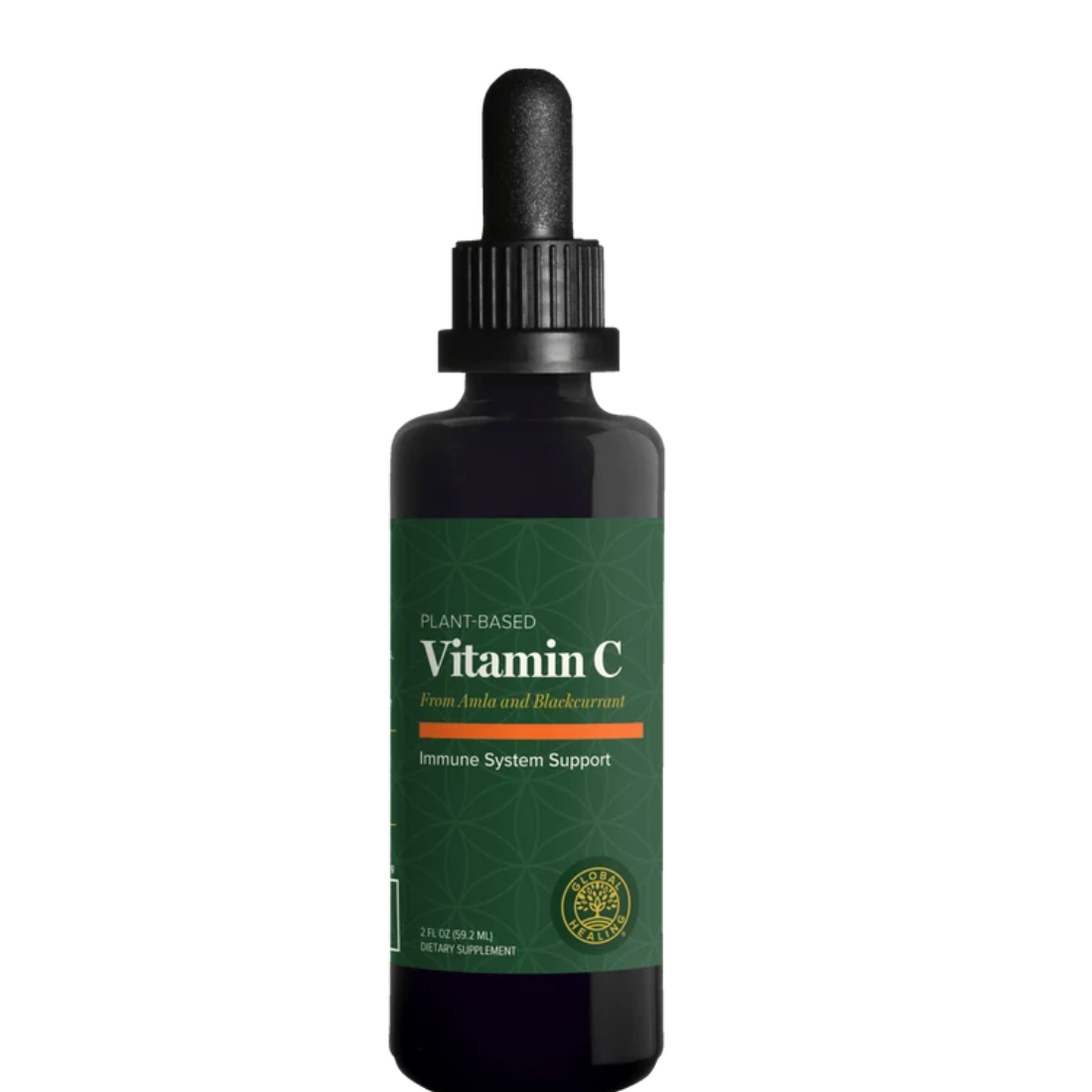
60ml | Liquid | Vitamin C | Natural source | United States of America
Completely natural vitamin C
Finally, there is the completely natural form of vitamin C, such as the plant-based vitamin C from Global Healing. This is also known as a full-spectrum form. It contains vitamin C alongside hundreds of other compounds found in the plants it is made from. Completely natural vitamin C is often sourced from fruits such as Camu Camu, Amla and Acerola.